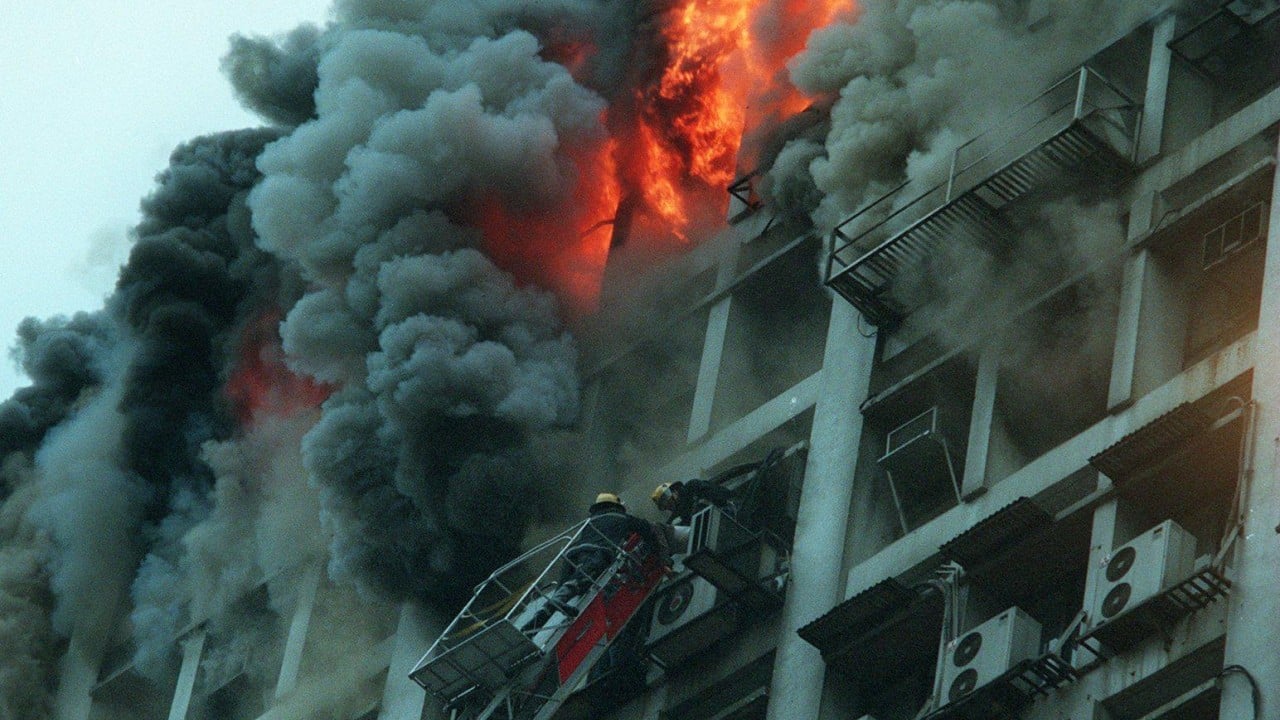
Sparks from a welding torch fell straight down an open lift shaft on November 20, 1996, and turned a routine afternoon on Nathan Road into one of Hong Kong's deadliest peacetime tragedies. Forty-one people died in the 1996 Garley Building fire, and another 80 or 81 were injured as smoke and flames tore through the 16-storey commercial block in Jordan.
Archive pieces like the South China Morning Post archive report bring back the raw shock of that day. Reading about it thirty years later makes something uncomfortable stand out. Most people remember the dramatic photos of helicopters hovering above Kowloon and the sheer scale of the loss. Fewer stop to examine the chain of small, everyday shortcuts that made a spark on one floor lethal to people trapped near the top. Don't miss our recent post on this related article.
That is the real story here. Not a single freak accident, but a stack of ordinary compromises that turned a vertical building into a chimney.
How a Spark Turned the Garley Building Fire Into a Trap
Welding work was underway inside a lift shaft as contractors replaced elevators in the building. According to fire engineering and investigative accounts of the incident, red-hot sparks and molten droplets dropped down the shaft and ignited construction materials gathered inside a hoarding on the second floor. If you want more about the history here, Reuters offers an in-depth summary.
Once those materials caught, physics took over. Lift shafts act like vertical flues when landing doors and lift cars have been removed during renovation work, especially when combustible materials and bamboo scaffolding sit inside. Hot gases and dense smoke surged upward at speed.
Here is the detail that makes experienced safety engineers wince. Smoke and burning smells hadn't been unusual around renovation and welding sites, which kinks human instinct. When workers and office staff smell smoke every so often during building work, early warning signs blend into background noise. Worse, smoke detectors on the second floor had reportedly been wrapped in plastic bags to stop nuisance alarms during construction.
By the time people realized this wasn't a routine nuisance, heat and toxic smoke had already raced through upper levels. Many of the fatalities occurred on the upper floors, including twenty-two staff members from Chow Sang Sang Jewellery on the fifteenth floor, while the bottom two and top three floors bore the heaviest fire damage.
Look closely at that aerial view and you can see the core problem of dense vertical cities. Heavy smoke pouring out of upper windows while emergency crews work in tight urban streets leaves almost zero margin for delayed evacuation or blocked stairwells.
Why Older Commercial Buildings Were So Vulnerable
Garley Building went up in 1975. That date matters a lot.
In Hong Kong, commercial buildings constructed before modern fire safety codes and mandatory sprinkler retrofits often operated under standards from an earlier era. Once a dense office block is packed with partitions, electrical gear, stored paperwork, and office furnishings, fire load climbs fast. Smoke doesn't just warm a room; it blinds occupants in seconds and floods escape routes long before flames reach the ceiling.
I've seen how easy it is for building managers and tenants to assume that because a structure passed inspection decades ago, it is basically safe today. That assumption is dangerous. A building's risk profile changes every time a partition wall moves, a lift is overhauled, a storeroom gets crowded, or a detector gets covered up to keep a contractor happy.
Firefighters facing the Garley Building blaze fought through grueling conditions for roughly twenty to twenty-one hours. Elevators were out of action, smoke choked upper areas, and one firefighter died after falling down a lift shaft during the operation. It wasn't a quick knockdown. It was a long, punishing fight in a crowded commercial district.
What Changed After 1996 and Where Debates Still Linger
Tragedies like the 1996 Garley Building fire force governments to stop treating older buildings as grandfathered exceptions. Following a wave of serious fires in the mid-to-late 1990s, Hong Kong moved ahead with fire safety upgrading laws—such as the Fire Safety (Commercial Premises) Ordinance and later the Fire Safety (Buildings) Ordinance—aimed at bringing older commercial, composite, and domestic buildings closer to modern fire protection expectations, including fire-resisting construction, protected exits, and fire service installations.
Government audit reviews over the years, including reports from the Audit Commission of Hong Kong, show why policy on paper is only half the battle. Upgrading thousands of older buildings takes years, creates real costs for owners and small businesses, and runs into practical hurdles when retrofitting tight layouts.
There is also a legitimate debate in building policy that doesn't have a neat soundbite. How aggressively should authorities force costly retrofits on older buildings versus focusing enforcement on high-risk uses, blocked exits, and disabled alarm systems? Strict mandates protect lives, yet heavy compliance costs can strain smaller owners if implementation isn't clear and well-paced. Nobody credible argues against life safety, of course, though experts often clash over timelines, enforcement teeth, and practical feasibility in tight urban blocks.
And remember how long the physical scar lasted on Nathan Road. The damaged building wasn't demolished until 2003, and a replacement office development on the site was completed in 2007—more than a decade after the fire.
Practical Steps You Can Take Right Now
Whether you manage a workspace, run a small shop, or simply spend your workday inside a multi-storey building, a few habits actually make a difference when something goes wrong.
- Never bag or tape over a detector during renovation. If dust or welding sparks trigger false alarms, call the fire system contractor or management to manage isolation properly rather than improvising with plastic.
- Treat any unfamiliar smoke or burning smell seriously. Don't assume a contractor is "just cutting metal" until someone verifies the source on the spot.
- Know two ways out before an emergency happens. Elevators are off-limits during fires, and single stairwells or smoke-filled corridors can trap people who only know the main entrance.
- Keep fire doors closed, never wedged open. A propped fire door looks convenient during a busy afternoon, yet it lets smoke travel straight into escape stairs.
- Audit renovation hot work aggressively. Welding, cutting, and grinding near shafts or combustible hoarding need strict spark control, fire watches, and clear rules before a single torch lights.
A spark on a lower floor shouldn't decide who walks out of a sixteen-storey building at the end of the day. When people stop cutting corners around alarms, exits, and hot work, that lesson finally sticks.