The numbers hitting the tickers right now look grim. Confirmed Ebola cases in the Democratic Republic of the Congo and Uganda have officially crossed the 550 mark. If you've been reading the mainstream headlines, you're probably seeing a lot of panic about a United States warning that the spread could soon match the worst historical outbreaks on record.
But headlines rarely tell the whole story. The panic isn't just about the raw number of infections. It's about a terrifying biological reality that the general public hasn't quite realized yet.
We are fighting this particular fight entirely empty-handed.
The Blind Spot in Our Pandemic Preparedness
When most people think of Ebola, they think of the massive 2014-2016 West Africa disaster or the subsequent outbreaks in eastern Congo. During those crises, global health agencies eventually rolled out highly effective weapons, specifically the Ervebo vaccine and advanced monoclonal antibody treatments like Ebanga. We got used to the idea that Ebola was a solvable problem if we just deployed enough resources.
That muscle memory is failing us completely in 2026.
The current outbreak isn't the standard Zaire strain of the virus that those famous medical advancements were built to fight. Instead, genetic fingerprinting from laboratories in Kinshasa confirmed that we are dealing with the Bundibugyo virus.
This is a rare variant of Ebola. It's only surfaced a couple of times before, once in Uganda back in 2007 and again in Congo in 2012. Because it's been so rare, pharmaceutical companies and global health donors never pushed a specialized vaccine or therapeutic through to regulatory approval.
The licensed vaccines sitting in global stockpiles right now offer zero protection against the Bundibugyo strain. There are no approved targeted treatments. If you catch it, your survival relies almost entirely on intense supportive care, like aggressive IV fluid replacement, to give your body time to fight back.
Why the Ground Truth Is Much Worse Than 550 Cases
Official counts from health ministries are always a lagging indicator, but the gap between reality and data right now is a chasm. The World Health Organization took the drastic step of declaring this a Public Health Emergency of International Concern because they know the virus had a massive head start.
The outbreak was formally confirmed in mid-May, but epidemiologists tracing the lineages discovered that the virus was quietly burning through communities as early as April. The very first known patient, a 59-year-old man in the Ituri province, died way back on April 27. For weeks, the virus was misdiagnosed as common local illnesses like malaria or severe seasonal flu because early symptoms look identical: fever, body aches, and deep fatigue.
By the time anyone realized Ebola was back, the damage was done.
The geography of this outbreak makes containment a nightmare. Ituri province is an active conflict zone plagued by insecurity, rebel militia violence, and mass civilian displacement. People are constantly on the move, fleeing violence or traveling across borders for trade and family survival.
Worse, the virus has already hitched a ride down major transit corridors. Confirmed cases have turned up in Goma, a massive, densely populated hub on the Rwandan border. Over in Uganda, the virus has breached the capital city of Kampala, where health officials have identified local transmission chains alongside cases tied directly to travel from Congo.
The Math Behind the Containment Failure
To stop Ebola without a vaccine, you have to find every single person who interacted with a sick patient, isolate them, and monitor them for 21 days. It's an exhausting, boots-on-the-ground math problem called contact tracing.
Right now, responders are failing that math.
The International Rescue Committee reports that teams on the ground are successfully tracing only about 20% of active contacts. That means four out of every five people exposed to the virus are slipping through the cracks, moving through crowded markets, riding public transit, and heading home to their families.
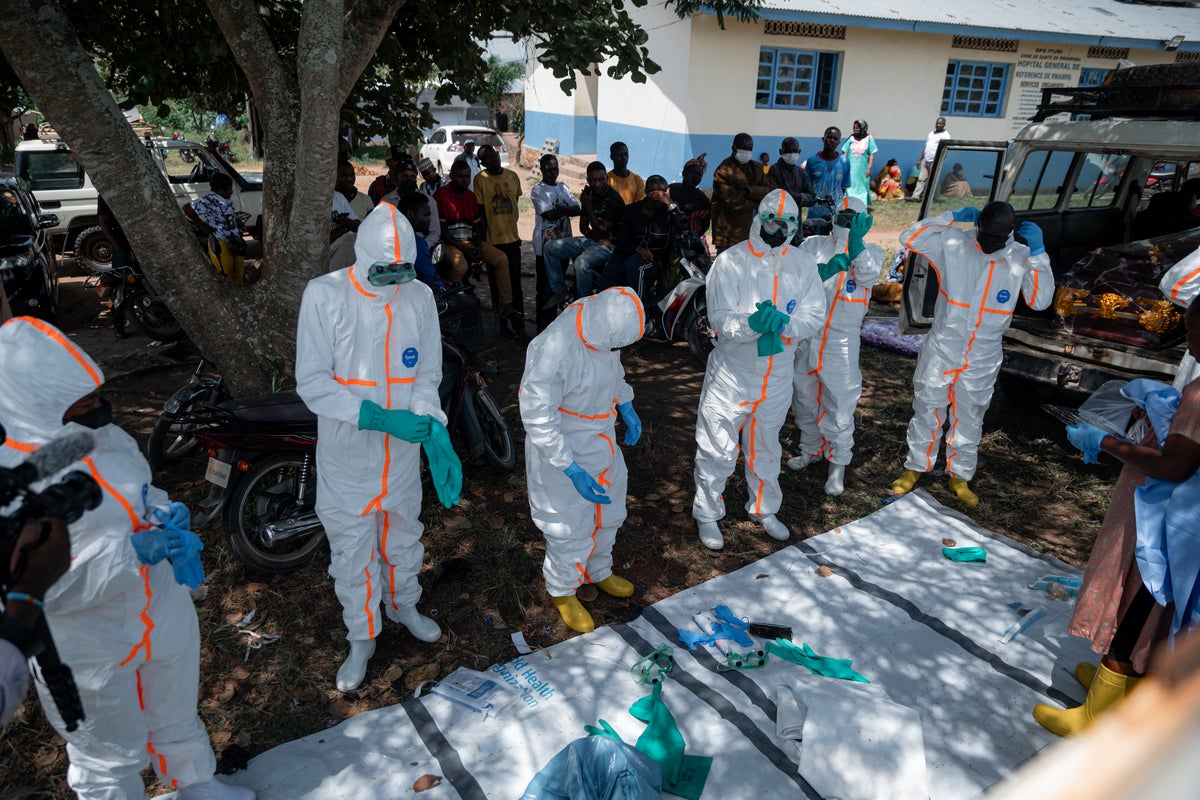
Humanitarian groups are facing this wall of infection while severely hamstrung. Deep global aid cuts over the last couple of years have gutted local health infrastructure. Frontline clinics in some of the hardest-hit health zones don't even have basic personal protective equipment left.
The lack of gloves and gowns has already cost lives. In the early days of the outbreak in Bunia, a cluster of infections tore straight through healthcare workers who had no idea they were handling Ebola. Multiple doctors and nurses have already died, severely weakening an already threadbare medical network.
The Hidden Burden on Women
Outbreak statistics often scrub away the human dynamics, but the demographics of the 2026 outbreak reveal a stark trend. Roughly two-thirds of the confirmed cases in Congo are female patients, primarily clustered between the ages of 20 and 39.
This isn't a biological quirk of the Bundibugyo strain. It's a direct result of societal roles.
In these communities, women are the primary caregivers. When a child or spouse falls ill with severe vomiting and diarrhea, the "wet" symptoms where the virus is most intensely contagious, women do the hands-on nursing care at home.
Furthermore, traditional burial practices require family members to wash and prepare the bodies of the deceased. Because the Ebola virus can live and remain highly contagious in a corpse for up to three days after death, these deeply personal funeral rituals end up becoming super-spreader events. Women, who traditionally handle these preparations, bear the brunt of that exposure.
What Happens Next on the Global Stage
The United States has already responded by enforcing air travel restrictions. Passengers arriving from the DRC, Uganda, and neighboring South Sudan are being funneled through specific screening airports, including Washington-Dulles, Atlanta Hartsfield-Jackson, Houston George Bush, and New York's JFK.
The risk to the general public in Western nations remains incredibly low. An American health worker who contracted the virus in Congo was evacuated to Germany for isolation and treatment, proving that high-level containment protocols can keep localized exposures from turning into domestic outbreaks.
But isolationism won't fix the core problem. The Africa CDC and the WHO have launched an emergency continental response plan, rushing to pull experimental Bundibugyo vaccine candidates out of labs to start emergency clinical trials on the ground.
If you want to understand how this ends, don't look at airport screening lines in the West. Watch the contact tracing percentage in eastern Congo. Until that number moves from 20% closer to 100%, the virus will continue to outrun the response, regardless of how many borders are monitored.
The next immediate steps for international health agencies require a massive injection of funding to supply frontline rural clinics with basic protective gear and to fund local community leaders who can safely alter burial practices without alienating grieving families. Without those basic, low-tech interventions, the medical community will remain entirely defenseless against a strain we chose to ignore for over a decade.