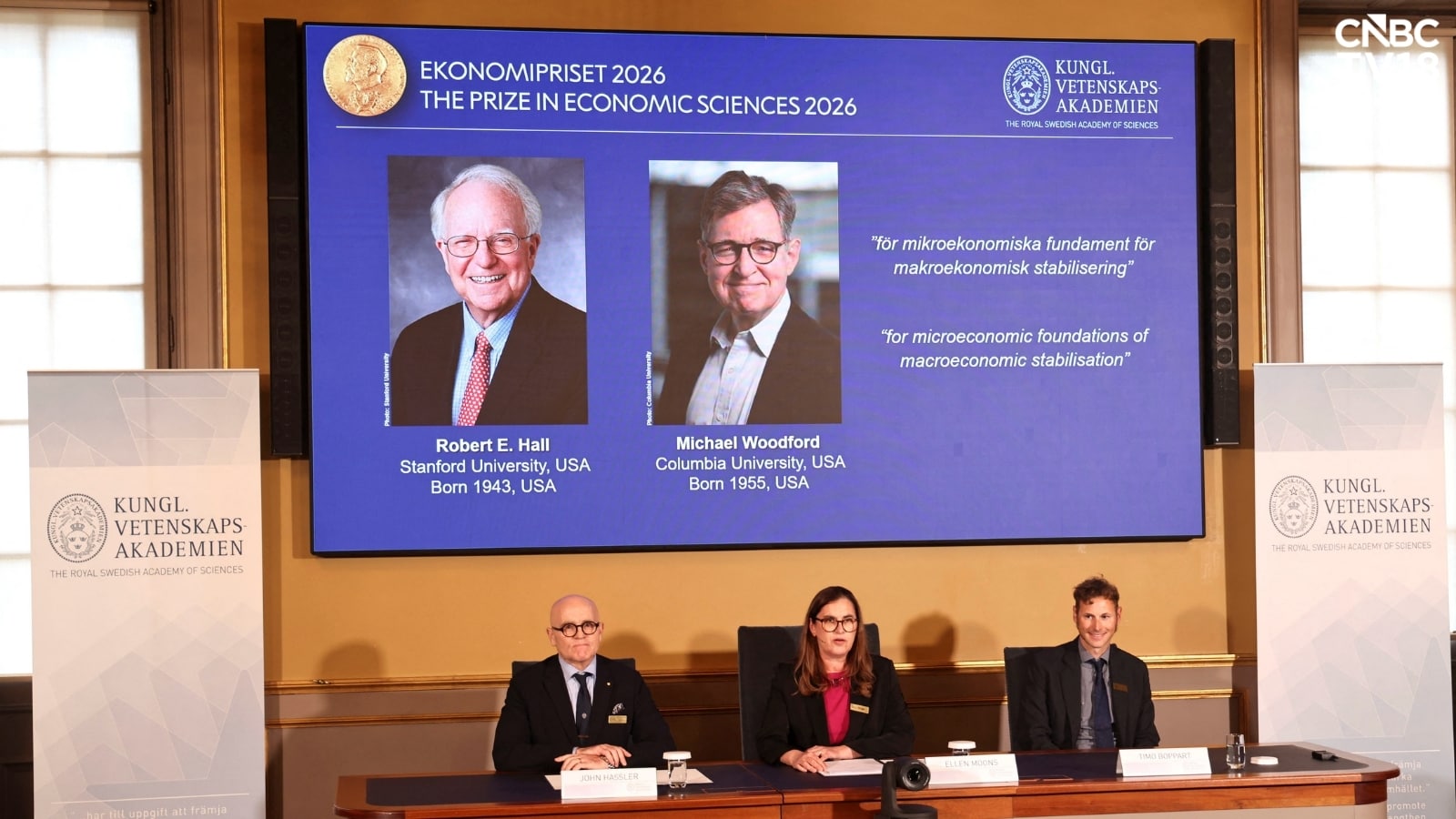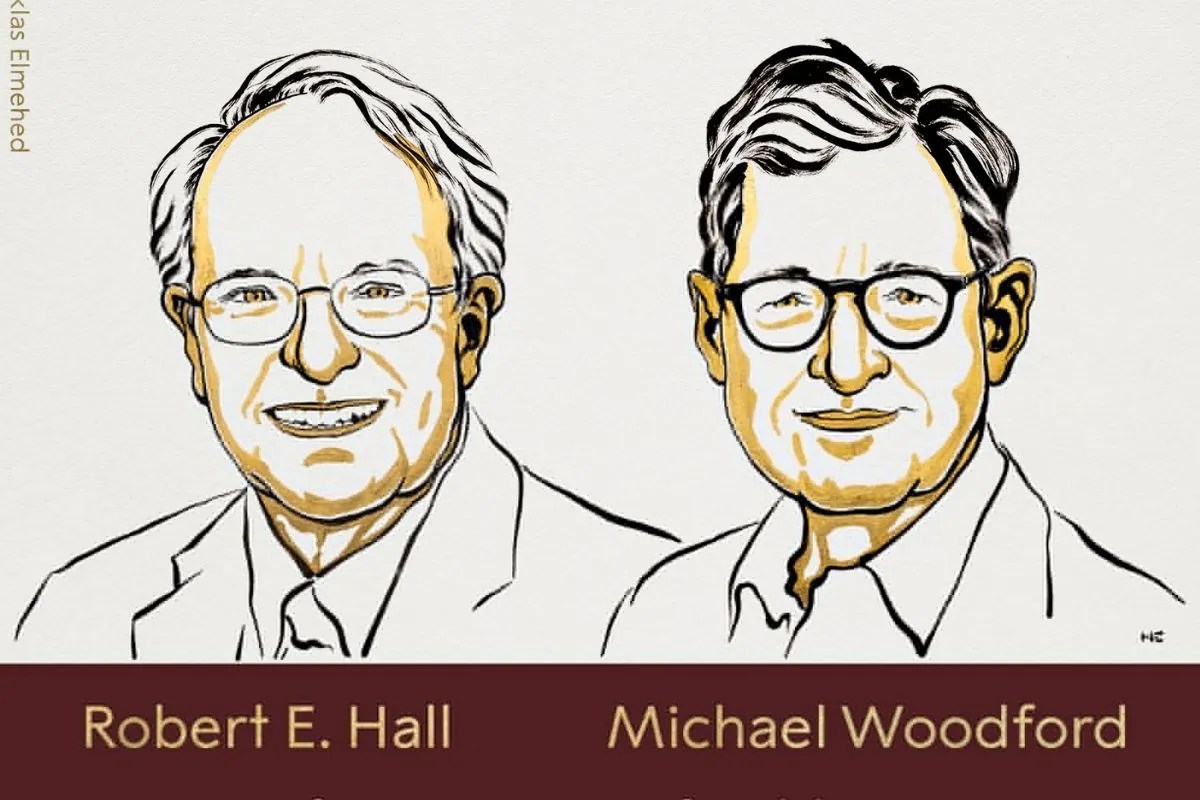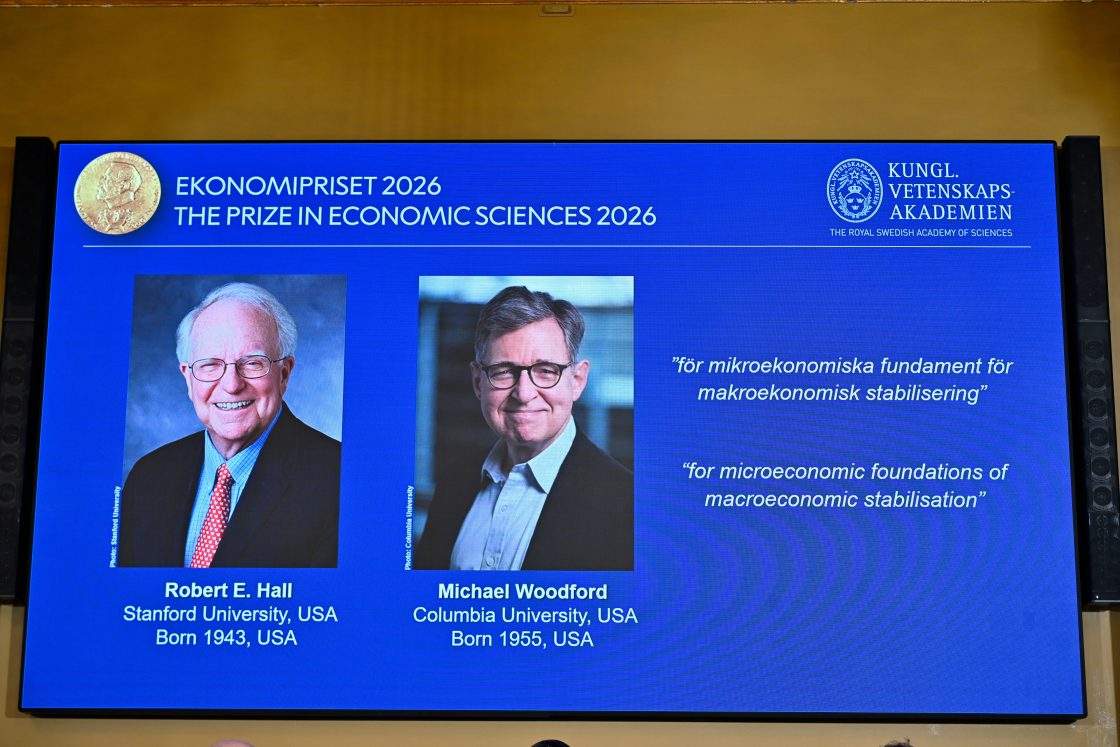
For decades, traditional economic modeling treated ordinary people and businesses like numbers on a spreadsheet, assuming that top-down government spending could always fix a broken market. That old playbook officially broke down when economists Robert E. Hall and Michael Woodford rewrote the rules of stabilization policy. Winning the Bank of Sweden Prize in Economic Sciences in Memory of Alfred Nobel, their groundbreaking work fundamentally changes how modern central banks and policymakers handle severe economic shocks.
If you have ever wondered why raising interest rates or injecting cash into the economy produces unpredictable results, the answers lie directly in the microeconomic foundations that Hall and Woodford spent decades mapping out. Their research shows that macroeconomics cannot function from a bird's-eye view alone. Real economic stability starts at the bottom up, driven by human psychology, future expectations, and daily household decisions.
Why the Old Keynesian Economic Model Stopped Working
Traditional economic management relied heavily on the prescriptions of John Maynard Keynes. Whenever a recession or an energy crisis hit, governments pulled two primary levers: they cut taxes and boosted public spending. The logic was simple. Put more money into circulation, and people will spend it, keeping businesses alive and factories running.
Then stagflation hit in the 1970s. The world economy experienced high inflation and high unemployment simultaneously, breaking the old trade-offs that policymakers relied on. The standard formulas failed because they treated consumers as passive absorbers of wealth rather than forward-thinking actors trying to survive an uncertain future.
Robert E. Hall and Michael Woodford attacked this limitation from different angles. They proved that macroeconomic outcomes are actually the aggregated result of millions of microeconomic choices made by everyday households and firms looking ahead.
How Consumer Expectations Drive the Entire Economy
Robert E. Hall focused heavily on how consumer spending habits are tied directly to future income expectations. People don't just spend whatever cash they happen to hold today. If they feel optimistic about tomorrow, they open their wallets. If they panic, they hoard cash.
In a landmark 1982 paper co-authored with Fredric Mishkin, Hall discovered that roughly 80 percent of households make spending decisions based on forward-looking expectations. The remaining slice of the population lives hand-to-mouth simply because they lack savings or access to credit.
This distinction matters immensely for modern central banks. When a crisis strikes, blanket stimulus packages fail if they do not account for how consumers view their long-term financial security. If families expect high inflation to erode their future purchasing power, standard government stimulus checks often go straight into savings accounts instead of driving retail growth.
The Power of Central Bank Communication
While Hall looked at households, Michael Woodford focused on businesses and price-setting mechanics. Woodford proved that companies do not set prices based solely on current production costs. Instead, they look ahead at what they think their competitors will charge and where interest rates are heading.
This insight transformed modern monetary policy. Woodford argued that central banks like the U.S. Federal Reserve must practice clear, predictable communication. If markets do not understand why a central bank is raising or lowering interest rates, businesses make defensive pricing choices that can trigger runaway inflation.
Central banks listened. Today, press conferences, forward-guidance statements, and transparent interest-rate projections are standard tools precisely because of Woodford's theoretical foundations. Clear communication anchors expectations, stopping panic before it starts.
What This Means for Future Financial Crises
The models built by Hall and Woodford became essential tools during the pandemic and subsequent global energy shocks. When supply chains fractured and inflation soared, policymakers had to look beyond basic interest rate adjustments. They needed to know how households would react to lockdowns, government relief, and sudden price spikes.
By shifting macroeconomic theory toward micro-foundations, these two economists gave governments a better steering wheel. They proved that economic stability is a psychological game as much as a mathematical one.
To navigate future economic volatility, policymakers must stop treating citizens as statistical anomalies and start factoring in how ordinary people form their expectations about the future. Keep a close eye on central bank messaging during your next market downturn. You are watching Hall and Woodford's theories in real time.