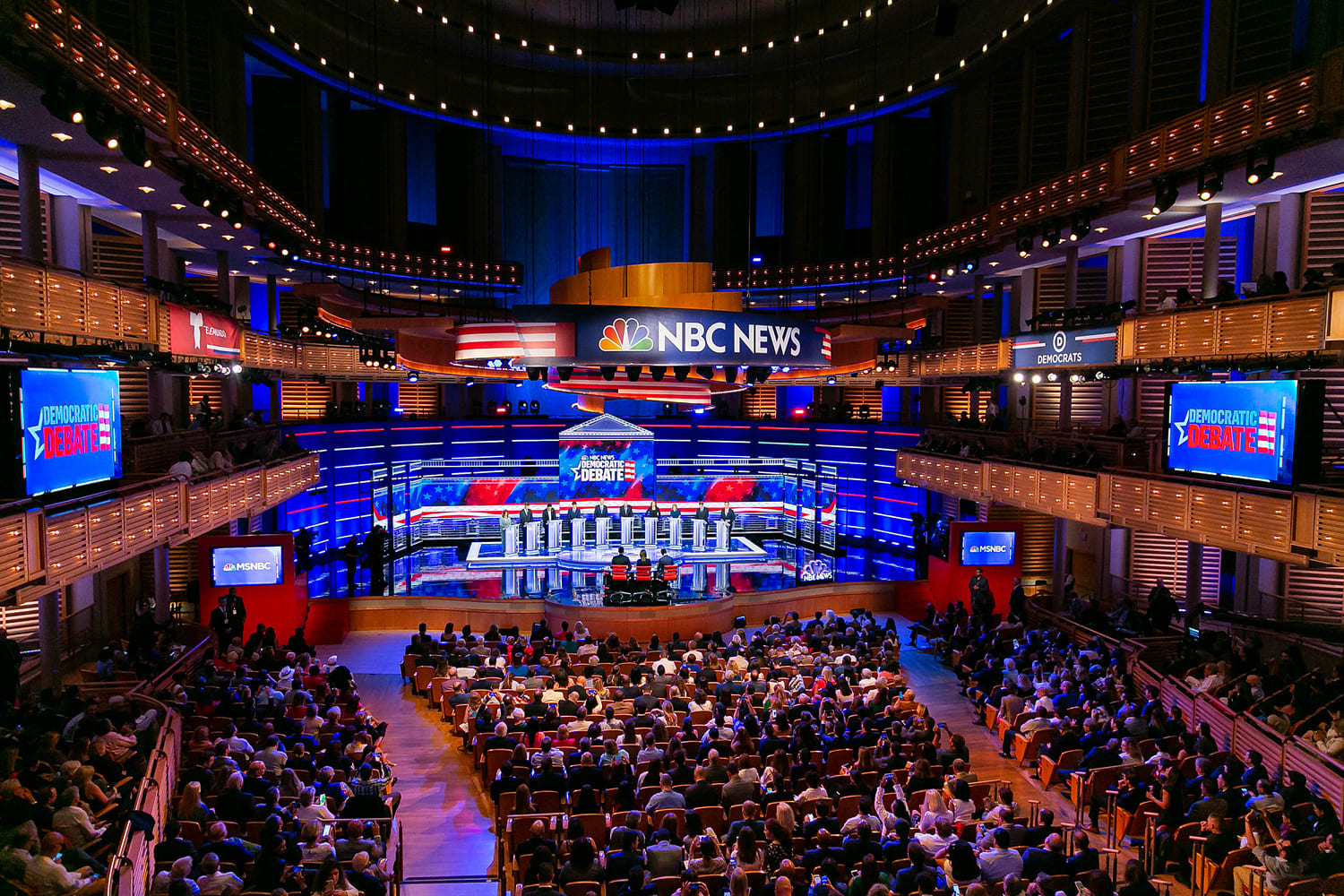
Twelve debates. Five in 2027, seven more in 2028, wrapping up in March 2028. Oh, and if you want to stand under those bright lights, you have to pledge to denounce dark money spent on your behalf.
That's the core of the framework the Democratic National Committee just rolled out for the 2028 presidential primary debates. Announced on November 23, 2026, right on the heels of big Democratic midterm gains, the plan sets out the broad structure before major contenders have officially jumped in to succeed term-limited President Donald Trump. Think of it as the opening whistle for a race with no obvious frontrunner yet.
Honestly, if you watch presidential primaries closely, a 12-debate schedule looks familiar. It echoes the 2020 cycle, when a sprawling cast of roughly two dozen hopefuls fought for oxygen across a dozen sanctioned forums. Yet the dark-money rule—pushed hard by DNC Chair Ken Martin—gives this rollout a real bite that 2020 didn't have.
Why the 2028 Democratic Debate Rules Matter Right Now
You might wonder why a party sets debate rules more than a year out from the first primary contest. Timing is everything in primary politics.
Once candidates launch campaigns, every rule looks like a targeted favor or a hit job aimed at a specific rival. Putting out the broad framework in late November 2026—after Democrats flipped both chambers of Congress in the November 3 midterms and won their largest House majority in over three decades—lets party leaders set ground rules while the field is still mostly theoretical.
Still, voters and insiders are asking practical questions. How many candidates can actually fit on stage? What counts as "dark money," and can a candidate really stop an outside group from spending? And how does this collide with state primary politics, especially in places like New Hampshire?
Here's the bottom line right up front. The DNC plans to cap each debate at 20 qualifying candidates across two consecutive nights if the field gets crowded, with early debates kicking off in June and July 2027. Exact polling and grassroots fundraising thresholds—along with specific dates, times, and locations—won't drop until January 2027.
The Dark Money Pledge and Outside Spending Trap
Let's talk about the rule that's going to cause headaches for campaign lawyers. For the first time, qualifying for a DNC primary debate requires candidates to pledge to denounce spending done on their behalf by dark-money groups—nonprofits that don't disclose their donors—and to report such spending to the committee.
Why did this become a centerpiece? Anti-corruption frustration was a major theme for voters in the 2026 midterms, and big outside spending has bruised Democratic primaries before. Look at what happened in the Michigan Democratic Senate primary in 2026: a super PAC tied to AIPAC spent more than $30 million against eventual winner Sen.-elect Abdul El-Sayed, drawing sharp criticism from figures like Sen. Bernie Sanders over outside money distorting primary contests.
In practice, though, enforcing a disavowal pledge gets messy fast. A campaign can't legally stop an independent super PAC or a 501(c)(4) nonprofit from airing an ad. Under the DNC's rules, outside spending itself doesn't violate the pledge—failing to denounce and report it does, which can make a candidate ineligible for the next debate.
What happens if a candidate has a friendly super PAC run a last-minute attack ad against a rival two days before a debate? Suddenly, a campaign has to decide whether to publicly slam its own allies on the record or risk losing the debate stage. That's a real political tension, and it won't play out cleanly every time.
Candidates must also pledge not to enter joint fundraising agreements with party committees or coordinate ad spending with state, county, or local parties during the primaries, with any improper spending subject to refund. Following a 2026 Supreme Court ruling that lifted limits on coordinated spending between candidates and political parties, the DNC says this firewall keeps party committees neutral during primaries and caucuses. Once the general election starts, that restriction lifts.
How 2020 Shapes the 2027 and 2028 Schedule
If you've ever watched a two-night, 20-person primary debate, you know it feels a little like speed-dating with a stopwatch. Each candidate gets maybe 60 to 90 seconds per answer, and viewers struggle to keep track of who's who.
The DNC is leaning back into that 2020 playbook. Just like in 2020, early debates can split across two nights with candidates randomly assigned into groups of up to 10 if more than 10 qualify. Twelve debates total—five in 2027 starting in June and July, followed by seven in 2028 through March—give hopefuls plenty of chances to introduce themselves, while also giving the party a mechanism to gradually winnow a huge field.
Let's be honest about the trade-off here. Too many debates late in the calendar can exhaust voters and turn a nominating race into a series of gotcha moments. Too few early on can lock out dark-horse candidates who haven't built name recognition yet. A 12-debate arc tries to split the difference, though campaigns will argue endlessly over whether the January polling and small-dollar donor thresholds are set too high or too low.
There's also a broader coalition angle worth noticing. Supporting voices cited around the rollout span different lanes of the party—from progressives like Sanders and Rep. Greg Casar to moderates and centrists like Sen. Andy Kim, Sen. Elizabeth Warren, Rep. Jason Crow, and former DNC Chair Jaime Harrison. Getting ideological wings to sign onto the framework early doesn't erase party friction—post-midterm gatherings like a Denver event already showed centrist-progressive strain—but it shows Martin trying to build procedural buy-in before rivalries harden.
The New Hampshire Collision and Early State Calendar
Debate rules don't live in a vacuum. They sit right next to the 2028 early primary calendar that the DNC adopted in August 2026.
Under that calendar, the party placed six states in the early window:
- South Carolina on January 22, 2028
- Nevada on February 1, 2028
- New Hampshire on February 8, 2028
- New Mexico on February 15, 2028
- Michigan on February 22, 2028
- Virginia on February 29, 2028
Here's where a trapdoor opens for candidates. Under the DNC's rules, participating in an unsanctioned primary can disqualify a candidate from DNC-sponsored debates. That puts a spotlight straight on New Hampshire, which has state law requiring it to hold the nation's first primary—a law Republican Secretary of State David Scanlan has indicated he plans to keep honoring.
Think about what a candidate faces if New Hampshire holds an unsanctioned contest earlier than the DNC's February 8 slot. Skip New Hampshire, and you risk angering local voters and losing earned media in a traditional battleground state. Run in an unsanctioned primary, and you could lose your spot on the DNC debate stage. Campaigns will have to walk that tightrope carefully.
Common Misconceptions About This Announcement
A few details from this rollout are easy to misread on a quick skim.
First, this isn't the whole rulebook yet. The DNC released a broad framework and an explainer site, while leaving exact polling thresholds, grassroots fundraising minimums, debate dates, and host cities or networks for January 2027.
Second, the dark-money rule isn't a blanket ban on every outside group ever existing. Rather, it centers on candidate pledges to denounce dark-money spending on their behalf, report it to the DNC, and avoid party-committee coordination or joint fundraising during the primary phase.
Third, the debate schedule isn't the only big logistical item on the DNC's plate. Picking the 2028 national convention host city—narrowed earlier in 2026 to Boston, Denver, and Philadelphia—runs alongside the primary build-up and shapes the entire summer finale.
Practical Next Steps for Following the 2028 Race
If you're tracking the 2028 Democratic primary—whether as a voter, activist, student of politics, or someone watching where the party heads next—don't get bogged down in hypothetical candidate rankings before the rules are finished.
- Bookmark the January 2027 DNC criteria release so you can see the exact polling and small-dollar fundraising numbers required to make the June and July 2027 debate stages.
- Watch how early 2027 hopefuls handle the dark-money pledge, especially when outside groups start running ads or counter-ads before a single ballot is cast.
- Track clashes over New Hampshire's primary date alongside the six-state early window stretching from January 22 to February 29, 2028.
- Compare candidate pitches across the six early states—from South Carolina and Nevada to New Mexico, Michigan, and Virginia—to see which coalitions hold up once debates actually begin.
(Note: If you're signed out right now, signing in to a Google Account can make it easier to save chats and come back to notes like this later as the 2028 race unfolds.)