Old chalkboards and lockers usually end up in landfills. Not this time.
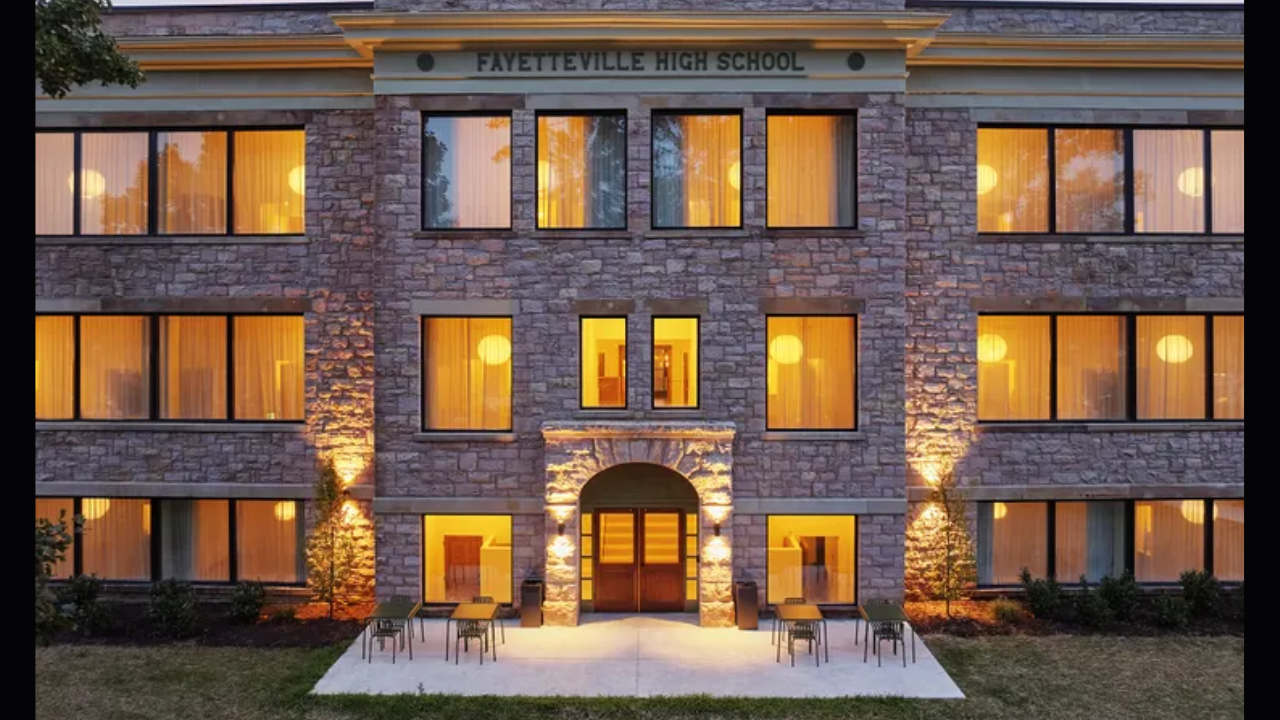
In downtown Fayetteville, West Virginia, a stone high school built back in 1923 has clawed its way back from the brink of abandonment. After sitting vacant for more than a decade, the historic campus now operates as the Hill Hall Hotel, a 40-room boutique destination. If you've ever wondered what happens when local heritage meets modern adaptive reuse, this project offers a masterclass in breathing new life into old masonry.
Let's look at why this renovation matters, how a century-old school layout became a luxury layout, and what you need to know if you plan to stay there.
The Backstory of the Hill Hall Hotel
The original stone structure wasn't just slapped together by any local crew. Back in 1923, skilled stonemasons who moved all the way from Piedicavallo, Italy, to Fayette County laid the cornerstone. For generations, the campus anchored the local community. But demographic shifts and changing school districts left the building empty, sealing its doors to the public for over ten years.
Enter Stephen Wendell. As the founder and CEO of Mountain Shore Properties and a native of Fayetteville, Wendell had personal skin in the game. Multiple generations of his family actually attended the school. Instead of watching a piece of local architecture rot or get demolished for a parking lot, his firm bought the old high school and a neighboring midcentury middle school to execute a massive restoration.
The timing isn't accidental. Ever since the surrounding New River Gorge gained official National Park status in late 2020, tourism has exploded. Visitors flood the area for white-water rafting, rock climbing, and mountain biking. Fayetteville needed more than just a gateway town—it needed places where people could stay and absorb local history.
Turning Classrooms Into Suites
Converting a 1923 educational building into a high-end hotel is an architect's logistical nightmare. School rooms aren't uniform hotel boxes. They vary in size, orientation, and window placement.
Instead of gutting the character to force a cookie-cutter layout, the design team leaned into the architectural quirks. Mae Pate, head of design at Mountain Shore Properties, mapped out custom configurations for every single one of the 40 guest rooms.
You won't find identical layouts here. Options range from compact 240-square-foot standard queen rooms to expansive 660-square-foot double king suites equipped with separate living areas and wet bars.
The old corridors and central gathering zones didn't get wasted either. They've been converted into shared lounges, reading nooks, and social spaces. Walk through the main lounge today and you will spot a massive custom mural painted by West Virginia artist Nichole Westfall, alongside vintage photographs, handmade ceramics, and curated library collections.
Eating, Working, and Local Touches
A good boutique hotel relies on local identity, not generic corporate branding. Hill Hall handles this through its food and community spaces.
The main restaurant, Patsy's, takes its name from Wendell's late grandmother, Pat "Patsy" Wendell. The menu skips pretentious fine dining in favor of Appalachian-inspired comfort food and family recipes, serving items like local Clear Water trout and regional meatloaf. If you get hungry late at night, a 24-hour guest pantry named Patsy's Provisions stays stocked for quick bites.
Outside, fire pits and open gathering areas encourage guests to mingle. Meanwhile, other buildings on the former school campus now host coworking spaces managed through the state-backed Ascend WV initiative. It bridges the gap between remote work culture and historic preservation.
The property is also part of Design Hotels, a portfolio under Marriott Bonvoy, which gives it international visibility while keeping its independent soul intact.
What This Means for Historic Preservation
Too many historic small-town buildings face a binary choice: demolition or decay. Projects like Hill Hall prove there is a third option.
When developers respect local roots instead of erasing them, communities win. You get economic fuel for nearby outdoor recreation, jobs for locals, and a tangible link to the past that you can actually touch, sleep in, and eat at.
If you head down to West Virginia to tackle the rapids or climb the gorge, skip the generic highway motels. Book a room where generations of local kids once learned their multiplication tables, and see what happens when history gets a second act.

.png?width=1200&auto=webp&trim=0%2C0%2C0%2C0)