History books love clean timelines. They tell us that trade routes defined ancient globalization and that luxury goods stayed locked inside imperial borders until official networks opened up. But history is rarely that tidy. Recent archaeological discoveries are flipping our understanding of early trade completely upside down.
New research proves that domesticated silkworm farming reached southern Central Asia four thousand years ago. That timeline shatters existing assumptions by nearly two millennia. If you thought the famous Silk Road was the exclusive vehicle for spreading East Asian sericulture westward, you're looking at a much older map.
What Investigators Actually Found in Uzbekistan
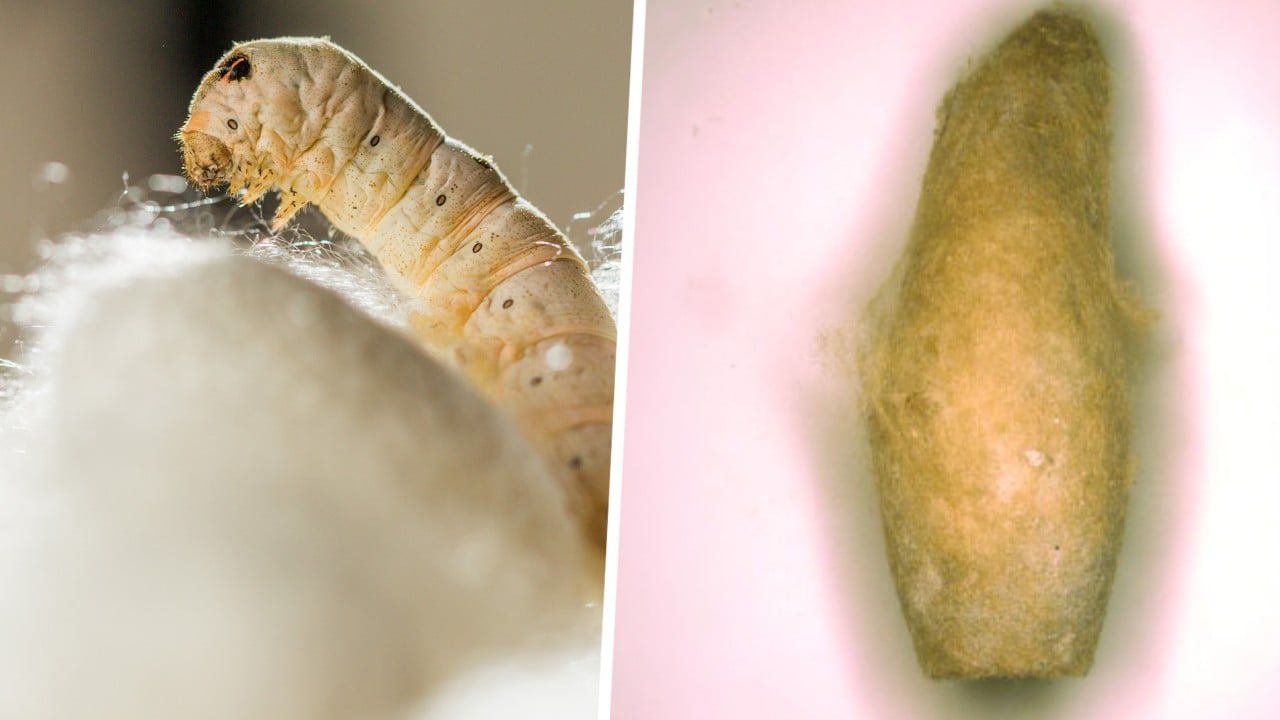
An international team of scientists working across institutions in China, Uzbekistan, Germany, and the United States published a study in Science Advances that changes everything. Excavating the Bronze Age site of Sapalli Tepe along the Surkhan-Darya River in Uzbekistan, researchers uncovered three remarkably well-preserved silkworm cocoons.
Finding fragile organic remains from four millennia ago is rare enough. Finding them outside China is unprecedented.
The team used direct radiocarbon dating alongside advanced protein fingerprinting. The results confirmed something remarkable. These cocoons belonged to Bombyx mori, the domestic silk moth species that cannot survive without human intervention and a steady diet of mulberry leaves.
They date back to between 1940 BCE and 1765 BCE. This makes them the oldest verified silkworm remains ever discovered outside China. Ironically, because of preservation challenges in Chinese soil, researchers even note that we don't have physical cocoons this old surviving inside China's own borders.
Rewriting the Ancient Exchange Network
For generations, historians pointed to the Han Dynasty and the establishment of the formal Silk Road during the second century BCE as the starting gun for Eurasian trade. Spices, glass, and silk moved between China and the Roman Empire, creating a massive economic corridor.
That narrative relied on the idea that sericulture technology was a closely guarded state secret. Central Asians supposedly only got finished textiles, rather than the means to produce them.
The Uzbekistan discovery breaks that assumption. Alongside the cocoons, archaeologists analyzed thousands of plant remains and wood charcoal fragments. They identified ancient mulberry wood (Morus) sitting right there in Bronze Age Central Asian deposits.
You don't have mulberry trees and domesticated silkworms unless you are actively attempting to raise them. Communities of the Bactria-Margiana Archaeological Complex weren't just importing luxury scarves. They were building an early, localized supply chain for silk production.
Why This Bronze Age Shift Matters
This wasn't an isolated accident. Scholars tracking early Eurasia note a broader pattern of ancient globalization happening long before official empires mapped out trade routes.
During the third and second millennia BCE, cereals, metallurgy, domesticated livestock, and fruits were already moving quietly across vast distances between East Asia, Central Asia, and South Asia. Silk was simply part of this larger, forgotten wave of prehistoric exchange.
People moved, technologies bled across borders, and local economies adapted far earlier than textbook chapters admit. When you look closely at the physical evidence, human innovation has always traveled faster and further than political boundaries allowed.
Stop treating ancient history as a series of isolated kingdoms waiting for major trade routes to wake them up. Long before empires built roads to showcase their power, local communities were already trading the impossible.