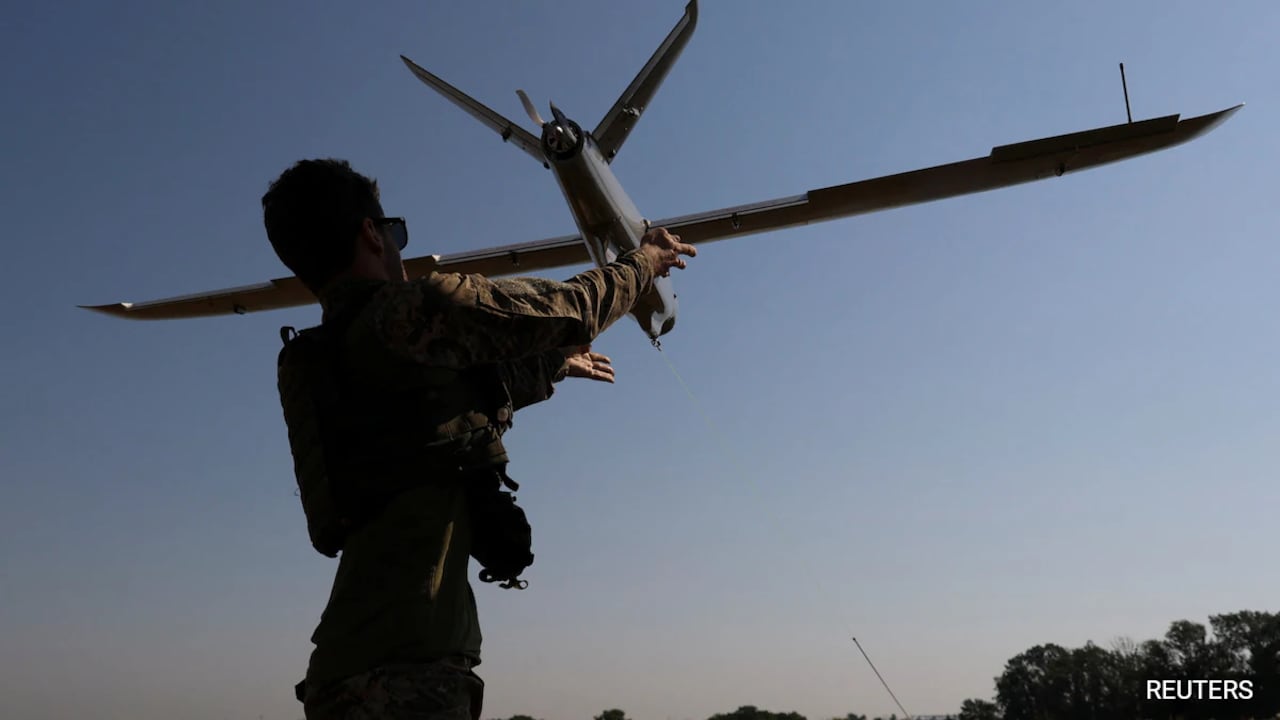
Sending humans to hook up a tow truck in the middle of an artillery duel is a terrible way to win a war. Yet right now, when an armored truck hits a mine or breaks an axle on the front line, that's exactly what happens. A massive, heavily armored recovery vehicle has to roll out, accompanied by a full security detail. Soldiers have to jump out into the dirt, manually crank heavy steel cables, hook up the disabled rig, and drag it back to safety. It's slow. It's dangerous. It kills people.
The military wants to stop doing this.
A newly issued request for information from the Army Applications Lab reveals that the U.S. Army wants robots to recover battlefield vehicles without risking a single human life. They aren't looking for simple remote-controlled trucks that require a soldier with a joystick to sit a few yards away. They want fully autonomous ground systems that can find a wrecked vehicle, navigate treacherous mud, figure out how to attach tow lines on their own, and pull the asset back to base.
This isn't a futuristic fantasy. The Pentagon has given defense tech companies a strict deadline of July 31, 2026, to submit real, workable proposals.
The High Stakes of Battlefield Vehicle Recovery
The war in Ukraine completely upended traditional ideas about safe rear areas. Cheap, fiber-optic flying drones can spot movement miles away and strike with terrifying precision. If a tactical truck breaks down on a modern battlefield, it becomes a magnet for enemy fire.
Under current doctrine, recovering that vehicle requires a massive footprint. You need the recovery vehicle itself, like an M88 heavy wrecker or a heavy tactical truck. You need an entire squad of soldiers to provide local security because a sitting truck is a prime target for an ambush. You need mechanics who know how to rig the cables under pressure.
Every minute spent hooking up a tow bar is another minute soldiers spend sitting in the kill zone. Human endurance limits the speed of these operations. Fatigue sets in quickly when you're dragging hundred-pound steel chains through thick mud while wearing full body armor.
The Army wants to eliminate that human vulnerability. If a robot gets blown up while trying to hook up a broken-down truck, you lose some metal and silicon. You don't have to write a letter home to a grieving family.
Inside the Pentagons Push for Autonomous Rigging and Towing
The technical hurdles here are immense. Navigating an uncrewed vehicle from point A to point B along a paved highway is relatively simple. Navigating a heavy autonomous tractor through shell craters, over unstable soil, and up steep hills to find a specific piece of twisted metal is a completely different story.
The military request splits this challenge into distinct problems that tech companies have to solve.
First, the machine has to find the disabled vehicle on its own. It can't rely on clean GPS data because the enemy will be jamming local signals. The robot needs onboard sensors, like radar and thermal imaging, to identify the target amidst the clutter of a chaotic war zone.
Second, the machine has to perform an autonomous rigging operation. Think about how hard it is for a human to hook up a tow truck to a car that rolled down an embankment. Now imagine a robot arm trying to do that to a scorched, misshapen military transport truck. The robot has to assess the structural integrity of the wreck, locate the standard towing eyes or frame points, clear away debris, and securely attach the recovery cables.
It requires a level of robotic manipulation and spatial awareness that goes far beyond anything currently deployed in warehouse automation. The software must adapt on the fly when a towing hook is bent or buried under a foot of clay.
The Reality of Operating in a Denied or Degraded Network
Military planners love to talk about connected networks, cloud computing, and real-time data sharing. On the front lines, those networks evaporate.
The Army explicitly warns that these robotic recovery missions will happen in environments where communication is denied, degraded, intermittent, and limited. Electronic warfare units will jam radio frequencies. Satellites will be blocked. You can't assume the robot can just stream high-definition video back to a base so a human operator can guide the mechanical arm.
The recovery machine must be smart enough to operate completely in the blind.
If the connection drops, the machine can't just stop and wait for instructions. It has to keep moving, calculate its own path, adjust its mechanical grip, and finish the job. This demands heavy onboard computing power. The vehicle needs a localized brain capable of processing vast amounts of sensor data without relying on an external server.
Mechanical Hands in the Mud
A lot of autonomous vehicle programs fail because they focus too much on the software and ignore the brutal physical realities of the field.
When a truck gets stuck in the real world, it's usually because the ground turned to soup. A robotic recovery vehicle needs the raw horsepower and specialized suspension to handle unpredictable terrain. Companies like Oshkosh Defense have spent years perfecting heavy independent suspension systems for manned trucks, and that mechanical foundation will be vital here.
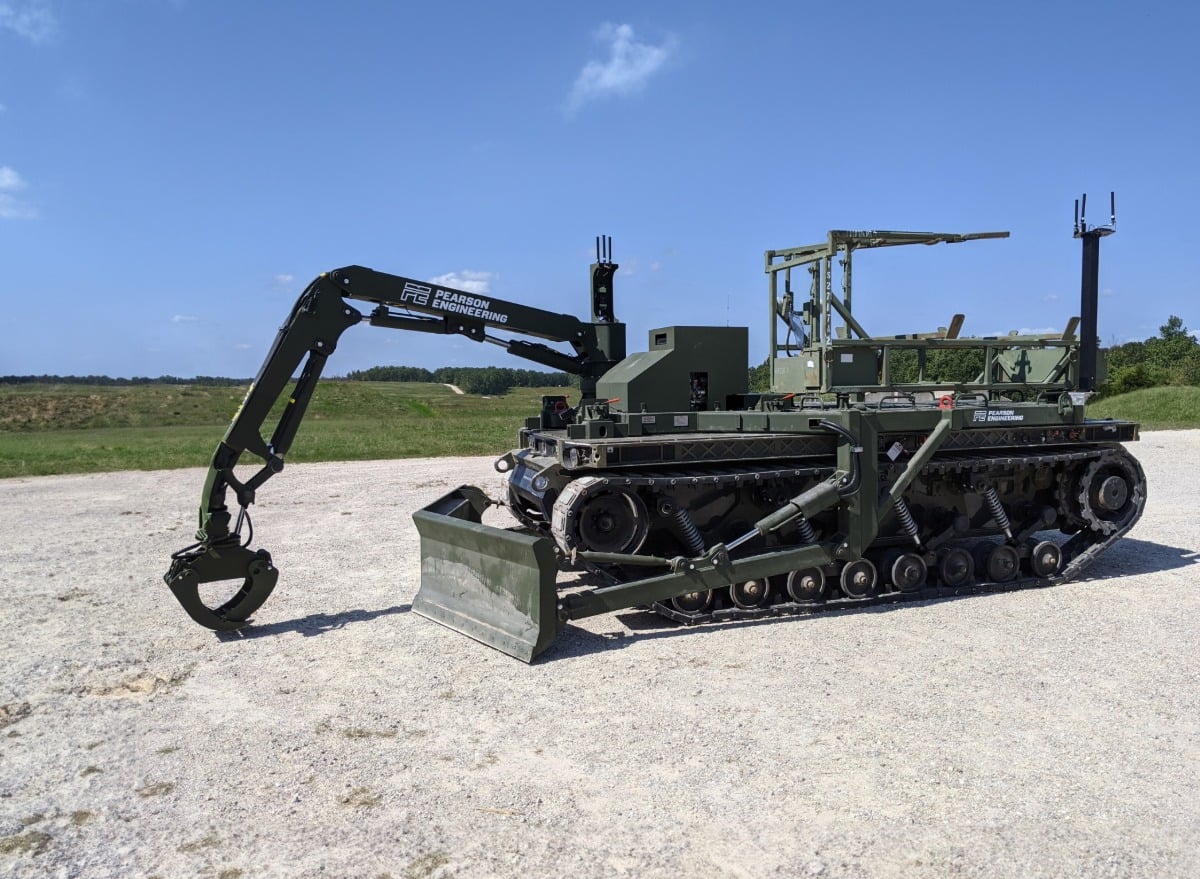
The actual tools used for the recovery must change too. Traditional winches require a human to pull the cable out and hook it onto a tree or another vehicle. A robotic system will likely need heavy-duty hydraulic arms equipped with specialized grippers or magnetic couplers that can lock onto a chassis without needing a human to loop a chain.
There's also the question of weight. The vehicles being recovered aren't light. A standard tactical wheeled vehicle can easily weigh over ten tons, while armored variants and heavy logistics trucks push far past that. The robot doing the pulling needs massive traction and weight to avoid simply spinning its wheels in the dirt.
What Comes Next for Military Logistics Contracts
The Army Sustainment Community isn't looking for slick PowerPoint presentations. They want to see physical prototypes and modified versions of platforms that already exist. This opens the door for defense giants to partner with commercial robotics startups that specialize in heavy machinery automation.
The immediate timeline is fast. Companies have until the end of July 2026 to send in their detailed technical approaches. From there, the military will filter out the noise and pick the most promising designs for real-world testing.
If you're an engineer or an investor in the defense tech space, your focus should be on the four core questions the Pentagon asked in its official brief.
- Develop navigation algorithms that don't fall apart when the GPS signal dies.
- Build robotic manipulators capable of clearing mud and locking onto standardized military hardware.
- Design heavy ground platforms that can maintain traction on steep, unstable embankments.
- Ensure the entire system can execute its mission with zero active data link to the outside world.
The shift toward uncrewed logistics is accelerating. We've seen autonomous cargo drones and self-driving supply convoys undergo field trials over the last two years. Bringing automation to the dirty, chaotic world of battlefield vehicle recovery is the logical next step. It's a massive technical headache, but the payoff is clear: keeping soldiers out of the crosshairs.
If you want to track where the big defense spending will go over the next five years, keep a close eye on the companies participating in this uncrewed recovery initiative. The tech developed for these muddy battlefields will likely filter down to commercial mining, disaster relief, and heavy construction sooner than you think. Everything starts with solving the rigging problem in the dirt.