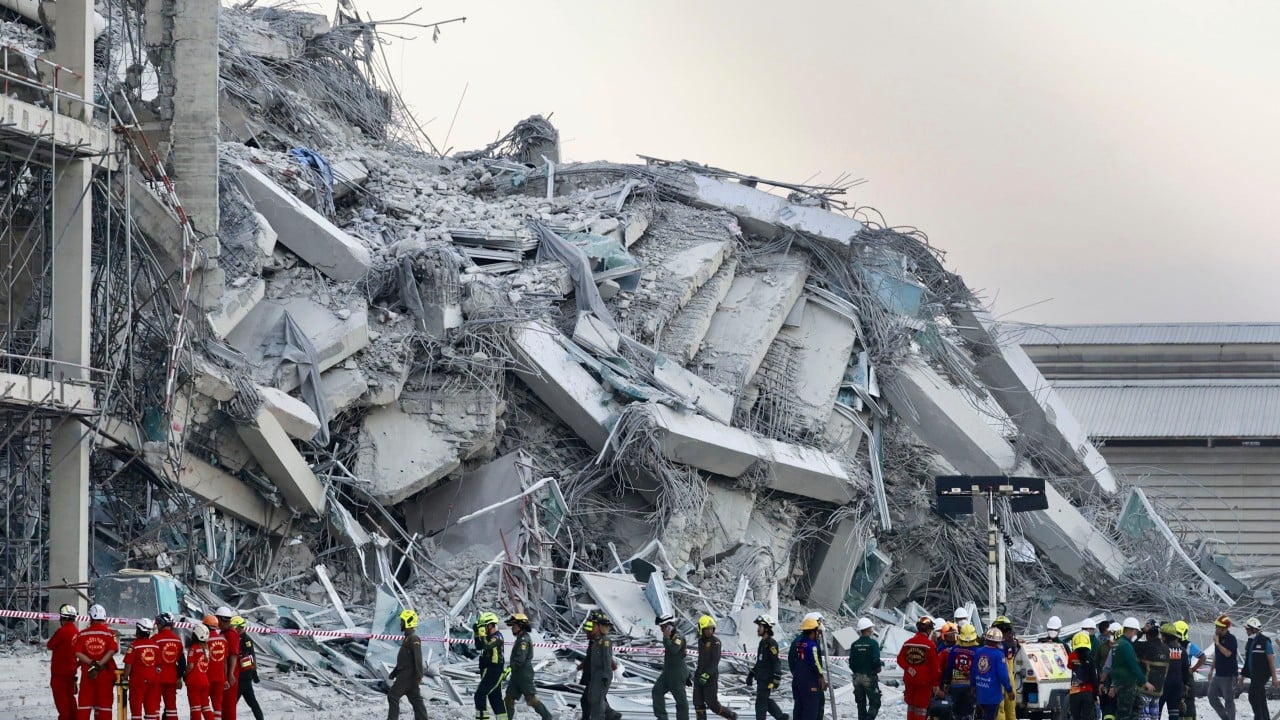
When a massive 7.7 magnitude earthquake struck Myanmar in March 2025, the shockwaves traveled over a thousand kilometers to rattle the Thai capital. Bangkok's soft soil amplified the seismic energy, yet out of the entire metropolis, only one brand-new skyscraper crumbled completely to the ground. That structure was the nearly completed State Audit Office building in the Chatuchak district, a project tied to a joint venture between Italian-Thai Development and China Railway No. 10 (Thailand) Co., Ltd.
The catastrophic structural failure claimed 96 lives, primarily migrant construction workers from Myanmar and Cambodia, and ignited widespread public outrage. Beyond the immediate tragedy, the disaster laid bare deep-seated issues regarding regulatory oversight, proxy shareholder loopholes, and corporate accountability in major Southeast Asian infrastructure projects.
Cracking Down on Proxy Structures
Months after the disaster, legal fallout hit a critical milestone when Thai courts handed down convictions and prison sentences to executives linked to the project. Investigators from the Department of Special Investigation focused heavily on how foreign entities circumvent local laws. Chuanling Zhang, a director of China Railway No.10, was initially apprehended at a luxury hotel on Ratchadaphisek Road following revelations regarding nominee arrangements.
Preliminary findings exposed how Thai nationals were allegedly utilized as proxy shareholders to bypass the strict limits outlined in Thailand's Foreign Business Act. This legal maneuvering isn't unique to this single project; it represents a widespread shortcut used by foreign corporations eager to secure lucrative state biddings without maintaining transparent local partnerships. When local names are rented out merely to satisfy bureaucratic checkboxes, accountability evaporates.
Material Quality and Seismic Realities
The disaster also brought intense scrutiny onto construction inputs. The State Audit Office tower was built with a budget exceeding two billion baht. Yet, investigators quickly began examining whether the materials utilized, including steel bars supplied by associated vendors, met required structural integrity standards.
While the Myanmar earthquake provided the external trigger, engineering experts immediately questioned why this specific high-rise pancaked while surrounding skyscrapers weathered the tremors. Buildings under construction are vulnerable, but total structural disintegration points to fundamental flaws in design execution, load distribution, or material strength. Compensation payouts provided to families by contractors cannot retroactively fix systemic compliance failures or restore lost lives.
The Broader Regulatory Reckoning
For foreign contractors operating across Southeast Asia, the Bangkok disaster marks a definitive turning point. Governments are tightening enforcement against nominee setups and corporate shell games. When large international corporations treat local regulations as mere administrative nuisances, the human cost can be devastating.
Transparency isn't just about ticking boxes on a compliance form; it is the baseline requirement for public safety. Moving forward, authorities across the region are signaling zero tolerance for shortcuts that bypass legal frameworks. If foreign firms want access to major public works, they must operate under absolute transparency, adhere strictly to local building codes, and ensure that every tier of management remains legally accountable.
The Bangkok Tower Collapse: Built by a Chinese State Contractor
This video provides an in-depth look at the engineering and structural factors surrounding the tragic collapse of the Bangkok State Audit Office building.