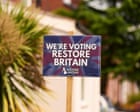
A proposed move at the Church of England General Synod could bar clergy from joining or backing Restore Britain, echoing a 17-year-old restriction aimed at the British National party.
Honestly, this is less a simple vote and more a test of how much political boundary-policing an established church can enforce without sparking a nasty internal fight. The motion sits right where theology meets street-level politics. Christian symbols and language are increasingly pulled into hard-right campaigns, and some pastors have cheered those overlaps on. Meanwhile, plenty of parish priests worry about getting dragged into party-political policing when they already have enough on their plates.
If you're searching for what this ban would actually do, the short answer is that nothing changes overnight. A private member's motion starts a debate and puts pressure on leadership, rather than instantly rewriting clergy discipline or every local parish relationship.
Why the General Synod ban on Restore Britain matters now
Look at the timing and the tension behind it. A newly elected General Synod, formally inaugurated by King Charles III in November 2026, is still finding its footing. At the same time, groups like Restore Britain—led by Rupert Lowe and positioned further right than Reform UK with ethnic nationalist and anti-immigration themes—are trying to turn cultural grievances and Christian identity markers into political momentum.
From where I sit watching church-state friction in Britain, the real flashpoint isn't just party membership. It's symbolism. When cross flags, church buildings, or claims about "Christian heritage" get waved at rallies alongside hard-line anti-immigrant or anti-Muslim rhetoric, ordinary churchgoers and clergy feel caught in the middle. Some see a clear moral line that needs drawing. Others think heavy-handed bans make martyrs out of fringe actors and turn church governance into a culture-war battleground.
There's also a practical twist. The Church of England is an established church with a nationwide parish footprint. Unlike a small sect that can expel a member with a quick committee vote, the C of E deals with centuries of canon law, local parish dynamics, and tricky questions about what counts as "supporting" a party in public life.
The BNP precedent from 17 years ago
The playbook people keep pointing to is the bishops' stance against the British National party (BNP) 17 years ago. Back then, senior leadership declared BNP membership or support incompatible with Church of England teaching on racial equality.
That precedent gave the Church clear moral language. It said, in plain English, that certain ethno-nationalist politics clash with core Christian convictions about human dignity and welcome.
Yet comparing 2009 to 2026 shows why a copy-paste approach can stall. The BNP had a notorious, explicit history that made drawing a bright line straightforward for many bishops. Restore Britain operates in a messier, more fragmented right-wing space, mixing local grassroots groups, sharper online messaging, and arguments framed around national renewal and cultural defense. Drawing the line between "defending heritage" and "ethnic nationalism" is much trickier to draft into a rule that holds up under scrutiny.
What people get wrong about church bans and clergy politics
A lot of commentary treats a General Synod motion like a courtroom verdict. That's just not how the Church of England works.
- Myth one: Synod votes immediately strip priests of their collars. Passing a motion or expressing a view doesn't automatically defrock anyone. Clergy discipline sits inside legal and safeguarding frameworks, including updated conduct rules that the Synod has been reforming.
- Myth two: Clergy have no political opinions anyway. Parish priests live in real communities. They argue about housing, local schools, cuts to council services, and immigration just like everyone else. The friction starts when private political backing collides with public ministry and claims to speak as the Church.
- Myth three: Banning a party settles the cultural argument. Even if clergy are barred from joining or backing Restore Britain, that doesn't stop activists outside the church from claiming Christian symbols. A rule can shape what ordained ministers do; it can't control every banner flown at a protest.
Honestly, I've seen institutions underestimate how fast grievance politics adapts. You ban one label or one group, and the same ideas show up under a softer slogan or a local campaign name. Anyone pushing this motion needs to think past the headline vote and ask how enforcement would actually look on a rainy Tuesday in a struggling market town.
Three fault lines that could trip up the motion
If this reaches a full General Synod debate, three arguments are going to dominate the room—and none of them are easy to brush aside.
Free speech and conscience inside a broad church
The Church of England has always housed sharp disagreements, from conservative evangelicals to progressive liberals. Some members will argue that restricting clergy from backing a registered political party crosses into policing political conscience. Even priests who strongly dislike Restore Britain's politics might hesitate to back a broad ban if they fear the precedent could later be used against other political stances.
Defining what counts as "supporting"
Joining a party is easy to spot on paper. "Supporting" is grey. Does it mean standing as a candidate or speaking at a party event? What about liking posts online, sharing a flyer, or agreeing with a point about border control? If a policy is vague, clergy won't know where the guardrail is—and bishops won't want endless borderline complaints landing on their desks.
Protecting vulnerable congregations from division
On the other side, proponents have a serious point. When a local vicar or pastor aligns openly with hard-right nationalism or anti-Muslim activism, minority church members and local neighbors notice right away. For congregations trying to build trust across diverse neighborhoods, silence from church leadership can feel like tacit approval.
How this compares to other recent church and state shifts
It helps to zoom out a bit. Church governance in England isn't sitting in a vacuum. Recent Synod sessions have wrestled with heavy practical pressures—from maintaining aging parish buildings and supporting clergy wellbeing to overhauling safeguarding and conduct processes. Meanwhile, Parliament has been moving legislation to modernize rules around advising the monarch on senior church appointments, ending historic exclusions for Catholic and Jewish prime ministers.
Put those pieces together and you see a clear pattern. The relationship between faith, national identity, and public institutions is being renegotiated from several angles at once. A debate over Restore Britain isn't a random distraction; it's part of a much bigger argument over what "national church" actually means in modern Britain.
If you want to follow this story without getting sucked into outrage bait, focus on the exact wording of any motion brought forward, who seconds it, and whether bishops weigh in with formal guidance. That's where the real signal lives.
Practical steps if you're tracking or responding to this debate
- Read the primary Synod papers, not just hot takes. Check official Church of England General Synod agendas and summaries when motions are tabled so you know what is actually being proposed versus what pundits wish were happening.
- Watch the distinction between bishops' statements and Synod motions. Historically, statements from the House of Bishops carry moral weight, while formal Synod business shapes wider church policy and legislative tracks.
- Look at local parish context before judging. A debate in London or York looks different on the ground in towns facing economic strain or rapid demographic change; pay attention to how local dioceses talk about unity and safeguarding.
- Keep an eye on boundary definitions. If a restriction moves forward, watch how it defines party membership, public endorsement, and use of church titles or premises.