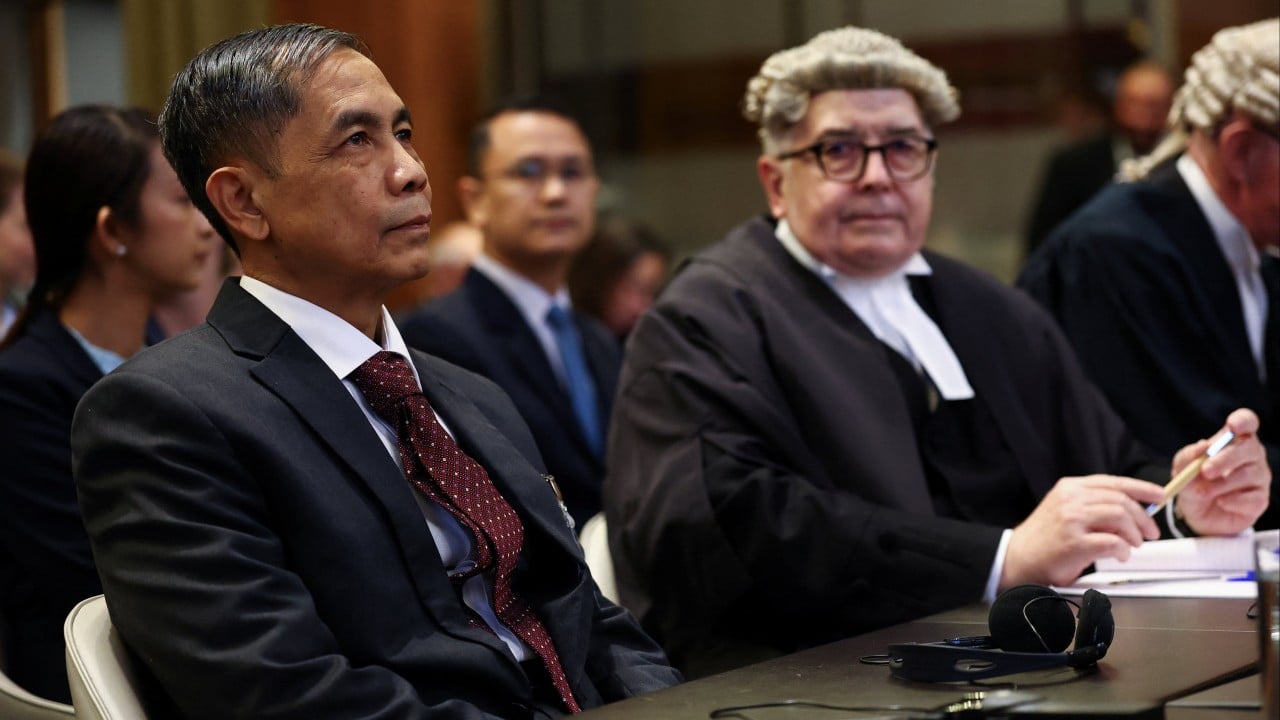
Beijing isn't about to walk away from Naypyitaw just because judges in The Hague slapped Myanmar with a genocide verdict. On November 19, 2026, the International Court of Justice ruled 9–6 in The Gambia's case that Myanmar committed genocide against the Rohingya during its 2017 military crackdown, marking the first time the world court has held a state responsible for genocide. For anyone watching China Myanmar ties, the real question isn't whether Beijing will suddenly turn moralist and cut off its neighbor. It's whether a legally binding genocide judgment complicates how China manages border trade, port projects, and armed factions inside a fractured country.
Honestly, people who expect a dramatic diplomatic breakup miss how Beijing operates when its own security and trade routes are on the line. China already backed Myanmar's military through the 2021 coup, through years of brutal civil war, and through Min Aung Hlaing's transition from junta chief to president in 2026 after staged elections. When Chinese Foreign Ministry spokesperson Guo Jiakun pushed back on the ruling—calling it unhelpful for dispute settlement and warning against perceived jurisdictional overreach—that reaction fit a script Beijing has followed for years.
Still, "no breakup" doesn't mean "business as usual." A genocide ruling changes the political temperature in Geneva and New York, gives Rohingya advocates and Western governments fresh ammunition, and lands right in the middle of active fighting in Rakhine State—the exact coastal region where China wants to anchor major infrastructure. If you're trying to read what happens next between Beijing and Naypyitaw, you have to look past the diplomatic speeches and watch the ground realities.
How China Myanmar Ties Are Shaped by the Genocide Ruling
When the ICJ delivered its judgment in The Gambia v. Myanmar on November 19, 2026, presiding judge Yuji Iwasawa laid out findings that go far beyond vague condemnation. The court found genocidal intent in the 2017 clearance operations that killed an estimated 10,000 Rohingya and drove roughly 700,000 into neighboring Bangladesh, alongside systematic village destruction, violence aimed at preventing births, and breaches of earlier orders to preserve evidence. It ordered Myanmar to halt atrocities, investigate culprits, facilitate safe return and restitution, and report back within two years, with compensation amounts to be settled later.
Yet in Beijing, that verdict doesn't flip a switch. As Al Jazeera reported, one of the ICJ's judges is Chinese and voted against Myanmar on all but one count, while Chinese officials echoed Naypyitaw's complaint that the ruling wasn't unanimous and risked complicating matters. Even more tellingly, Beijing's pushback came right around a high-profile trilateral summit in Shenzhen with Russian President Vladimir Putin and U.S. President Donald Trump, where joint messaging cautioned international bodies against overstepping their jurisdiction.
From my perspective watching Asian security politics, Beijing treats international courts as tools that Western powers frequently use to pressure governments China prefers to keep aligned. You see that instinct clearly in how China handles the UN Security Council. After the ruling, the UK moved to expel Myanmar's defense attaché and pushed for Security Council attention, while rights groups urged tougher sanctions. According to PBS NewsHour, Daniel Forti of the International Crisis Group pointed out that China—alongside Russia—has long discouraged Security Council action on Myanmar and is unlikely to support enforcement measures that erode its leverage next door.
That doesn't make Beijing immune to reputational drag. Whenever Western diplomats point to a formal genocide finding, China faces sharper scrutiny for arming, trading with, or hosting Myanmar's leadership. President Xi Jinping met Min Aung Hlaing in Beijing in June 2026, and Beijing has invested heavily in keeping a cooperative government in Naypyitaw. A genocide label makes defending that relationship awkward in global forums, even if it won't force Beijing to abandon it.
What Most Analysts Miss About Rakhine State and Border Trade
Here's where a lot of commentary gets lazy. Analysts often treat the Rohingya case as a self-contained legal story from 2017, forgetting that northern Rakhine State in late 2026 is a live war zone. Since late 2023, fighting between Myanmar's military and the ethnic Arakan Army has engulfed Rakhine, trapping Rohingya civilians between competing forces and documented abuses. Reports from Human Rights Watch and the Independent Specialists on Myanmar (ISP-Myanmar) highlight heavy airstrikes and intense clashes across Rakhine townships, including escalating fighting around Kyaukphyu.
Why does Kyaukphyu matter so much for China? Because Kyaukphyu sits on Rakhine's coast and anchors major Chinese-backed infrastructure ambitions, including deep-sea port and corridor plans meant to give China an Indian Ocean outlet that bypasses the Strait of Malacca. You can't build or secure big-ticket ports and pipelines smoothly when fighting flares nearby and civilian displacement is soaring.
At the same time, China's bigger headache with Naypyitaw right now isn't actually a lecture from The Hague. It's friction over border trade and armed groups. Look at what happened in mid-November 2026: Myanmar Now reported that Min Aung Hlaing rejected Chinese efforts to reopen a key border trade route, warning in parliament that trade flowing through areas held or influenced by ethnic armed organizations strengthens his rivals. Only a handful of Myanmar's 17 border trading towns were operating normally, while ethnic armed groups—including the MNDAA and TNLA in northern Shan State, as tracked by The Irrawaddy—have been opening or upgrading crossings and engaging with cross-border commerce on their own terms.
Think about the bind that puts Beijing in:
- Naypyitaw wants monopoly control: Myanmar's leadership fears that cross-border trade and China's Belt and Road links will bankroll rival armed groups if they run through rebel-held ground.
- Rebels hold real territory: Ethnic armed organizations control vital border gates and large swaths of territory, meaning Beijing can't simply wish them away if it wants goods and energy moving.
- The ICJ ruling adds political friction: While China backs Naypyitaw against international legal pressure, the ruling gives critics another reason to attack Myanmar's military and complicates any tidy "repatriation" plan in Rakhine.
In practice, a common mistake observers make is assuming Beijing has total control over Myanmar's generals. It doesn't. China has leverage—through trade, diplomacy, and border pressure—yet Min Aung Hlaing and his circle still push back when they feel their grip on power or revenue is threatened.
Repatriation, Sanctions, and the Real Limits of Enforcement
One of the biggest questions hanging over this ruling is whether it will actually bring Rohingya refugees home from Bangladesh or elsewhere. Under the judgment, Myanmar is ordered to take steps toward restitution, safe return, and protection, and to submit a compliance report within two years. That sounds monumental on paper. In reality, returning hundreds of thousands of displaced people to Rakhine while fighting rages and citizenship disputes remain unresolved is a massive hurdle.
Beijing says it wants to play a constructive role in dialogue and repatriation, and China has occasionally tried to position itself as a regional mediator between Myanmar and Bangladesh. Yet without security guarantees on the ground in Rakhine—and with both Myanmar's military and the Arakan Army accused of serious abuses against civilians—promises of safe return ring hollow right now.
As Channel NewsAsia noted in examining what comes next, ICJ rulings are legally binding and can't be appealed, yet the court lacks its own police force to compel compliance. If Western countries try to pair the verdict with new sanctions or push for UN Security Council action, China will likely shield Naypyitaw diplomatically while quietly protecting its own economic and security interests.
What should you watch over the next few months? Don't just wait for another press release from Beijing or Naypyitaw. Watch who controls the ground around Kyaukphyu and key border crossings in Shan and Rakhine states, see whether Min Aung Hlaing budges on reopening trade routes, and track how the UN Security Council handles the UK's push. Those moves will tell you far more about the future of China Myanmar ties than any diplomatic talking point.
- Track border trade announcements: Watch whether Naypyitaw reopens contested crossings with China or keeps them blocked out of fear of empowering ethnic armed groups.
- Monitor fighting in Rakhine State: Follow credible local and international reporting on clashes near Kyaukphyu and across Rakhine to gauge risks to Chinese infrastructure and Rohingya civilians.
- Follow UN and regional diplomacy: Check upcoming UN Security Council discussions and ASEAN statements to see if legal pressure turns into concrete sanctions or stays bogged down by vetoes.