Why Black Friday Shoppers Raising Bags At Mall Of America Actually Matters
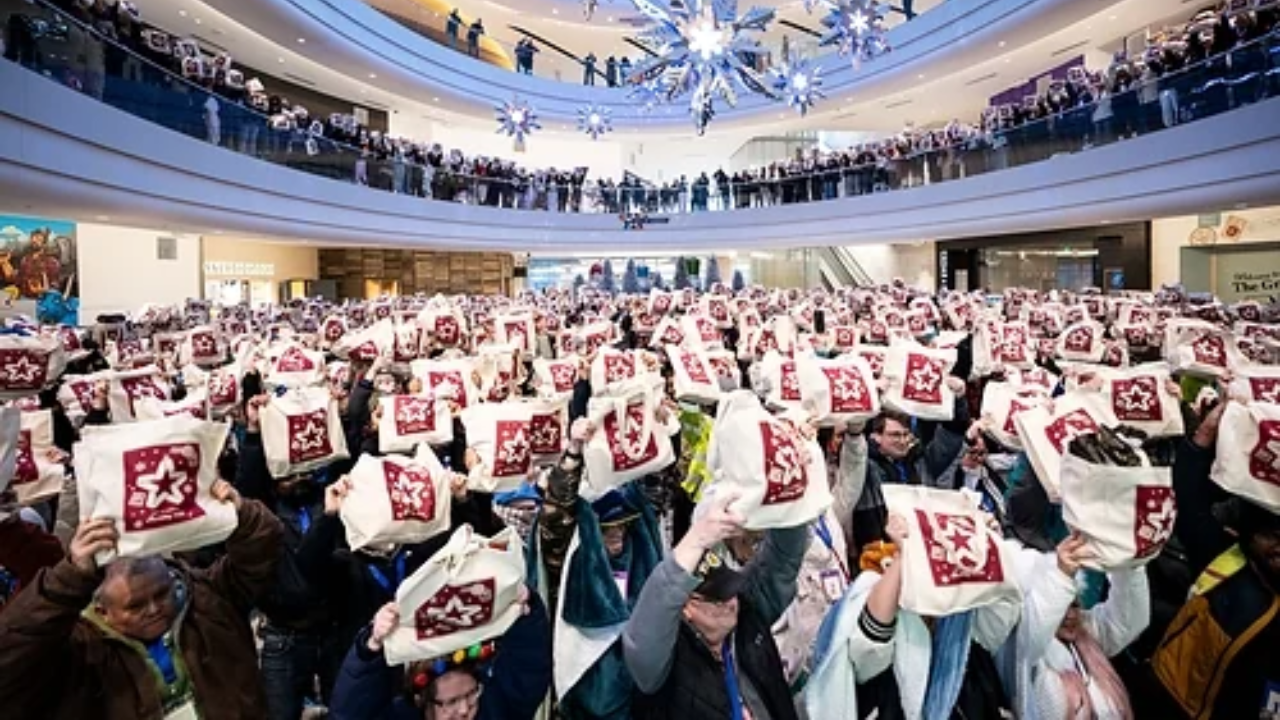
On Friday morning, November 27, 2026, 854 Black Friday shoppers at Minnesota's Mall of America lifted matching shopping bags into the air for 30 seconds and locked in a Guinness World Records title for the most people holding up the same shopping bag at the same time. Around 1,000 eligible guests stepped up for the attempt, and an official adjudicator verified 854 valid participants while the mall rolled out more than $100,000 in prizes.
At first glance, holding a tote bag overhead for half a minute sounds like pure silliness. Honestly, plenty of locals on Reddit rolled their eyes at the premise and called it a gimmick. Yet when you look past the confetti and streamers, this stunt reveals how brick-and-mortar retail survives when online checkout takes thirty seconds from a couch.
Most news recaps treat the record like a quirky side note between Thanksgiving leftovers and markdown racks. That misses the bigger point. Big-box malls don't win Black Friday on price alone anymore because Amazon, target.com, and flash apps match or beat plenty of doorbusters before sunrise. Malls win by turning shopping into a shared physical moment you can't replicate on a phone screen.
What Actually Happened Inside Bloomington That Morning
Doors opened at 7 a.m., though the real story started the day before. Shoppers began lining up on Thanksgiving—including Alex Geist and Silencia Monochromia, who arrived around 10:30 a.m. Thursday and camped out for the shot at prizes like a $5,000 Mall of America gift card. Waiting overnight in November in Minnesota takes a special kind of commitment, even when you're standing inside a massive indoor complex.
Once the crowd got in, the mechanics were dead simple. Eligible guests received identical bags packed with giveaways and rewards stated at $100 or more in value, with bag contents varying by guest. When the signal hit, shoppers raised those matching bags together for 30 seconds while a Guinness World Records adjudicator counted who met the strict rules. Out of roughly 1,000 participants taking part, 854 made the official tally.
The mall didn't stop at the record attempt. Across the celebration, Mall of America advertised more than $100,000 in prizes and giveaways, live entertainment, and holiday programming. Mystery scratch-off cards ranged from $10 to $599.99, featuring items like a gaming console, smartwatch, and hotel stays alongside other rewards. Three eligible record participants also walked away with shopping sprees of $5,000 and $2,500 in Mall of America gift cards plus a $1,000 lululemon gift card.
There's also a neat piece of context most quick hits skip: the 2026 event marked the 10th anniversary of Mall of America closing on Thanksgiving Day so employees could spend the holiday with family before the Black Friday rush. That detail changes the mood a bit. Instead of pushing doors open at midnight on Turkey Day, the mall compressed the energy into a Friday morning spectacle with a clear starting gun.
Why A Bag Stunt Beats A Boring Discount Sign
If you've ever worked retail marketing or watched holiday foot traffic up close, you know the hardest part isn't printing a "40% Off" sign. Anyone can slap a red sticker on a sweater. The hard part is giving people a reason to leave their house, deal with parking, and show up at a specific hour.
A synchronized bag lift works because it is effortless to understand and fun to film. You don't need choreography lessons, and you don't need to buy a specific SKU just to hold a bag up. Every person in that group becomes part of the frame rather than just a spectator watching someone else juggle chainsaws.
As Mall of America's chief business development and marketing officer Jill Renslow put it around the event, creating unique experiences sits right at the center of what the property tries to do. Look at how other retailers play with physical objects—Target, for instance, has leaned on its iconic red bag in past brand campaigns—but Mall of America turned the bag into a group action on site. You had to physically be there when the clock ran for 30 seconds.
In retail strategy, folks often call this "retailtainment," which sounds a little cheesy if you say it out loud at a dinner party. Strip away the jargon, though, and it's basic human nature. Going out with friends or family for a silly group record feels like an outing, not just an errand.
Separating Crowd Hype From Real Retail Math
Here's where I put on my skeptical hat, because flashy numbers get tossed around every November and people mix them up. Mall of America reported more than 15,000 shoppers entering during the first hour of Black Friday. That proves the building was buzzing early. It does not prove that all 15,000 showed up solely because of a Guinness title.
Same goes for the $100,000-plus prize pool. That figure tells you what the mall put on the table in giveaways, scratch-offs, and gift cards—not how much extra revenue cash registers rang up or how many of those first-hour visitors came back in December. Any marketer who treats a crowd count or prize total as automatic net profit is kidding themselves.
Let's be real about the critics, too. Some people look at records like "most people holding the same shopping bag simultaneously" and feel Guinness titles have gotten overly specific or overly commercial. That criticism isn't crazy. Branded records exist precisely because companies want third-party verification and press coverage for an event. Still, adjudicators enforce strict rules on counts and execution, which is why 854 out of roughly 1,000 participants passed muster rather than an automatic round number.
Even if a record is engineered as a promotional hook, it still has to deliver real value to the people standing in line. Giving away bags worth at least $100 each plus shots at big gift cards and scratch-offs meant participants got tangible perks whether they won a grand prize or not. Compare that to standing in line for three hours only to find out the one TV you wanted sold out online at 6 a.m.
What Shoppers Get Wrong About Big Black Friday Events
If you're planning to hit a massive retail event like Mall of America on Black Friday next year, a few common mistakes trip people up:
- Assuming "early" means you're first: Shoppers who camped out on Thanksgiving showed up hours and hours ahead of 7 a.m. Rolling into the parking ramp at 6:15 a.m. for a limited-cap giveaway or record attempt is basically showing up after the party started.
- Chasing grand prizes over everyday value: Big headline numbers like a $5,000 shopping spree grab attention, yet the odds on a handful of top prizes are always steep. Look at what everyone or most early arrivals get—like the $100-plus giveaway bags or $10 to $599.99 scratch-offs—and decide if that baseline payoff is worth your time.
- Forgetting the rules of the stunt: Guinness adjudicators don't grade on vibes. If a record requires holding an identical item a certain way for a set duration, missing the cue or holding the wrong thing can keep your spot from counting toward the official total.
- Treating Black Friday like the only sale of November: Retailers stretch promotions across weeks now. Going to a flagship mall on Black Friday makes the most sense when you want the atmosphere, live entertainment, and group energy—not when you just want a quiet, stress-free price check.
Practical Next Steps If You Want In Next Time
Want to catch a flagship retail event or record attempt without wasting a whole holiday weekend? Do this:
- Check official mall announcements in early to mid-November: Watch properties like Mall of America, local news outlets, and Guinness World Records listings weeks ahead of Black Friday to see exact eligibility rules, check-in times, and prize details.
- Read the fine print on eligible guests: Events with caps (like ~1,000 spots) often require wrist-banding, specific entry gates, or arriving before a cutoff. Plan your arrival around check-in rules, not just store opening time.
- Set a hard time-and-spend cap before you leave home: Decide the exact hour you'll bail if lines stretch past your comfort zone, and keep a list of what you actually need so "freebies" and hype don't nudge you into impulse buys you'll regret in January.