EU budget talks hit a brick wall in Brussels on Thursday, November 26, 2026, leaving the bloc's next seven-year spending plan unresolved and throwing a proposed €45 billion loan for Ukraine into limbo.
Leaders packed up early instead of grinding through a planned two-day summit. No deal came out of the room. Honestly, watching twenty-seven governments argue over both a multi-year blueprint and emergency cash for 2027 at the exact same time was a recipe for gridlock.
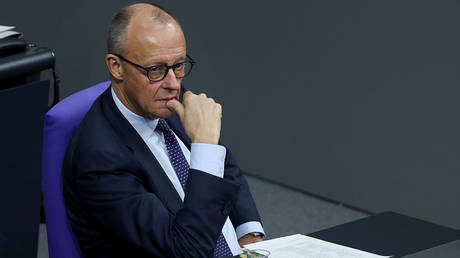
German Chancellor Friedrich Merz told reporters that positions remained far apart, while Finnish Prime Minister Petteri Orpo put it even more bluntly: leaders were nowhere near the finish line. The next European Council summit is set for December 17–18, which means the real political drama is only getting delayed by three weeks.
Why EU Budget Talks Unraveled in Brussels
At the surface, the summit looked like a standard tug-of-war between net contributors and net recipients over the 2028–2034 Multiannual Financial Framework. Look closer, though, and two separate fights collided in the same room.
One fight was about long-term structure. European Council President António Costa tabled a revised negotiating text that trimmed roughly 10% from the European Commission's initial proposal, while still pushing a sharp real-terms increase for defense and setting aside €15.6 billion for military mobility routes across Europe. According to European Council press remarks, a large majority of member states pushed back against squeezing agricultural subsidies and cohesion funds further, while some governments even wanted to roll back proposed cuts to cohesion.
The second fight was immediate and personal for several capitals. Nine days earlier, on November 17, the European Commission proposed a fresh €45 billion loan package to cover two-thirds of Ukraine's projected financing needs for 2027, including up to €25 billion in defense support on top of earlier EU backing. Merz has argued that collective EU action should bind all 27 member states rather than leaving opt-outs for a handful of capitals.
"When the European Union provides funding, it does so as the European Union – and that union consists of 27 member states, not 23 or 24." — German Chancellor Friedrich Merz, reported by The Guardian
That linkage turned a tough budget session into a high-stakes standoff. Countries that rely heavily on EU structural and agricultural transfers worry about losing leverage if Ukraine financing gets tangled with the 2028–2034 ceiling.
How Opt-Outs and Leverage Backfired
Back in December 2025, EU leaders agreed on a €90 billion loan facility for 2026 and 2027 while letting Hungary, Czechia, and Slovakia avoid financial liability for servicing or repaying it, as detailed in analysis from Responsible Statecraft. That workaround kept things moving at the time.
This round, Berlin signaled it didn't want another patchwork opt-out structure. Yet forcing reluctant capitals into a joint loan guarantee ran straight into fierce domestic pushback from Central European leaders.
- Slovakia: Prime Minister Robert Fico blasted the pressure tactics around the loan as "blackmail," reflecting Bratislava's hard line against taking on new debt obligations for Kyiv.
- Czechia: Prime Minister Andrej Babiš argued that Ukraine funding belongs on a separate track from the seven-year budget and demanded clarity on long-term costs and conflict strategy.
- Hungary: Prime Minister Peter Magyar said on X that the chances of a Thursday agreement were practically zero and warned that even a deal around Christmas looked doubtful.
- Bulgaria: Officials indicated support only for non-military assistance, highlighting how even non-veto capitals draw lines around defense spending.
Here is a mistake plenty of commentators make when reading Brussels summits: they treat a stalled council meeting as a permanent collapse. In EU budget politics, early walkouts and midnight format disputes are often negotiating theater designed to show domestic voters a leader stood firm. Still, the gap over unanimous liability is real, and you can't wave it away with procedural tricks.
What the Competitor Coverage Missed
The RT report on the collapsed talks captures several quotes from the summit—including remarks from Merz, Orpo, Babiš, Magyar, and Kremlin officials—and notes the protests in Brussels over austerity and agricultural cuts. That gives a snapshot of the noise around the meeting.
What it leaves out is the institutional machinery underneath. A seven-year EU budget isn't decided by heads of government alone. Even after the European Council reaches political agreement, it requires unanimous backing from member states and consent from a majority of the European Parliament's 720 members.
Recent Parliament maneuvering over the external-action and enlargement envelope—often grouped under Global Europe—shows MEPs aren't simply rubber-stamping cuts either. When European Council drafts trim external programs while member states fight over internal cohesion and farm money, the final compromise almost always shifts before December is done.
Another angle easy to miss is fiscal constraint inside the big spenders themselves. Merz has talked tough on both defense readiness and avoiding fresh debt, while governments across Europe face voter anger over cost-of-living pressures, public-sector strikes, and farm income squeezing. You're watching leaders try to square a circle: more security spending, lighter national debt, and fewer domestic budget cuts.
Unpopular Choices Nobody Wants to Own
Let's be honest. Nobody in Brussels wants to tell voters at home that their tax euros are going to an open-ended bill while domestic services feel tight.
At the same time, leaders in northern and eastern states like Denmark's Mette Frederiksen and the Netherlands' Rob Jetten view backing Ukraine and strengthening defense as basic survival insurance for European security. Meanwhile, southern and cohesion-heavy states watch every euro earmarked for new priorities to see if their regional funds get clipped.
That tension explains why Costa's meeting format drew complaints from frugal-leaning countries, with several preferring a full 27-member plenary rather than smaller or targeted groupings that felt like pressure tactics. When trust is thin, process itself becomes a weapon.
What to Watch Between Now and December 18
Anyone tracking European policy, defense contractors, regional grant recipients, or cross-border businesses shouldn't tune out just because Thursday's talks ended early. The real test comes in the run-up to the December 17–18 European Council meeting.
First, watch whether Berlin softens its all-or-nothing stance on the €45 billion loan or looks for a compromise structure that avoids a formal budget veto. A veto on the 2028–2034 framework would hurt net recipients badly, giving pro-budget capitals real counter-leverage.
Second, track the agriculture and cohesion battle. Member states made clear they don't want traditional programs hollowed out to pay for new priorities, which means any December deal will likely reshuffle numbers rather than settle the underlying fiscal math.
Third, pay attention to European Parliament signals. Even if leaders strike a deal in mid-December, MEPs have their own priorities on external funding, enlargement, and own resources that will shape the final text.
If you manage EU grant applications, advise clients on European public finance, or trade around eurozone policy headlines, take three practical steps right now:
- Audit grant exposure past 2027: Review any multi-year projects or regional co-financing plans tied to post-2027 EU programs and flag scenarios where cohesion or external-action lines face delays or revisions.
- Separate 2027 liquidity from 2028–2034 rules: Track the €45 billion Ukraine loan proposal as its own near-term negotiation rather than assuming it moves in lockstep with the seven-year MFF timetable.
- Prepare for a messy December finish: Build contingency timelines around the December 17–18 summit and subsequent Parliament negotiations instead of banking on clean, early consensus.