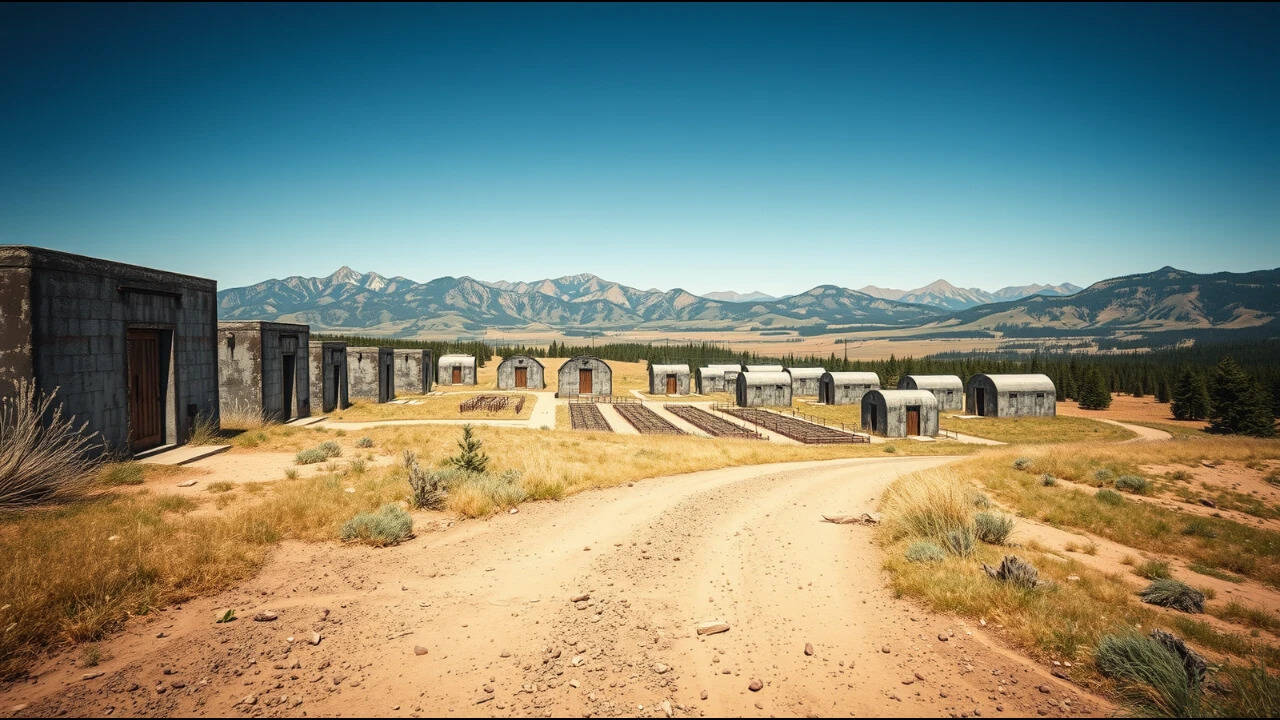
People dream of escaping global collapse by hiding underground. They picture stocked pantries, heavy steel doors, and absolute safety from whatever catastrophe headlines the news today. But reality tends to crash hard into romanticized survivalism. Out in the remote Black Hills of South Dakota, hundreds of decommissioned military structures were supposed to offer a foolproof sanctuary from the end of the world. Instead, they delivered a wave of bitter courtroom battles, eviction notices, and even gunfire.
If you look closely at what happened at the Vivos xPoint development near Edgemont, you will see a masterclass in how high-stakes investments can implode when contract law collides with off-grid isolation. If you found value in this post, you might want to read: this related article.
What Actually Is Vivos xPoint
Back in 1942, the U.S. military built an enormous ammunition depot featuring 575 concrete bunkers designed to store bombs and munitions. Those military structures sat completely empty for decades after the army packed up in 1967. Enter Vivos, a company that bought the sprawling property and rebranded it as an ultimate survival community.
The pitch sounds straightforward enough. Instead of buying land above ground, you secure a 99-year lease on a heavy-duty military concrete shell. Upfront costs range anywhere from tens of thousands of dollars up to $55,000, depending on the terms. For another look on this event, see the latest update from USA.gov.
There is a major catch that many buyers overlook. Vivos delivers an empty, unfinished concrete tube. You have to pump your own money into pouring floors, installing air filtration systems, wiring electricity, plumbing a septic setup, and building interior walls. You are basically buying an industrial cave and paying for a massive renovation project entirely out of your own pocket.
The Fine Print Catches Up With Residents
Dreams of sovereign independence rarely survive standard contract law. Take the case of Daniel Sindorf. He signed a 99-year lease in July 2020 after dropping a $35,000 upfront payment. Like other buyers, he entered into a legally binding relationship where the management company retained the right to alter community rules with just thirty days of written notice.
When management attempted to evict Sindorf over alleged rule violations—including disputes regarding firearms policies and conduct—he fought back. His legal team argued that because the company could change the rules at any time, the whole agreement was an illusory contract that held no legal weight.
A lower circuit court initially agreed with him. But the legal saga did not stop there. In April 2026, the South Dakota Supreme Court reversed that lower ruling. The state's highest court determined that the lease was fully valid because money changed hands for the promise of a bunker, meaning management could enforce its rules under standard guidelines of good faith.
Residents learned a harsh lesson. Signing a long-term lease for an off-grid sanctuary does not mean you are free from corporate governance or property management rules.
When Neighbor Disputes Turn Violent
Isolation does not cure human friction. If anything, high-stress environments tend to amplify neighborly disputes. The legal fallout at Vivos xPoint extended far beyond contract disagreements into physical safety concerns.
Consider the case of resident David Streeter, who purchased a bunker in July 2023. Court records show that after moving in with his family, Streeter quickly ran into severe issues with the local septic infrastructure. Frustration mounted as he blamed management for failing to maintain basic utilities, leading to escalating tensions with staff.
The situation deteriorated rapidly. Streeter claimed that management employees began monitoring his movements, making hostile gestures, and racing vehicles past his property at dangerous speeds. The boiling point arrived in August 2024. After a confrontation involving a Vivos employee driving past his bunker, a violent physical altercation broke out at Streeter's home involving a company contractor.
Streeter ultimately shot the contractor in the chest. While the man survived, the incident triggered massive civil litigation. Ultimately, the South Dakota courts upheld that Streeter acted within his rights under local self-defense and civil immunity laws. Yet, the underlying reality remained grim. A community built to protect people from external chaos was tearing itself apart from internal hostility.
What Survivalist Buyers Keep Missing
If you are looking into buying or leasing alternative properties for emergency preparedness, look past the marketing hype. Real estate developers selling apocalyptic safety nets are still running businesses. They rely on complex lease agreements, strict community guidelines, and centralized control.
Before dropping a fortune on a remote shelter, verify these operational realities:
- Read every clause regarding unilateral rule changes. If a company can alter your lifestyle mandates overnight, you do not own your security.
- Audit the infrastructure yourself. Empty concrete shells require hundreds of thousands of dollars in hidden utility investments to become genuinely habitable.
- Understand the jurisdiction. Being off-grid doesn't mean you are outside the reach of local courts, property disputes, and state laws.
Preparation requires clear eyes. Trusting a corporate entity to manage your final sanctuary can easily land you in a courtroom instead of a safe haven.