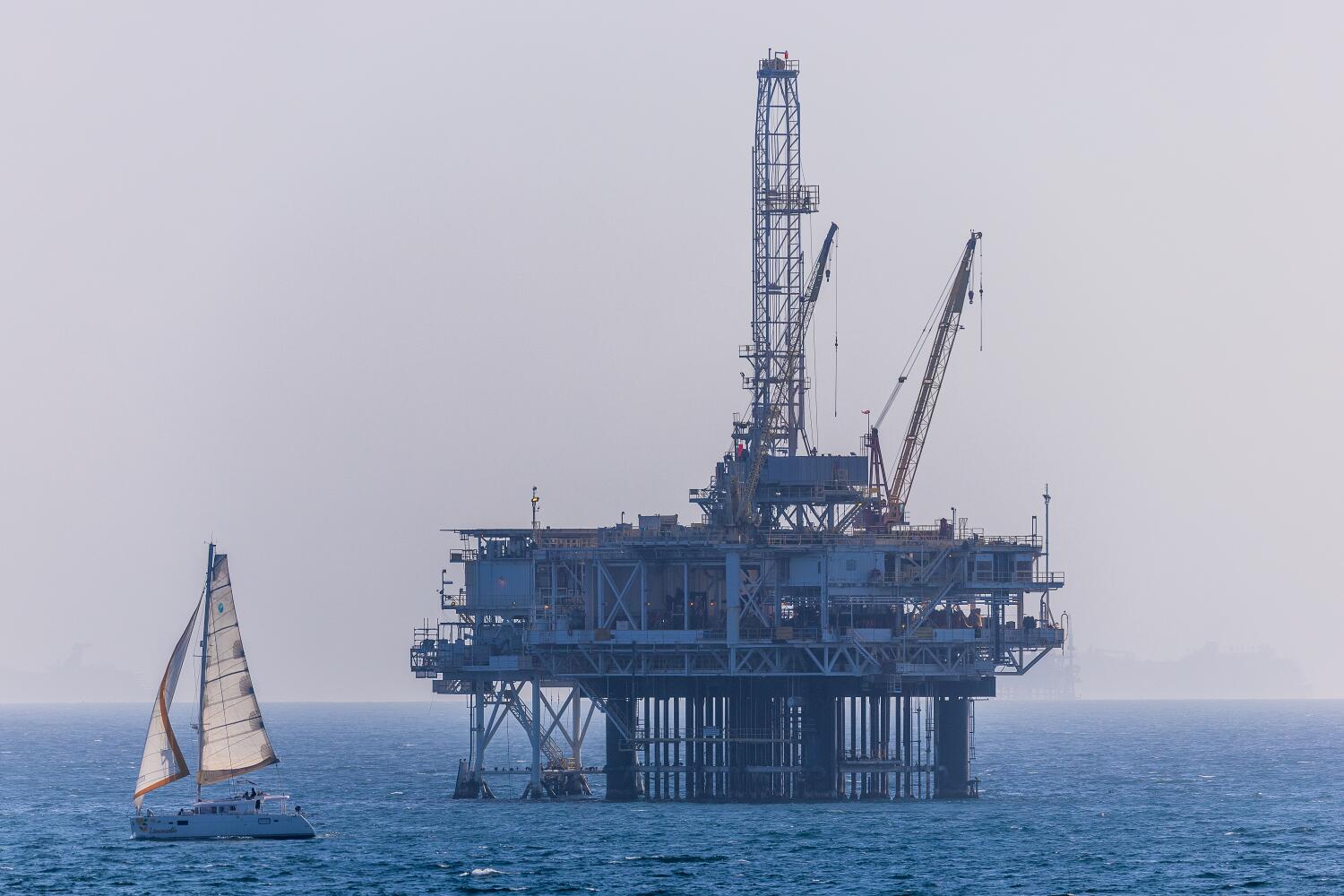
The coastline of California is officially locked in another high-stakes battle with Washington. When Governor Gavin Newsom signed Assembly Bill 1448 into law, Sacramento sent an unmistakable message to the White House: you can auction federal waters, but you won't easily pump the oil.
This legislative showdown isn't just political theater. It's a calculated legal barrier designed to block the Trump administration's aggressive push to reopen more than a billion acres of federal waters to offshore drilling. If you've been wondering whether state lines can actually halt federal energy policy, the answer is messy, complicated, and entirely dependent on who controls the pipes on the shore.
How AB 1448 Aims to Block Federal Drills
Let's look at the actual mechanics of the new law. Washington holds jurisdiction over federal waters located beyond three miles from the coastline. That means federal agencies can theoretically lease those ocean blocks to energy companies. But extracting crude oil offshore requires land-based infrastructure. Pipelines, processing plants, trucking depots, and coastal terminals sit squarely under state jurisdiction.
AB 1448 cuts off that vital logistical link. Authored by Assembly Member Hart, the statute prohibits new state oil and gas leases and blocks any existing state infrastructure from being utilized to support federal drilling expansion. Without access to state lands and coastal pipelines, drilling miles out at sea becomes a logistical nightmare for oil corporations.
It's a clever choke point strategy. State lawmakers know they can't rewrite federal leasing laws in the open ocean, so they're drawing a hard defensive line at the water's edge.
The Haunting Legacy of California Oil Spills
Why is Sacramento pushing back so aggressively? History provides a very expensive answer. California's coastline has borne the scars of catastrophic industrial accidents for decades.
Think back to the infamous 1969 Santa Barbara blowout, the 2015 Refugio Beach spill, or the 2021 Huntington Beach pipeline rupture. Those disasters discharged millions of gallons of crude oil into fragile marine habitats, paralyzed multi-billion-dollar tourism economies, and devastated local fisheries. Public opinion reflects this trauma. Polling from the Public Policy Institute of California shows that 63% of residents flatly oppose expanding offshore oil extraction.
When voters look at federal drilling plans, they don't see energy independence. They see black sludge washing over iconic beaches from Monterey Bay down to San Diego.
The Coming Legal War Between State and Federal Power
Of course, the oil industry and federal regulators aren't going to roll over because of a single state statute. We're heading straight toward an intense constitutional clash in federal courts.
The core legal question comes down to preemption. Can a state intentionally starve federal leaseholders of necessary infrastructure without violating the U.S. Constitution's supremacy clause? Federal attorneys will argue that state obstruction unlawfully interferes with national energy security policies. State attorneys will counter that California has every right to manage its own sovereign lands, coastal zones, and public utilities under police powers.
Expect lawsuits to fly fast. Energy companies have deep pockets, and the administration views public land and water auctions as a cornerstone of its economic platform.
What Happens Next for Coastal Protection
If you live along the Pacific coast, this fight directly impacts your backyard, local property values, and regional ecosystems.
The law also introduces strict public oversight and rigorous safety requirements for altering any existing legacy permits or leases. It's designed to slow down bureaucratic approvals to a crawl. While federal officials can issue permits on paper, the physical reality of moving oil to market has never been more legally perilous in the Golden State.
Keep an eye on the courts over the coming months. The outcome will decide whether state lines remain an effective shield against federal energy mandates or if big oil forces its way back onto the Pacific shore.

:max_bytes(150000):strip_icc():focal(742x300:744x302)/elon-musk-justine-wilson-062424-d55056f5cbd1428fa3b76079db3cd865.jpg)
