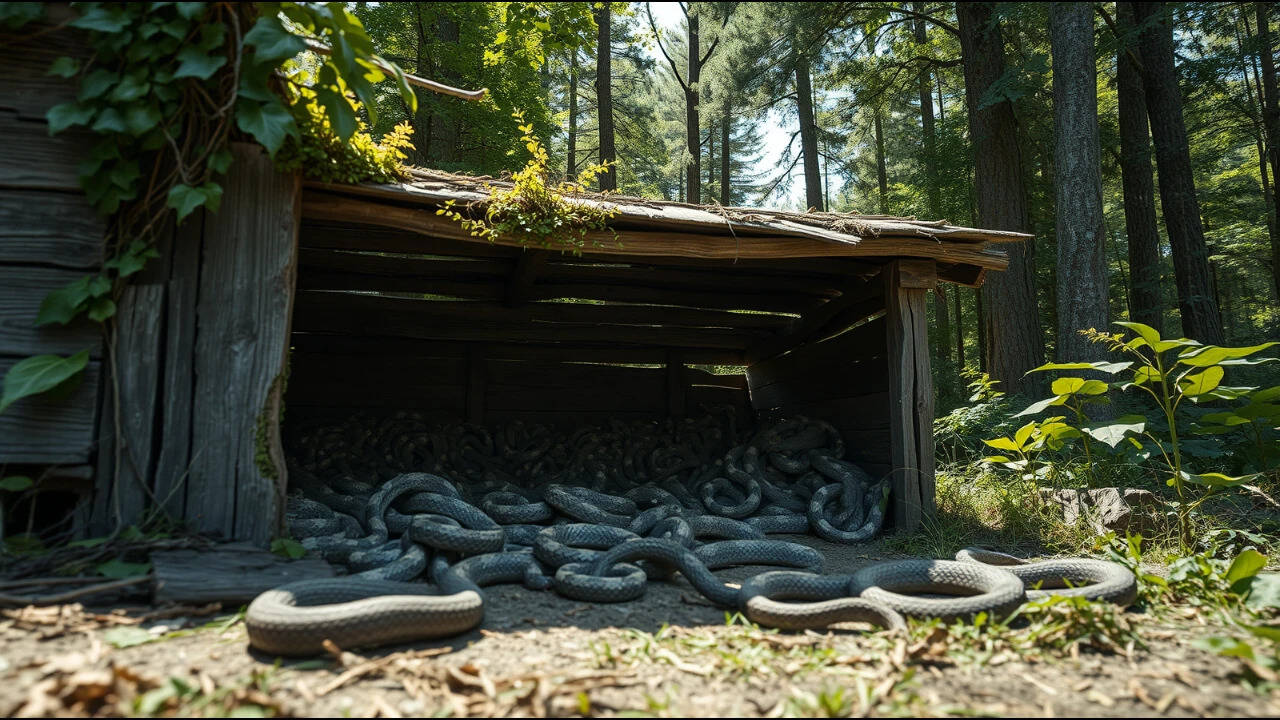
Walk past an abandoned outbuilding dripping with old snakeskins and most people run the other way. Researchers F. R. Hensley and C. I. Hensley did something smarter in central Mississippi. They set up time-lapse cameras.
They wanted to know why gray ratsnakes kept returning to a single decaying structure. The resulting data turned common assumptions about snake behavior upside down. If you think snakes just wander aimlessly until they stumble upon food, this study proves otherwise.
What the Mississippi Snake Shed Revealed
The abandoned building became known locally as the Snake Shed. Day and night, cameras tracked gray ratsnakes arriving on the ground and scaling adjacent trees.
Activity spiked heavily in the spring, dropped during the heat of summer, and stopped entirely when autumn arrived. The structure provided a secure microhabitat that solved multiple survival problems at once. Snakes used the walls for shelter, absorbed warmth, and accessed nearby tree canopies.
During heavy rainstorms, snakes poked their heads out of the rotting walls to drink water collecting on the exterior surfaces. It wasn't just a random hideout. It was a functional survival hub.
Busting Myths About Ratsnake Climbing Habits
For years, wildlife observers assumed that when ratsnakes climb trees, they are hunting birds' nests. People see a snake near a bluebird box and assume the worst.
To test this idea, the researchers compared their camera data against 950 citizen-science records from the Cornell Lab of Ornithology's NestWatch program, spanning bird nesting habits across a decade. If snakes were climbing strictly to raid nests, the peak climbing timeline should have matched the peak bird nesting season.
It didn't.
Snake climbing activity peaked early in the spring—long before local avian nesting reached its zenith—and dropped off sharply just as bird eggs and nestlings became abundant.
Why Do Gray Ratsnakes Actually Climb Early
The early-season spike comes down to thermoregulation, not predation. After months of winter dormancy, snakes need heat to get their digestive and metabolic systems running.
The shed offered immediate ground-level shelter, while the tall trees next to it provided direct pathways to the sunlit canopy. Snakes made daily ascents into the branches to bake, returning to the safety of the shed walls each evening.
Once spring transitioned into summer, the snakes dispersed away from the building to hunt widely across the landscape. Their primary diet consists of small mammals like mice and rats, which explains why syncing their movements strictly to bird breeding schedules never made biological sense.
Hidden Patterns in the Dark
The cameras also picked up a weird detail that standard field studies miss. Nocturnal movements correlated directly with moon phases, showing that ambient light alters how these reptiles navigate at night.
Shedding skin, or ecdysis, happened throughout the active months. September brought a spike in old skins left behind even though overall snake traffic around the building was low. Snakes actively look for humid, tight spaces with stable microclimates to shed safely without risking severe dehydration.
What This Means for Backyard Wildlife Management
If you find a ratsnake near your property or an outbuilding, don't panic. They aren't plotting an invasion. They are looking for the exact things the Mississippi shed provided: shelter, water access, and safe vertical routes.
If you want to keep snakes away from specific areas like poultry coops or monitored bird boxes, focus on habitat modification rather than extermination. Clear brush piles away from foundations, seal gaps under doors, and install predator guards or baffles on nesting poles. Understanding how these reptiles use structural architecture helps you coexist without disrupting local ecosystems.