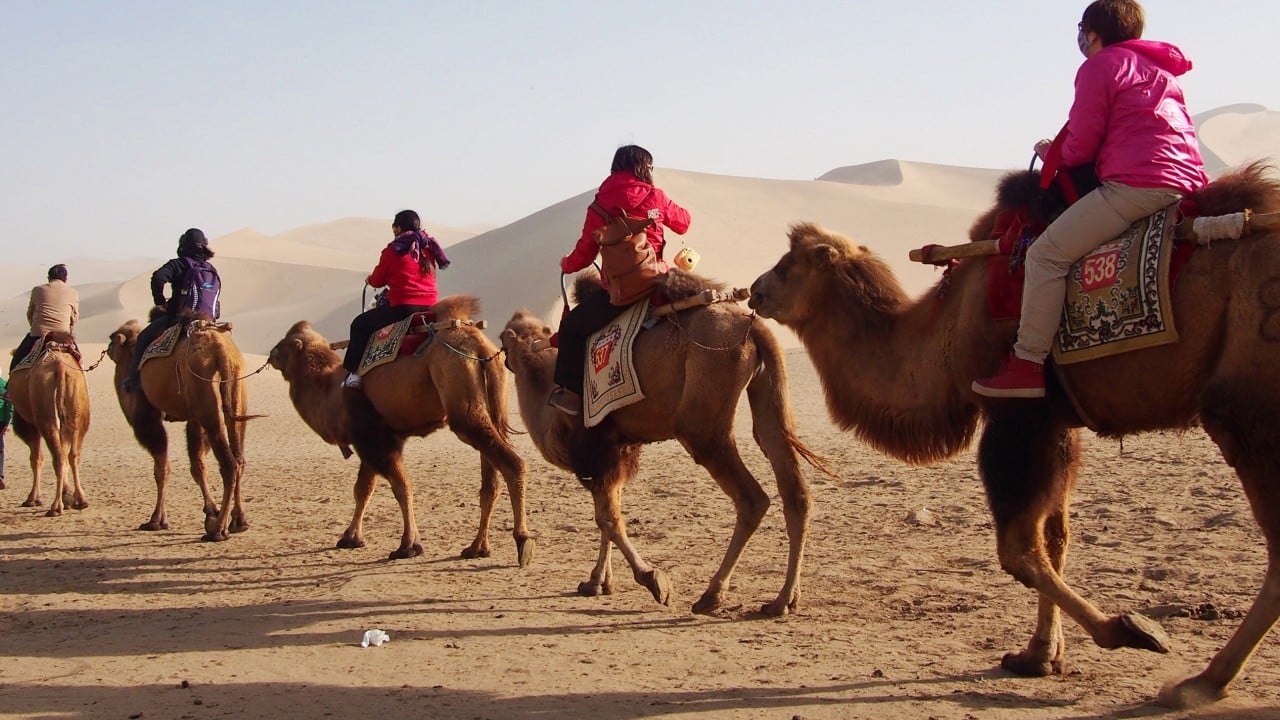
Most people think the Silk Road was just an ancient highway for hauling silk and porcelain across the desert. That narrative misses the most important thing that actually moved from kitchen to kitchen: flavor. If you look closely at modern plates from Beijing to Rome, you'll find footprints left by Central Asia, the true crossroads of global eating habits.
Let's clear up a massive misconception right away. Central Asia wasn't just a passive checkpoint where traders stopped to water their camels. It was a chaotic, high-stakes incubator where ingredients from East and West collided, mutated, and spread outward.
The Ancient Supply Chain That Built Your Dinner
Think about where everyday foods originated. Rice, chicken, and melons didn't magically appear in the Middle East or Europe. They leaked out of China, funnelling directly through the Central Asian corridor. Meanwhile, wheat, lentils, cattle, and fava beans bled eastward from Southwest Asia.
Yet historians often forget that Central Asia itself gifted the world some of its most iconic produce. Botanist Robert Spengler notes that apples, walnuts, pistachios, and quinces are native right here. Archaeological digs prove pistachios were cultivated in this region at least two thousand years ago before making their long march westward.
Back then, supply chains didn't operate like modern cargo shipping. Merchants rarely rode the entire distance from Chang'an to Venice. Goods moved through a relay system, passing from hand to hand at bustling desert hubs.
Oxford historian Peter Frankopan points out that these trading posts were economic engines. If you wanted to get rich, matching supply and demand in a dusty oasis town worked just as well as selling raw silk. Spices and exotic foods moved along these same paths, though they started as elite luxury items. Two millennia ago, rice was an expensive commodity for the ultra-wealthy in Central Asia—a bizarre thought when you look at a modern pot of plov.
Dumplings, Plov, and the Great Food Diaspora
Food writer Clara Wang describes this historical phenomenon as Asia's first true food diaspora. You can trace the lineage across thousands of miles simply by looking at dough wrapped around meat.
Chinese jiaozi share DNA with Korean mandu. Those same dumplings morph into Nepalese momo, which look remarkably like Mongolian mantuun buzz. The concept traveled across borders, adapting to local spices, livestock, and cooking vessels.
Take plov, the crown jewel of Central Asian cooking. It's a masterclass in seasoning rice with meat and fat, a technique that rippled south into India to inspire biryani. Then you have the ubiquitous savory pastry: the Uzbek samsa baked fresh in the bazaars of Bukhara. It shares a common ancestor with the samosas found across South Asia.
Nothing in food stays pure. Dishes we worship as sacred traditions are actually products of constant friction between colliding cultures.
Eating Your Way Through History Today
If you visit Central Asia now, you aren't just tasting local recipes. You're eating a living archive of global trade. The food culture here thrives on mutton, handmade noodles, fermented mare's milk, and flatbreads stamped with intricate wooden seals.
If you want to understand how global cuisine actually evolves, stop looking at modern corporate fusion experiments. Look at the bazaars of Tashkent or Samarkand. Grab a steaming plate of plov, bite into a crispy samsa, and remember that every single bite represents centuries of human migration, trade, and cultural stubbornness. Plan your next travel itinerary around the local markets, skip the tourist traps, and taste the history yourself.
Silk Road Flavors: How Ancient Trade Shaped Global Cuisine
This video provides a visual exploration of how ancient trade routes transformed global cuisines and ingredient exchanges between the East and West.