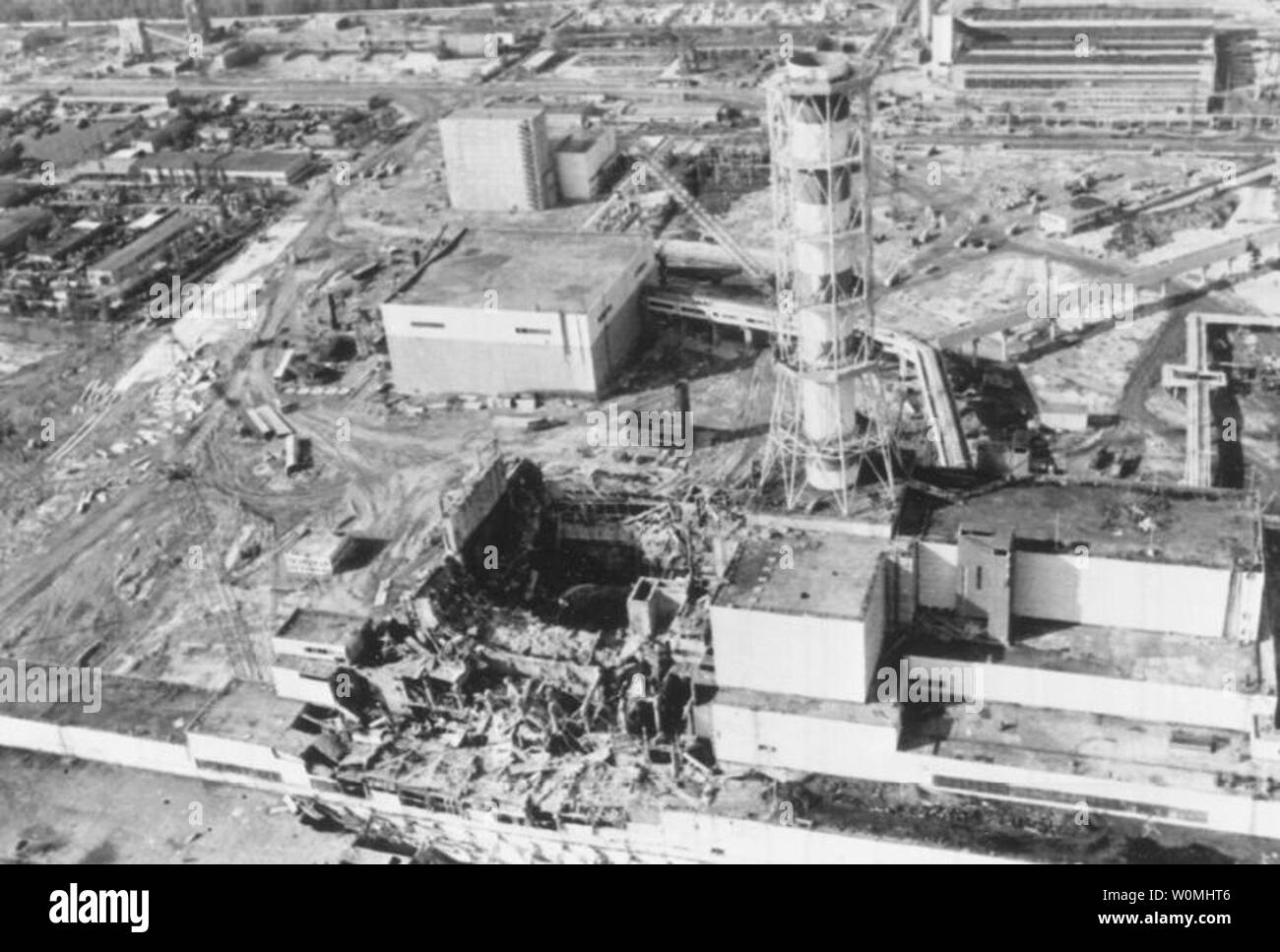
Four decades after the worst nuclear accident in history, the ghost site of Chernobyl still holds surprises. Researchers from Leibniz University Hannover and the Helmholtz-Zentrum Dresden-Rossendorf recently examined six tiny fuel fragments ejected during the 1986 disaster. What they found upends old assumptions about how nuclear fuel weathers in the open environment. Instead of breaking down into harmless soil or dissolving quickly over time, these microparticles have retained largely intact crystal structures.
This mechanical stability changes the conversation around long-term radioactive contamination and cleanup strategies. When people think about nuclear waste degradation, they often picture a steady, predictable decay into harmless components. Reality is much messier. These tiny grains of uranium oxide dust refuse to disintegrate as fast as physicists originally modeled.
The Shocking Durability of Nuclear Particles
To understand why this matters, you have to look at what happens to fuel when a reactor core blows apart. During the explosion at Reactor Unit 4, intense heat blasted tons of material into the atmosphere. Over the last forty years, scientists assumed weather, rain, and microbial activity would break down these microscopic fuel fragments relatively quickly.
Instead, recent analytical breakthroughs show that six specific fuel fragments collected from the exclusion zone still exhibit robust crystal integrity. They haven't lost their physical form. They contain trapped fission products and stay fiercely radioactive, acting like persistent microscopic embers that refuse to cool down or wash away.
Think of it less like soluble sugar dissolving in water and more like stubborn gravel that resists erosion. Because the crystalline matrix holds together so well, the hazardous material doesn't dilute into the surrounding ecosystem the way models predicted.
What This Means for Decommissioning and Safety
The persistence of these microparticles throws a wrench into standard decommissioning timelines. If fuel fragments remain physically intact and chemically resilient for forty years, they will likely stick around for many decades to come. That changes how safety engineers approach environmental remediation.
You can't just wait out the physical breakdown of the fallout if the particles stay locked in solid form. Instead, tracking these hot spots requires specialized monitoring. Researchers admit that sampling fragments from just a few locations doesn't give a complete picture of how particles behave across the entire exclusion zone. Weathering rates vary wildly depending on local soil chemistry, moisture, and surrounding shielding materials.
If you are tracking long-term environmental safety or studying nuclear waste management, this discovery highlights a core truth: prediction models often underestimate material stubbornness. Nuclear fuel handles extreme stress better than our cleanup models account for.
Moving Forward With Real-World Cleanup
Dealing with persistent radioactive dust isn't a problem solved by wishful thinking or generic policy overviews. Governments and international monitoring teams must focus on localized soil mapping and targeted particle recovery.
If you want to stay informed on modern nuclear safety, keep an eye on how automated drone mapping and high-resolution mass spectrometry track these microparticles. Understanding the physical structure of fuel fragments is the only way to design better containment protocols for future reactors. The lessons learned from Chernobyl's stubborn particles will dictate how we handle nuclear decommissioning for the next century.