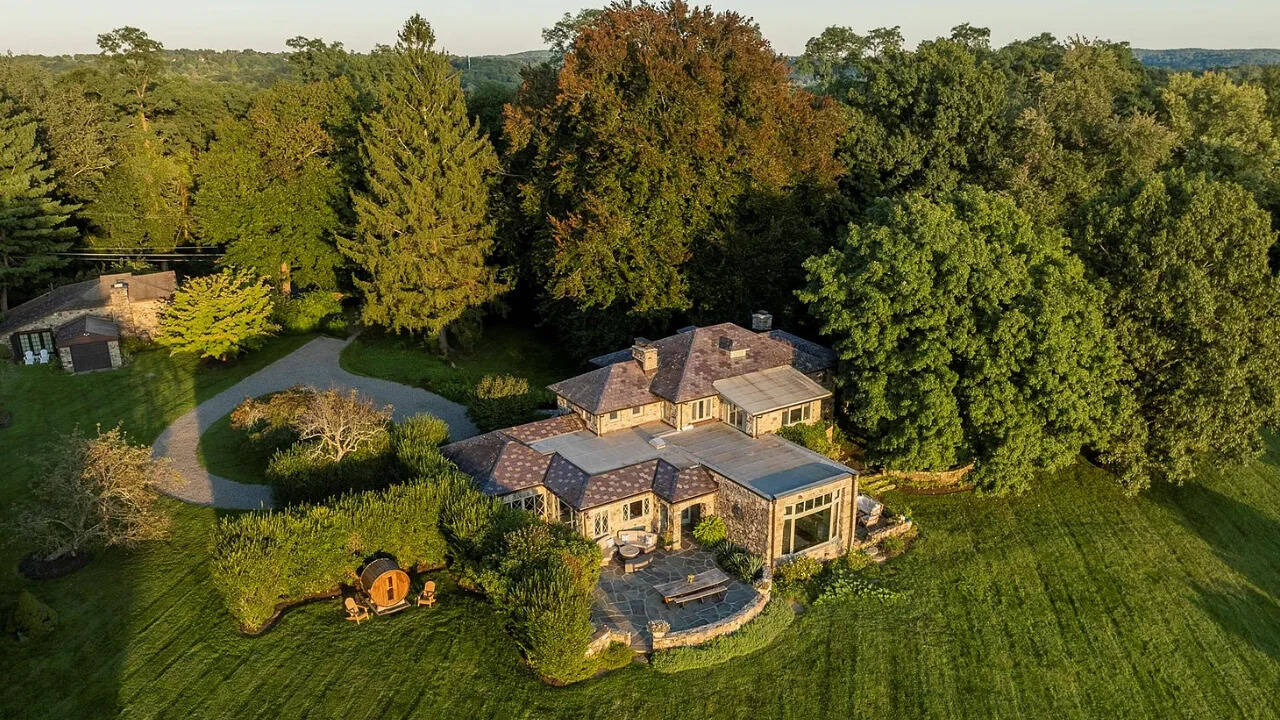
Trading two sculptures for ten acres of New York land sounds like a bohemian fairy tale. In 1917, sculptor Chester Beach actually pulled it off in Brewster, roughly 55 miles north of Manhattan, laying the foundation for a 10.49-acre stone compound known as OldWalls. Now back on the market for $4.15 million, this place forces a question most luxury buyers skip. Are you buying a home, or are you taking on stewardship of an artist's living archive?
Standard real estate listings love shiny kitchens and fresh paint. OldWalls isn't that kind of property. Built around thick stone walls gathered right off the land, the estate ties together Beach's personal life, his working studio, and a century of hands-on craftsmanship. For a more detailed analysis into this area, we suggest: this related article.
How Chester Beach And OldWalls Came Together
Chester Beach wasn't a hobbyist dabbling in country living. Born in San Francisco in 1881, he trained at the Académie Julian in Paris between 1904 and 1907, spent time in Rome, and built a serious reputation for marble figures, busts, medallic art, and coins, while teaching in Queens. You can still see his marble work Unveiling of Dawn in the collection of The Metropolitan Museum of Art and explore his broader career through the Smithsonian American Art Museum.
In 1910, he married painter Eleanor Murdock, whom he'd met as an art student in Paris. Seven years later, they struck that sculpture-for-land swap with a local farmer in Putnam County. For further context on the matter, extensive analysis is available at The Spruce.
At first, the plan was simple: put up a working studio. By 1918, Beach had also built the main stone residence using stone pulled from existing walls on the site, giving the compound its name. He lived and worked there until his death in Brewster in 1956.
What Makes The Buildings And Grounds Unusual
Most historic homes have been stripped of their quirks over the decades to satisfy generic buyer tastes. OldWalls kept the weird, personal details intact.
The main stone house, built in 1918, features stone walls more than two feet thick, structural timber traced to old-growth forest, and original artwork by Beach woven into the architecture itself. Even the layout plays with memory—a doorway in the primary suite sits hidden behind a bookcase. Floors incorporate tiles collected from Spain, Guatemala, and Italy, including Roman tiles set beneath the dining room table, while a kitchen chandelier started life as one of Beach's sculpting turntables.
Step outside the main house and the compound expands into four distinct living and working spaces:
- The Studio: Around 1,466 square feet with a bedroom, loft, and bath, originally purpose-built for Beach's work and later functioning as a memorial studio holding his original tool-chest cabinet, sculpting tools, door hardware, and sliding doors preserved behind newer French doors.
- The Camp / Stone Cottage: Roughly 1,503 square feet with two bedrooms and one bath, built during the 1940s on the foundation of a former Howes Great London Circus animal barn, with Chester laying stone while Eleanor mixed mortar. It even incorporates the "424" doorway from Beach's New York City brownstone and studio alongside salvaged cabinetry from the main house.
- The Barn: A multi-stall barn that includes a one-bedroom apartment, supporting the property's equestrian and rural footprint.
Outside, the 10.49 acres mix open meadow, orchard trees like apples and pears, berry plantings, stone walls, and long valley views. A European beech gifted when Beach acquired the land in 1917 and a terrace maple from the 1920s anchor the grounds.
Why Buyers Misread Artist Estates At $4.15 Million
Honest truth: buying an artist's compound at $4.15 million is very different from buying a standard Westchester or Hudson Valley commuter trophy house. You aren't paying purely for square footage or turnkey suburban polish. You're paying for provenance, setting, and continuity.
Here is where buyers frequently trip up when looking at properties like this:
- Treating historic quirks like defects: Low ceilings, thick masonry, salvaged doors, and irregular layouts are part of the soul of an Arts & Crafts and artist-built place. Gutting them to look like a modern farmhouse destroys the exact value that separates OldWalls from every other acreage listing.
- Underestimating maintenance across multiple structures: Four separate buildings—a stone main residence, a studio, a 1940s cottage, and a barn with an apartment—plus mature trees and stone walls mean four sets of systems, roofs, and seasonal upkeep. That's fine if you love hands-on property care or hire solid local trades. It's a headache if you want zero-maintenance weekend living.
- Ignoring town rules and separate parcels: Rural Putnam County parcels can carry distinct lot configurations, zoning rules, and conservation or historic considerations. Listing details for OldWalls note a separate 3.5-acre cottage lot alongside the broader acreage, which makes title and parcel boundaries critical to verify early.
Some buyers love the romance of keeping a sculptor's tools and studio alive. Others would rather clear out history and start fresh. Neither impulse is crazy, though starting fresh at $4.15 million usually misses the point of the property.
Practical Next Steps If You Are Eyeing OldWalls
If you're seriously considering touring or bidding on OldWalls—listed through Will Stuart of Berkshire Hathaway HomeServices New England Properties—do a few concrete checks before falling in love with the photos:
- Pull the full parcel and lot survey: Confirm how the 10.49 acres, any separate cottage parcel, rights-of-way, and town zoning in Brewster line up on municipal maps.
- Clarify what stays with the sale: Ask specifically which sculptures, architectural elements, studio tools, tool chests, and fixtures convey with the deed versus what belongs to the sellers or an estate collection.
- Inspect masonry, roofs, and mechanicals separately: Bring in inspectors familiar with early-20th-century stone construction, lime or historic mortar, old-growth framing, and multi-building septic, well, and heating setups.
- Price out your five-year upkeep budget: Add annual maintenance for the main house, studio, cottage, barn apartment, and mature tree care on top of property taxes before locking in an offer price.