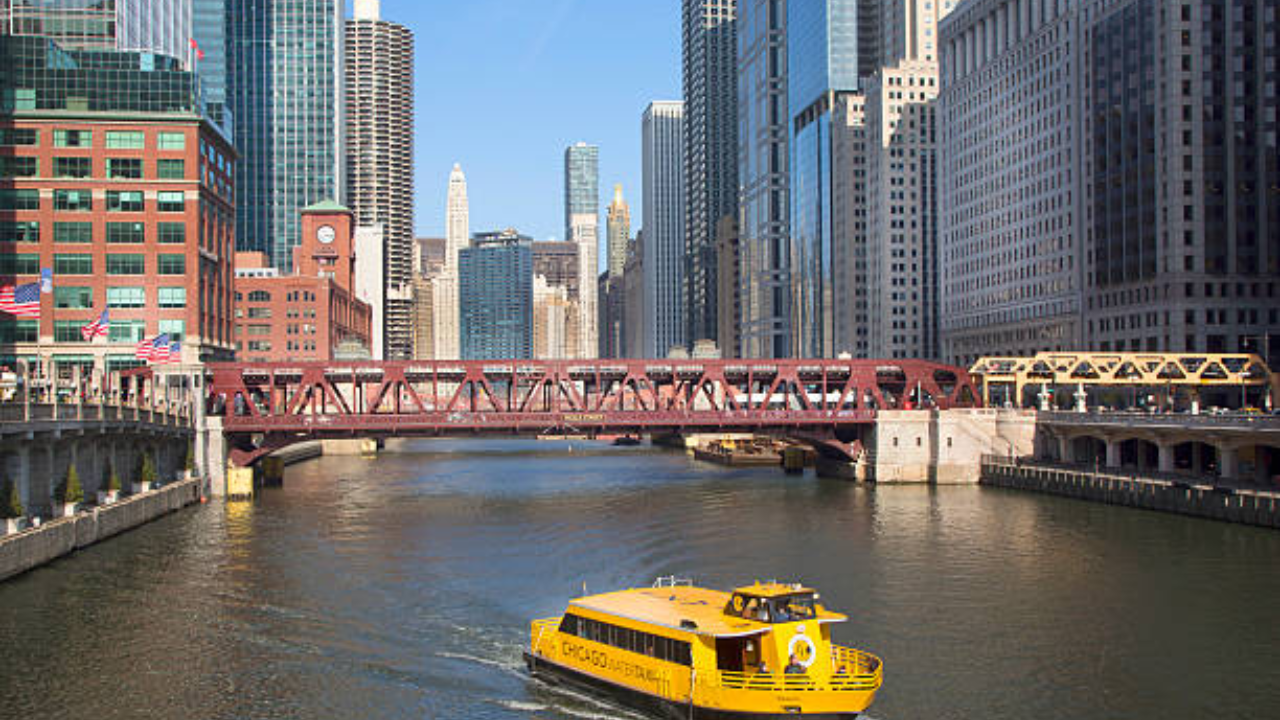
Imagine drinking from a glass of water while your city dumps all its raw sewage directly into the exact same bucket. That was daily life in Chicago during the late nineteenth century.
The city had a massive plumbing crisis. Built right along the edge of Lake Michigan, Chicago pulled its drinking water straight out of the lake and sent its toilets, slaughterhouses, and industrial waste flowing right back into it via the Chicago River. Heavy rainstorms flushed the filth straight toward the municipal water intakes. Typhoid and cholera tore through the population on a regular basis.
Instead of treating the waste, local engineers decided to alter geography itself. They forced the Chicago River to flow backward.
Rewriting the Map With Shovels and Dynamite
Rivers don't just reverse direction because you ask nicely. But Chicago had a geographical quirk working in its favor. A low ridge sat just west of the city, separating the Great Lakes basin from the Mississippi River basin.
Engineers figured out that if they dug a deep enough channel through that ridge down toward the Des Plaines River, gravity would handle the rest. Lake water would pour into the Chicago River, push its current upstream, and carry the city's diluted waste away from Lake Michigan and down toward the Mississippi.
The project became known as the Chicago Sanitary and Ship Canal. Starting in 1892, workers carved a 28-mile ditch through rock and clay using earth-moving machinery invented specifically for the job. It was the largest construction undertaking of its kind at the time. The veterans of this massive dig later took their newly learned techniques and heavy equipment straight to Central America to build the Panama Canal.
Running From the Law and the Courts
Downstream neighbors weren't thrilled about hosting Chicago's flushed waste. Missouri panicked when officials realized Chicago was pointing its sewers straight toward the Mississippi River, which supplied drinking water to St. Louis.
Missouri prepared a lawsuit to stop the project before the final barrier came down. Chicago's sanitary trustees caught wind of the legal strategy and decided to beat the courts to the punch.
On a freezing morning in January 1900, crews cut through the final earthen dam at Kedzie Avenue with almost no warning. Workers broke through the barrier as water rushed in. By mid-January, the controlling works were wide open, and the reversal was complete. Missouri filed its injunction anyway, but the courts faced a physical reality: the river was already running backward.
The ensuing legal battle, Missouri v. Illinois, went all the way to the U.S. Supreme Court. In 1906, Justice Oliver Wendell Holmes ruled against Missouri. The court noted that Missouri hadn't proved Chicago's distant sewage was the sole cause of St. Louis's illnesses, especially since St. Louis and every other town along the river were dumping their own raw waste into the water. The reversal stood, and the ruling laid foundational groundwork for modern environmental law regarding interstate pollution.
The Modern Reality of a Backward River
The engineering gamble paid off immediately for Chicago's public health. Waterborne disease death rates plummeted within a generation. The American Society of Civil Engineers eventually designated the project a monument of the millennium.
More than a century later, the system still operates. Lake Michigan water flows in at the lakefront and travels backward through downtown Chicago every single day, controlled by a complex network of locks and sluice gates.
Yet messing with nature's plumbing comes with persistent headaches. During massive storms, the city's massive underground tunnel networks fill up completely, forcing operators to briefly open the gates and let the river spill back into Lake Michigan to prevent catastrophic urban flooding.
Connecting two previously isolated watersheds also created a two-way highway for aquatic invaders. Invasive species like Asian carp now use the channel to swim north toward Lake Michigan, prompting authorities to install high-tech electric fish barriers across the waterway to protect the Great Lakes ecosystem.
Next time you look at a map of Chicago, remember that its water flows against the grain of nature, powered by a nineteenth-century grudge against gravity that refuses to quit.