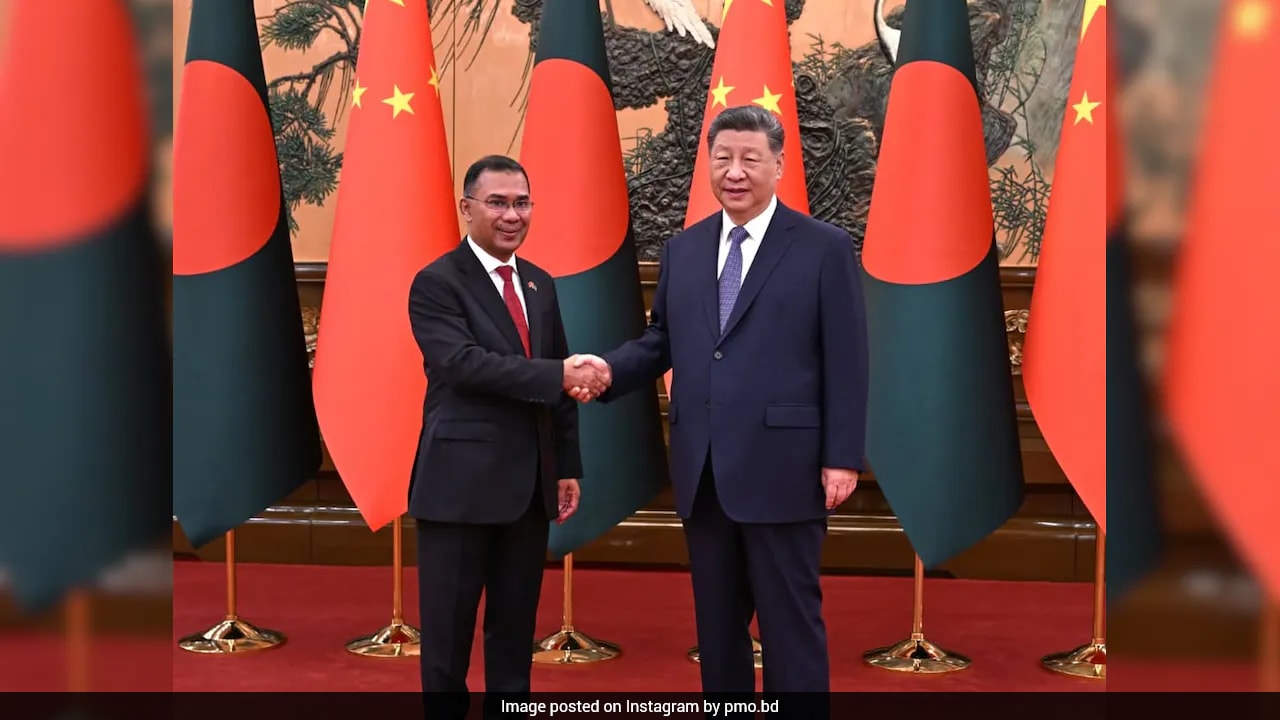
Big money changes ports, and it changes borders too. Dhaka just locked in a massive financial deal with Beijing that alters the maritime balance in South Asia.
Bangladesh signed a $335.78 million loan agreement with the Export-Import Bank of China on October 10 to overhaul Mongla Port. The terms look attractive on paper. We are talking about a 2 percent interest rate for concessional financing. Alia Meher, joint secretary of the Economic Relations Division, and Fengjun Tian, assistant general manager of EXIM Bank of China, formalized the agreement.
The cash is earmarked for two new container terminals equipped with heavy machinery, a container yard, a container delivery yard, and a cargo handling yard. But behind the logistics lies a much larger diplomatic pivot.
The Geopolitical Shift at Mongla Port
Geopolitics rarely operates in a vacuum. Earlier, India had secured rights to operate a terminal at Mongla Port through an agreement signed with India Ports Global Limited. That framework aimed to streamline regional transit and bolster maritime trade. It was a clear strategic counterweight to Beijing's footprint in the Indian Ocean.
Things changed fast. Following the political upheaval and the ouster of the Sheikh Hasina government in August 2024, Dhaka recalibrated its foreign policy. Prime Minister Tarique Rahman visited China earlier this year, setting the stage for Beijing to step into major infrastructure ventures.
Now, both the Teesta Masterplan and the Mongla Port upgrades are firmly in Chinese hands.
Is Foreign Policy a Zero-Sum Game?
Dhaka insists it isn't. Bangladesh Foreign Minister Khalilur Rahman recently stated that his country does not view foreign relations as a zero-sum contest. He urged international partners to view Bangladesh's outreach through a pragmatic lens.
Yet, New Delhi is watching closely. The Ministry of External Affairs has maintained that India monitors developments in its neighborhood carefully and will respond when necessary. Security analysts in Delhi worry that maritime hubs once slated for Indian management are sliding into Beijing’s expanding network of overseas ports, often referred to as the String of Pearls strategy.
When deep-water access and container terminals change operators, security calculations shift overnight.
What This Means for Trade and Regional Stability
The modernization of Mongla Port is genuinely overdue from a purely commercial standpoint. Bangladesh needs higher cargo capacity, faster turnaround times, and better yard management to support its booming export economy. Relying on aging infrastructure hurts national competitiveness.
China brings fast execution and deep capital pockets. For a developing nation looking to scale up logistics quickly, EXIM Bank loans provide an immediate fix.
The real question isn't why Bangladesh accepted the loan. The question is how Dhaka will manage the long-term debt and the diplomatic friction that comes with it. Balancing economic necessity against great power rivalries is a high-stakes tightrope walk. One misstep, and the economic lifeline turns into a strategic trap.