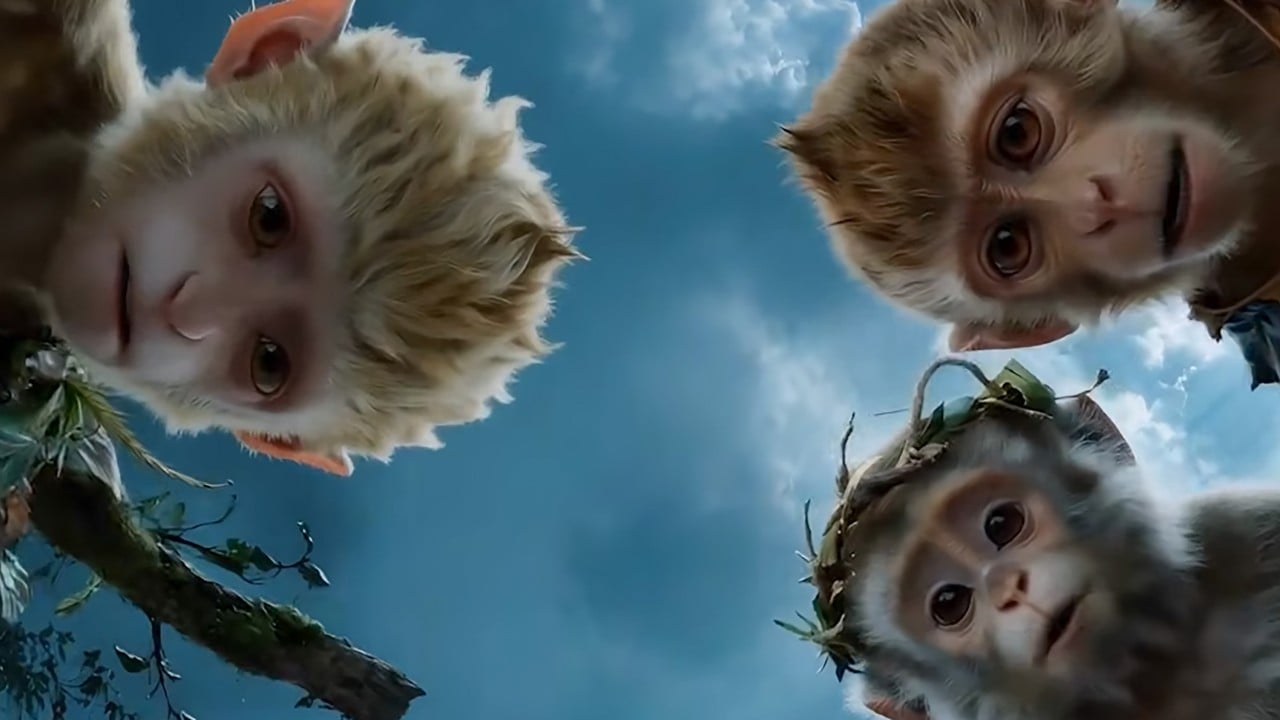
You can't scroll through social feeds in China right now without running into an artificial intelligence video. What started as cheap internet clips featuring weirdly humanlike animals or strange dating shows has just crossed a massive line. A fully AI-generated series called Post Journey to the West hit the 8 PM prime-time slot on Hunan Satellite Television, pushing artificial intelligence drama from niche internet feeds straight onto traditional living room television sets.
The 30-episode adaptation of the classic Chinese novel features no human actors. Every mountain, celestial palace, and monkey leaping across the screen was generated using generative video tools. While viewers might spot continuity errors—like a character holding a weapon in one cut and empty hands in the next—the show still ranked first in its time slot for provincial satellite channels during its premiere. Investors noticed immediately. Mango Excellent Media, the parent company of the network's streaming platform Mango TV, saw its shares surge by the daily maximum limit of 20%, adding billions of yuan in market value.
Traditional production models in China's multi-billion-dollar entertainment sector are taking a direct hit. Here is what is actually happening behind the scenes and why this shift matters for global media.
The Brutal Economics Driving AI Production
If you look at why studios are throwing money at artificial intelligence content, it comes down to basic math. Traditional live-action or high-end animated series in China take anywhere from one to two years of grueling planning, shooting, post-production, and censorship compliance.
Post Journey to the West went from initial commission to television broadcast in just three months. Production costs dropped to a fraction of traditional budgets. Industry estimates point out that creating a three-minute battle scene using standard computer graphics can cost millions of yuan, whereas generative tools can produce the same sequence for a tiny fraction of that price.
Streaming giants like Tencent Video, iQiyi, and ByteDance's short-drama platform Hongguo are pouring cash subsidies and algorithmic traffic boosts into artificial intelligence content. According to data from the China Netcasting Services Association, hundreds of thousands of micro-dramas are released across Chinese platforms every few months, with a staggering majority utilizing generative tools.
Inside the New AI Factories
Southern Chinese tech hubs are transforming into massive production assembly lines. You won't find traditional film crews setting up lights or building physical sets. Instead, large office spaces are filling up with command-input specialists known locally as chouka shi.
These operators sit at rows of computers handling prompt engineering. Production companies hand down scripts and storyboards, and these operators generate and refine video outputs scene by scene. Teams use advanced reasoning models like Anthropic's Claude for scenario development alongside domestic video generators like ByteDance's Cueken to scale production volume at unprecedented speeds.
A tiny ten-person team can turn out vertical drama content at a rate that would require dozens of traditional staff members in the past.
The Downside Facing Traditional Crews
While investors are popping champagne, traditional workers are panicking. The barriers to entry that protected traditional actors, directors, lighting technicians, and costume designers for decades are cracking open.
Fees for mid-tier actors have dropped significantly as human talent faces direct competition from endless digital avatars. Directors who still shoot live-action projects note that network executives now ask for artificial intelligence integration in almost every pitch, even when the technology makes zero creative sense.
Quality control remains a massive hurdle. Viewers are currently tolerating glitchy expressions, shifting props, and awkward movements because they want fast, repetitive dopamine hits. Content formulas that already dominated the short-drama market—such as revenge arcs, time travel, and melodramatic comebacks—translate easily into automated text-to-video prompts.
What Comes Next for Global Entertainment
The rise of automated prime-time television is not just a localized media quirk. It signals a fundamental reset in how video content gets funded and consumed.
Large model developers are positioning themselves as the new gatekeepers of entertainment profits, squeezing traditional production houses that rely on slow, expensive human labor. Regulators are trying to keep pace by scrubbing millions of policy-violating uploads involving deepfakes and safety issues, yet the momentum is unstoppable.
You're watching the early messy days of a complete industry overhaul. As tools improve and continuity errors disappear, the boundary between human-crafted cinema and automated generation will blur even further. Don't expect studios to slow down anytime soon. The financial incentives are simply too loud to ignore.