Skies across North America went completely dead silent on September 11, 2001. Thousands of commercial aircraft were forced to land immediately after coordinated terrorist attacks struck New York and Washington, D.C. Total airspace lockdown. Nothing moved.
Except for one single medical emergency flight.
While the nation reeled from the worst tragedy on domestic soil, a man fighting for his life in a Miami hospital needed an ultra-rare medication flown across the country. This is the story of how an exception broke the absolute freeze of American aviation to save a snakebite victim from certain death.
When the Skies Froze Solid
The Federal Aviation Administration took the unprecedented step of ordering all aircraft out of the sky on 9/11. Millions of passengers were stranded. Airports turned into ghost towns. Air traffic control radars showed empty screens across the entire continent.
Planes stayed grounded for days. The safety protocols were ironclad. No commercial, private, or charter flights were granted exemptions.
Then came Lawrence Van Sertima.
A Deadly Encounter in Florida
Van Sertima was an experienced snake handler living in Florida. On the afternoon of September 11, while attempting to secure an inland taipan into its enclosure, he suffered a bite on his thumb.
Bad luck does not wait for geopolitical crises.
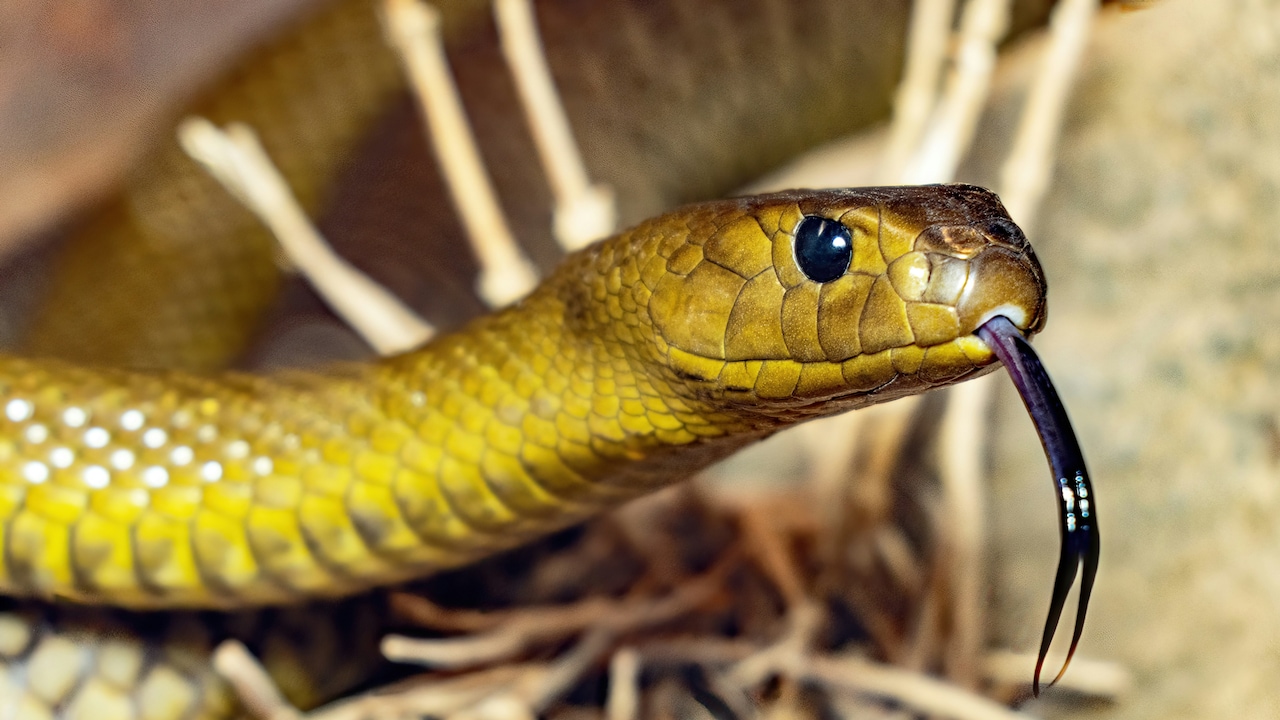
The inland taipan is widely recognized as the most venomous snake on earth. Native to Australia, its venom packs a neurotoxic and myotoxic punch capable of killing dozens of adult humans with a single strike. Within hours, Van Sertima's body began shutting down. He suffered severe internal bleeding, spitting blood from his eyes, ears, and mouth.
Captain Al Cruz of the Miami-Dade Fire Rescue administered five standard vials of antivenom through the county's specialized Venom One unit. It did nothing. The antivenom was useless against an Australian taipan. He needed a specific species-targeted serum, and fast.
The Search for the Only Antivenom Left
Only two known supplies of the required inland taipan antivenom existed anywhere in the United States at that moment. One sat in New York City—right in the middle of the chaos following the World Trade Center attacks. The other was stored at the San Diego Zoo on the opposite coast.
New York was completely inaccessible. San Diego was thousands of miles away.
Johnny Delgado, who managed Baptist Health South Florida's air ambulance service, spent hours desperately calling government agencies. Time was running out. He reached out to an FAA official through professional contacts, cutting through red tape by delivering a brutal truth: the patient was going to die within hours without that specific medicine.
The FAA finally relented under strict conditions. They authorized a single cross-country flight, restricted strictly to daylight hours, to fetch the antidote from California.
The Ghost Flight Across America
At first light on September 12, a contracted aircraft took off from Fort Lauderdale heading west. The pilots later described the journey as deeply unsettling. They flew through empty skies with zero radio chatter and no other traffic on the radar. It felt apocalyptic.
The plane touched down in San Diego, where local harbor police delivered a small red Igloo cooler containing the precious vials directly to the tarmac. Crew members refueled in record time and turned right back around for Florida.
The jet landed at Kendall-Tamiami Executive Airport in Miami at roughly 4:30 PM. A waiting medical helicopter grabbed the cooler and rushed it to the hospital. Doctors administered the specialized antivenom within forty-five minutes of arrival.
Van Sertima survived. He later remarked that the people who pulled off the daring transport operation turned heaven and hell upside down to save him.
Why This Exception Mattered
Most historical accounts of September 11 focus entirely on the immense scale of destruction, security failures, and geopolitical fallout. This quiet medical mission reminds us that human life preservation still managed to cut through bureaucratic walls during moments of absolute national trauma.
When you look back at aviation history, rules are usually absolute. But extraordinary circumstances force extraordinary decisions. Next time you think modern logistics are too rigid to handle emergencies, remember the day a single red cooler crossed an empty continent to cheat death.


