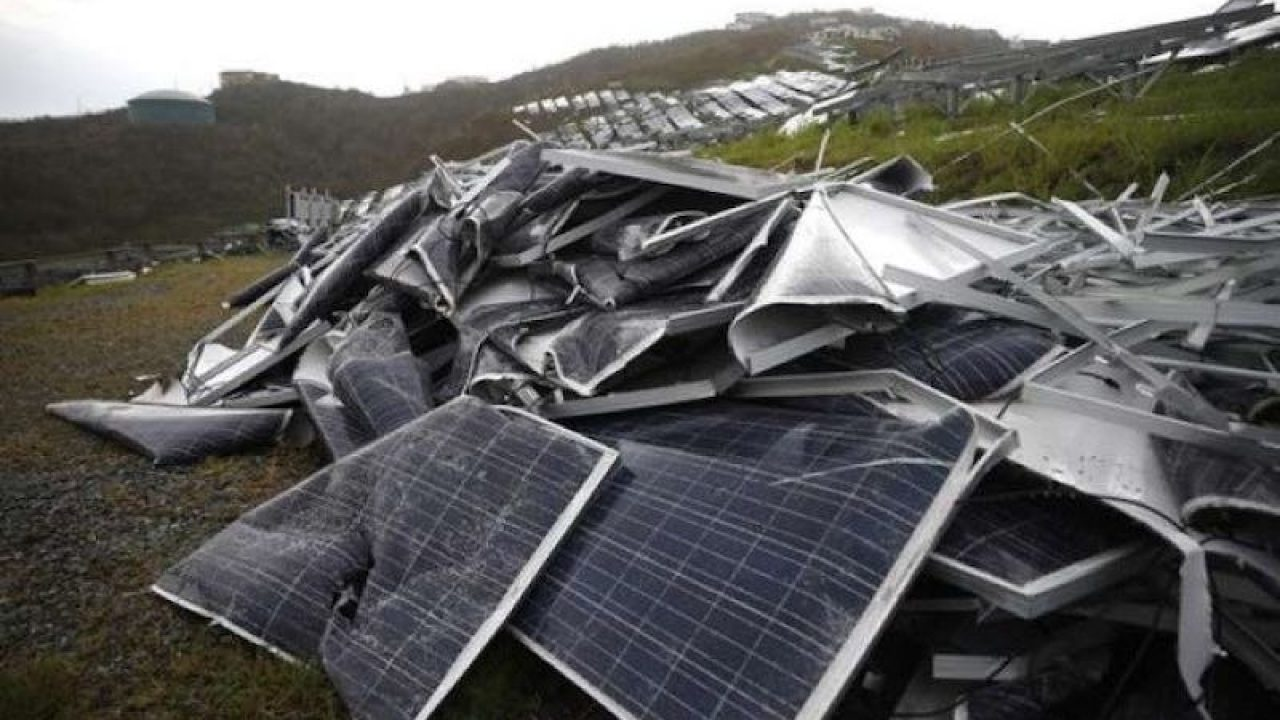
We built the renewable energy transition on glass and silicon, but nobody planned for what happens when the sun goes down on old hardware.
If you look at current green energy projections, you see endless fields of shining photovoltaic panels soaking up rays. You rarely see the looming graveyard underneath. Recent research published in the journal Nature paints a stark picture. By 2060, the world could face between 297 million and 402 million tonnes of discarded solar panel waste.
That is not a minor footnote. That is a mountain of electronics waiting for a home.
Most people assume solar panels last forever. They do not. Standard commercial panels carry a working lifespan of roughly 25 to 30 years. The massive boom in installations that kicked off in the early 2000s means those units are rapidly approaching retirement. Right now, old panels often end up smashed in standard landfills or sitting in dusty warehouses because specialized recycling infrastructure simply hasn't kept pace.
What is Actually Hiding Inside a Dead Solar Panel?
When a panel stops generating peak power, it doesn't become useless rubble. It becomes an urban mine.
Inside every single frame sits a cocktail of materials that industry desperately needs. We are talking about high-purity silicon, copper, aluminum, and precious traces of silver and tellurium. At the same time, panels harbor hazardous heavy metals like lead and cadmium. Throwing them into a regular dump means risking soil and water contamination while torching billions of dollars in recoverable commodities.
According to the international computer modeling study involving researchers from Adelaide University, China, and Sweden, proper management changes everything. If we build out the right recovery pipelines, treating that 402 million tonnes of photovoltaic scrap as a resource rather than trash could unlock nearly $1 trillion in economic benefits.
The Global Inequality Trap in E-Waste
Parsing through 1,708 different recycling scenarios across 32 distinct global regions reveals a dirty truth about international supply chains. The economic windfall of recycling won't distribute itself evenly.
As middle-income nations—particularly China—retire massive waves of early installations after 2040, a logistical scramble will ensue. Richer regions with advanced chemical processing facilities might import scrap from developing nations. If policymakers aren't careful, wealthier countries will pocket the financial upside while poorer nations inherit the logistical headaches and environmental risks.
Professor Jian Zuo from Adelaide University noted that the cheapest global recycling path isn't automatically the fairest one. Developing regions need direct investments in local technology and infrastructure. Otherwise, they get sidelined from the financial gains while bearing the brunt of the heavy industrial footprint.
Fixing the Broken Lifecycle
Governments love handing out subsidies to kickstart clean energy manufacturing, but they usually ignore the backend. Subsidizing the factory floor while ignoring the scrapyard is a recipe for disaster.
Smart policy requires a phased subsidy approach. Instead of writing blank checks that last forever, governments should inject capital to help nascent recycling plants get off the ground, then gradually taper off support as facilities become commercially self-sufficient.
We also need aggressive standardization. Right now, every manufacturer uses proprietary glues, frames, and glass compositions that make automated disassembly a nightmare. If the industry commits to uniform design rules for easier dismantling, recycling costs will plummet.
Recovering silver and silicon from old panels also slashes our reliance on raw mining. Extracting virgin minerals burns massive amounts of fossil fuels and wrecks local ecosystems. Feeding recycled materials back into new production lines cuts billions of tonnes of carbon dioxide-equivalent emissions.
Stop treating solar power as a zero-emission magic bullet that requires no maintenance after installation. Demand extended producer responsibility laws from local lawmakers, support regional collection programs, and force manufacturers to take responsibility for their products from the first watt to the final teardown.