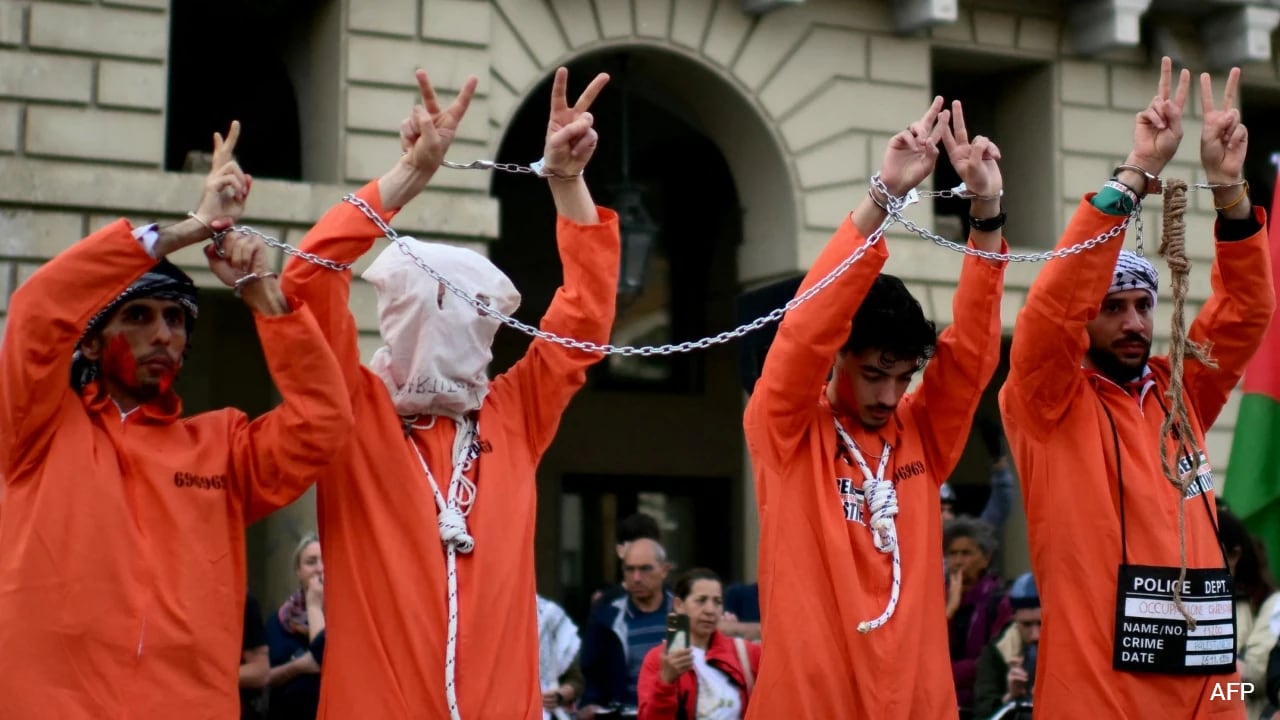
A confession signed after days of sleep deprivation and painful stress positions isn't evidence of guilt. It's proof of endurance limits. Yet human rights investigators and legal observers warn that coerced statements continue to shape prosecutions and convictions of Palestinian detainees inside Israel's legal and detention systems.
When you read headlines about a report accusing state authorities of sanctioning torture to get confessions, it's easy to treat it like just another grim dispatch from a long-running conflict. Honestly, that misses what's actually happening inside the courtrooms. Torture isn't just a dark room story anymore—it's a pipeline feeding statements straight into legal files, bail hearings, and trial records.
What the Report Actually Says About Confessions and Courts
The Public Committee Against Torture in Israel (PCATI) released a 25-page report titled "Tainted by Torture: Palestinian Detainees in the Israeli Legal System," examining 42 complaints filed over the past decade involving Palestinian security detainees interrogated by the Shin Bet. Researchers also noted an unusual case involving a Jewish Israeli suspect, showing how coercion controversies occasionally spill beyond their most frequent targets.
Here's the core problem PCATI highlights: allegations of abuse don't stay locked inside interrogation wings. According to the findings, statements obtained under severe physical or psychological pressure wind up in case files and influence judicial decisions. Even when defendants report bruises, pain, or mistreatment in court, critics say judges and prosecutors often move forward with cases rather than halting or thoroughly investigating the claims.
Watch closely how that works in practice. A detainee is held under tight restrictions, denied regular outside contact during intense questioning, and pushed toward a statement. Once that statement enters the record, it carries momentum—even if the defense later argues it wasn't given freely.
Why Coerced Statements Are So Dangerous Right Now
Two developments make this issue far heavier than an abstract legal debate.
First, detention conditions across Israeli prisons and military custody have drawn widespread international scrutiny since October 2023. Rights groups, UN experts, and medical monitors have reported sharp increases in physical abuse, harsh solitary or restricted conditions, and custodial deaths, with over 100 Palestinian detainees reported dead in custody since October 2023. When custodial environments turn harsher, the risk that coercion—or sheer exhaustion—produces unreliable statements spikes.
Second, stakes in the courtroom have risen dramatically. In March 2026, Israel's Knesset gave final approval to death penalty legislation for certain fatal attacks classified as terrorism, taking effect in the occupied West Bank in May. Critics and rights monitors warn that applying capital punishment in a system where confessions linked to torture can surface in proceedings creates an irreversible risk of executing someone based on tainted evidence.
Think about that for a second. Irreversible punishment plus disputed evidence is a nightmare in any legal system, anywhere in the world.
A Common Misconception About "Voluntary" Statements
People outside legal practice often assume a confession is only valid if a suspect signs a neat paper admitting everything in front of a neutral magistrate. That's rarely how security interrogations work in high-tension environments.
Coercion doesn't always look like movie-style violence. Sometimes it's prolonged sleep deprivation, painful positions, cold rooms, isolation, or relentless pressure until a person says whatever will make the questioning stop. Even where courts occasionally throw out a direct confession, reporting notes that Israeli case law can still allow prosecutors to use derivative information—leads or details traced back to that statement—to build a case.
From a legal standpoint, that distinction matters a lot. If a statement is ruled inadmissible, a layperson assumes it vanishes from the case. In reality, derivative leads can linger like smoke after a fire.
Official Positions and Competing Views
Any serious look at this subject has to account for how state institutions and supporters of tough security measures respond.
Official bodies—including the Israel Prison Service—have maintained that detainees are held according to law, while security agencies and government officials have historically argued that aggressive interrogation measures are sometimes needed to prevent attacks and gather urgent intelligence. Defenders of strict security policies often contend that allegations from advocacy groups overstate systemic intent or overlook operational pressures faced by interrogators dealing with armed groups.
At the same time, human rights organizations—both Israeli groups like PCATI and Physicians for Human Rights Israel, alongside international bodies like the UN—argue that legal safeguards fall short when judicial oversight fails to scrutinize credible complaints of abuse. Where data is limited by secrecy, classified procedures, or restricted access to detainees, independent verification remains a persistent challenge.
Practical Steps for Following and Verifying Coverage
If you're tracking news on this topic—whether as a researcher, student, journalist, or informed reader—a few habits will keep you from getting misled by headlines or partisan spin:
- Check the primary source behind the headline: Look for the specific report or agency named—such as the Public Committee Against Torture in Israel or the UN Human Rights Office—rather than relying solely on a short wire summary.
- Separate interrogation methods from evidentiary rules: Notice whether a story is describing physical conditions in prison, interrogation tactics, or how judges treat resulting statements in court. Those are related, yet legally distinct.
- Look for official responses alongside advocacy claims: Check whether agencies or ministries issued a statement, declined to comment, or cited specific legal provisions.
- Track case outcomes, not just arrest numbers: Detainee totals and urgent alerts grab attention fast, while trial rulings, evidentiary exclusions, and appeals show how allegations actually play out under law.