Numbers lose their meaning when they climb too fast. Over three thousand people have died. That is not just a statistic pulled from a press briefing. That is thousands of families, communities fractured, and an entire medical infrastructure gasping for breath.
When you look at the Congo Ebola outbreak, you are watching a tragedy unfold at a speed health officials have never seen before.
Let's clear the air right now. If you think this is just another localized health scare, you are missing the entire picture. The virus has infected thousands, pushing past containment lines in North Kivu and spreading across multiple provinces before contact tracers can even map the transmission chains.
The Reality on the Ground
Why is this specific outbreak moving so fast? Honestly, it comes down to a brutal mix of geography, conflict, and operational burnout.
Eastern Congo is not a sterile laboratory. It is a conflict zone. Armed groups operate in the exact areas where the virus thrives. When health workers face targeted violence, they cannot do their jobs. When local miners move constantly for work, they carry the virus across regional borders before anyone realizes they are sick.
Frontline medical staff have walked off the job in frustration. They are fighting an invisible enemy while lacking basic pay and equipment. You cannot expect people to risk their lives without support.
Public health evaluations from agencies like the US Centers for Disease Control paint a bleak picture. Containment metrics sit well below necessary targets. Officials call it an uncontrolled expansion. That is corporate language for a crisis slipping out of hand.
What Public Health Officials Are Missing
We hear a lot about official counts. Governments report thousands of confirmed cases and fatalities. But experts at the Africa Centers for Disease Control and Prevention whisper a much darker reality. The actual scale of the epidemic might be triple the documented count.
Why the massive gap? Surveillance is broken. People die at home without ever seeing a doctor. Families hide their sick out of fear or deep-seated distrust of authorities. Contact tracing is practically nonexistent in active conflict pockets.
Schools have reopened. Think about that for a second. Classrooms filled with children while an airborne-adjacent or fluid-transmitted hemorrhagic fever moves through local towns. Concerns over school transmission are mounting, yet options remain limited because communities cannot simply pause everyday life forever.
The Treatment and Vaccine Dilemma
You would think medical science has a ready answer by now. Not quite.
The specific strain driving this crisis—the Bundibugyo virus—lacks fully approved, widely available treatments and dedicated vaccines tailored specifically to it. Researchers are scrambling. Candidate vaccines are in development, but science moves slowly while viruses move fast.
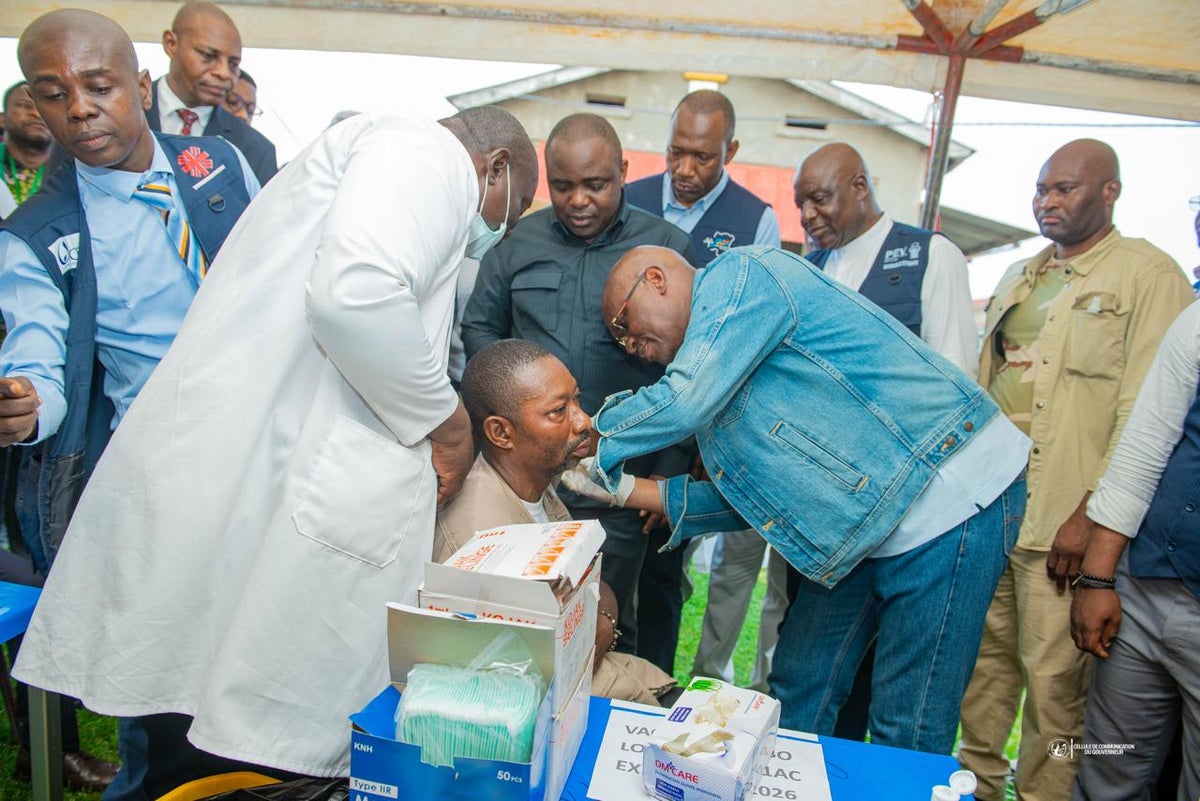
Authorities have started rolling out the Ervebo vaccine to frontline workers in regions like Kisangani. Ervebo worked wonders in past outbreaks. Will it hold the line here? The World Health Organization hopes so, noting it provides cross-protection, but rolling it out amidst active violence and infrastructure collapse is an uphill battle.
What Needs to Happen Now
Waiting for miracle solutions will not save lives. Immediate survival depends on three operational shifts:
- Secure the Medical Corridors: Armed actors and community leaders must negotiate safe passages for healthcare workers. Without physical safety, surveillance stops entirely.
- Rebuild Trust Locally: Government mandates mean nothing if communities reject outsiders. Local leaders must lead the response, not foreign officials in distant capitals.
- Fund the Frontline Directly: Stop administrative delays. Pay healthcare workers immediately, supply them with proper gear, and back them up with security.
The threat of this epidemic surpassing historic precedents is real. If containment doesn't catch up to the virus soon, the numbers will only get worse.