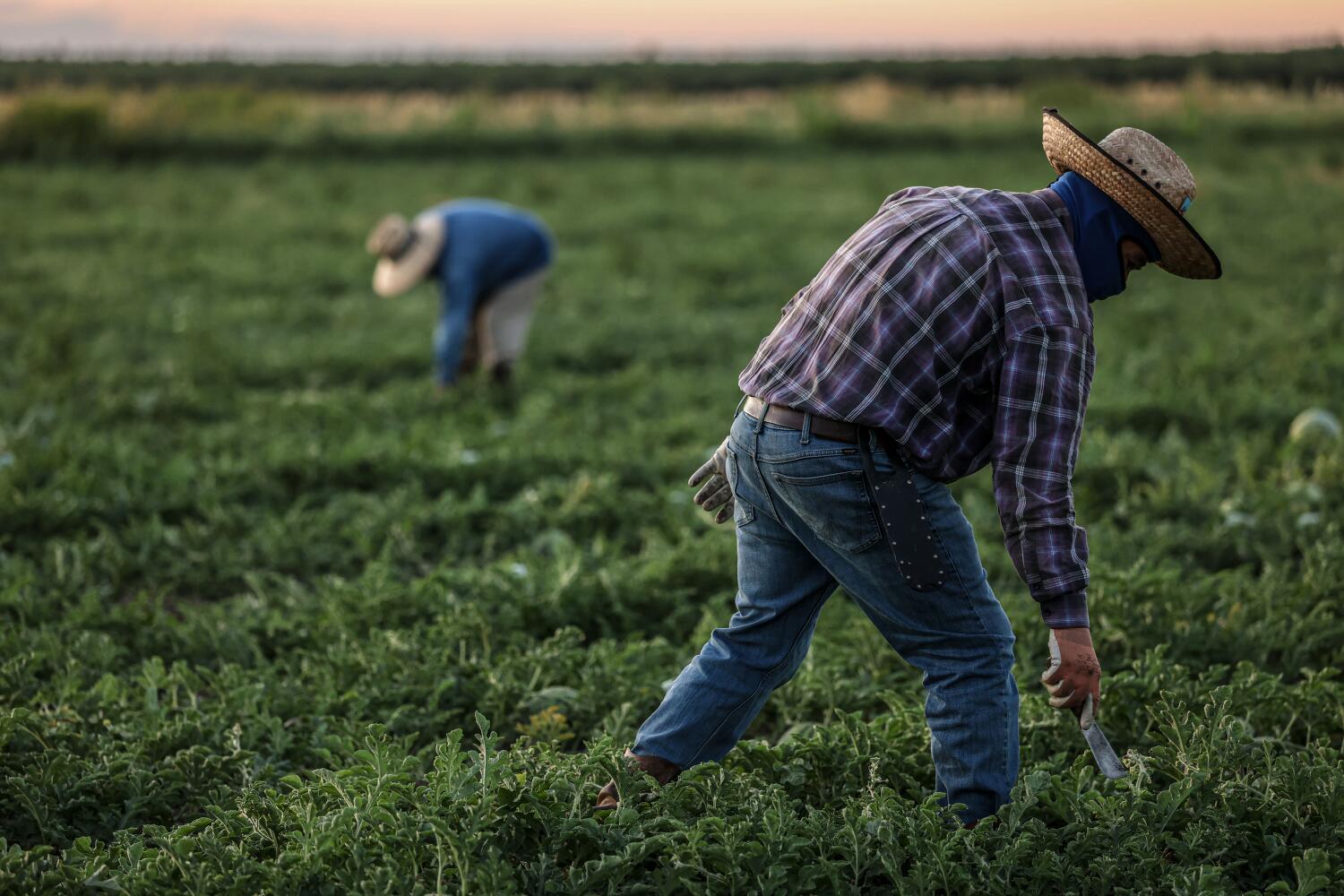
A federal judge in California just threw a massive wrench into executive branch agricultural policy. U.S. District Judge Kirk Sherriff ruled that the Trump administration's attempt to lower wages for seasonal farmworkers under the H-2A guest worker program was unlawful.
If you have been following the legal battle between agricultural advocacy groups and the Department of Labor, this decision marks a critical turning point. The court didn't just tweak a few administrative guidelines. It struck down core components of an interim final rule that would have transferred billions of dollars in wages directly from hardworking laborers to agricultural conglomerates.
Let's look at what actually happened, why the court stepped in, and what this means for the future of American agriculture.
The Problem With The H-2A Wage Rewrite
Federal law has a clear mandate. When farms bring in temporary foreign labor through H-2A visas, the Department of Labor must ensure those hires don't depress wages or working conditions for domestic workers. It is a statutory safeguard designed to prevent a race to the bottom.
Last year, the administration pushed through a rule that radically altered how Adverse Effect Wage Rates are calculated. Labor advocates, including the United Farm Workers and individual plaintiffs, immediately sued. They argued the changes were engineered specifically to cut pay.
Judge Sherriff agreed with much of that assessment. He found that three out of four challenged parts of the rule were arbitrary and capricious.
The administration tried to slash pay by shifting how baseline wages were determined. Instead of tracking real market averages, the rule dropped the wage floor for a massive tier of workers down to the 17th percentile of all wages. Internal projections admitted this would affect roughly 92% of all H-2A workers.
That is not a minor adjustment. That is an intentional downward pull on the entire agricultural labor market.
Bypassing Public Input
Transparency matters in governance. Agencies cannot simply rewrite massive economic regulations overnight without letting the public weigh in, unless there is a true emergency.
The administration claimed good cause to skip the standard notice-and-comment period. Judge Sherriff drew a sharp line here. He acknowledged that switching data sources was urgent because an older government survey had genuinely been discontinued.
However, the administration used that narrow administrative hiccup as a blank check to overhaul everything else. The court ruled that the rest of the rule went far beyond fixing the data source problem. Skipping public input for sweeping wage structures was a bridge too far.
Hidden Pay Penalties
The blocked rule used creative accounting to lower compensation without explicitly changing hourly numbers on paper.
Take employer-provided housing. Federal regulations legally require growers to give housing to H-2A workers for free. Yet, the administration's rule introduced a housing adjustment mechanism that effectively deducted the estimated value of that housing from the mandatory wage rate. Workers took a hidden financial hit.
Another controversial piece involved multi-task job classifications. Under the rule, if a worker spent more than half their day doing a lower-paying chore, their entire day got paid at that lower rate—even if they spent hours operating heavy machinery or performing high-skill tasks that normally command better pay. The Department of Labor never seriously considered a simpler alternative, like paying workers different rates for different tasks.
What Happens Next For Growers and Workers
The court left the old wage framework temporarily in place rather than instantly vacating it, noting that sudden termination would throw the harvest season into complete chaos.
Instead, the Department of Labor has to go back to the drawing board. They must draft a brand-new methodology that complies with federal law.
Furthermore, the legal door remains wide open for back pay. The court gave parties two weeks to report on agency timelines, leaving open the possibility that agricultural employers could be forced to retroactively pay workers the difference between the illegal wage rates and whatever new legal rates are eventually established.
If you run an agricultural business relying on seasonal labor, keep a close eye on these compliance updates. Budget for potential retroactive adjustments and prepare for stricter federal oversight. The era of fast-tracked wage cuts just hit a permanent roadblock.