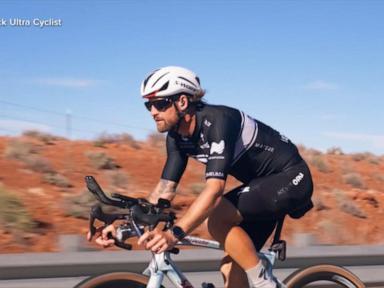
Ten thousand miles on a bicycle sounds like a stunt until you hear why Jack Thompson actually got on the road.
The Australian ultra-endurance cyclist didn't spend roughly two months crisscrossing all 48 contiguous U.S. states just to pad his resume or chase another headline. He did it to test a simple idea about recovery, mental health, and what happens when you step off the couch and out of the noise. Read more on a connected subject: this related article.
Short news clips like the ABC News segment with Danny New give you the quick hit: an Australian rider, nearly 10,000 miles, 48 states, about 60 days. That's great for a morning broadcast teaser. Honestly, though, reducing a ride like that to a mileage tally misses the entire point.
When you pull back the curtain on the Ride the Nation project, you find a story built on personal recovery, schoolyard rides, actual scientific data on exercise and mood, and some uncomfortable truths about how hard sustained endurance really is. Further analysis by The Athletic explores similar perspectives on this issue.
What Jack Thompson Was Actually Chasing Across 48 States
Thompson isn't a tourist wandering between state lines with a camera and plenty of time. In interviews—including a November 2026 conversation with Spokane Public Radio's Ember Braun—he talked openly about spending time in rehabilitation for substance abuse issues in his early 20s. Long-distance cycling became his way of staying grounded, connecting with people, and seeing how different communities handle hardship.
Before setting out from Boston in September 2026 toward a planned finish in Santa Cruz, California, around mid-November, Thompson had already racked up nine world records in ultra-endurance cycling. Still, the physical toll of cycling 10,000 miles across 48 states on a tight timeline is brutal.
Thompson described daily riding blocks stretching roughly from 6 a.m. to 4:35 p.m.—around 10 hours in the saddle covering roughly 175 miles a day and burning an estimated 8,000 to 10,000 calories daily. You don't keep that up for weeks on end unless there's something bigger pulling you forward when your legs feel like lead and the weather turns against you.
"When I'm on a bike, and I'm exercising, I find it's one of the few times that my mind is truly still." — Jack Thompson, via Spokane Public Radio
There's also a sharper angle here that quick news recaps tend to smooth over. Thompson noted that reading Australian news often meant seeing America filtered through political extremes and clickbait. Riding across the country let him look past the loudest voices and talk directly with people—students, local riders, and everyday folks dealing with their own quiet battles.
Why News Clips Miss the Real Story Behind Ultra Rides
Television and radio segments have a job to do, and they usually do it fast. In a few minutes, a host can introduce the rider, toss out the big numbers, and leave you feeling inspired.
Nothing wrong with inspiration. It gets people interested.
The problem is when "inspirational" turns into a fairy tale. Ultra-endurance riding isn't a magic cure-all, and romanticizing 175-mile days can actually backfire if someone thinks suffering through extreme mileage is the only way to fix their head.
Thompson himself made a surprisingly grounded point in his Spokane Public Radio interview. Cycling worked well for him, he said, but the bike isn't for everyone. People grow up in different circumstances, face different barriers, and find different ways to cope. That kind of candor matters way more than another hero shot at a state welcome sign.
The Myth of Effortless Inspiration
If you've ever done even a 50-mile ride into a stiff headwind, you know how quickly romance evaporates. Now multiply that by days on end, cold western stretches, logistics, and relentless caloric demands.
What makes long rides meaningful isn't some mythical state of perpetual bliss. Often it's boredom, soreness, problem-solving, and small human moments—like riding alongside around 100 middle school students in Pocatello, Idaho, or stopping for a community meet-and-greet along the route.
What Science Actually Says About Cycling and Mental Health
Since Thompson rode as an ambassador for Outride, a nonprofit focused on expanding access to cycling for brain health and well-being, it's worth looking past slogans to the evidence.
Does riding a bike help your mental health? Yes, often—though the science is more nuanced than a bumper sticker.
A 2026 scoping review published in Frontiers in Sports & Active Living by Lauren Schuck and colleagues—synthesizing 87 bicycling intervention studies across 19 countries—found that bicycling was generally linked to better mood, stronger social connection, and improved cognitive performance, especially in outdoor and multi-session programs.
At the same time, the researchers pointed out something crucial: outcomes depend on context. Some acute, high-intensity, or fatigue-heavy studies showed neutral or even negative effects. Push too hard when you're already depleted, and the payoff isn't guaranteed.
Look at Outride's flagship Riding for Focus school program, which operates in nearly 500 schools across the U.S. and Canada and has reached more than 500,000 students. A 2025 Frontiers in Sports & Active Living study evaluating Riding for Focus across 31 U.S. schools following COVID-19 lockdowns reported a modest 5% boost in WHO-5 well-being scores alongside a slight increase in reported symptoms on the PSC-17-Y checklist, while showing clear links between mental health metrics and habits like sleep, screen time, and physical activity.
Read those findings straight. A modest 5% bump isn't a Hollywood miracle. It's real-world, messy, incremental progress—and it shows that movement works best alongside good sleep, reasonable screen boundaries, and supportive environments rather than in a vacuum.
Mistakes Beginners Make When Chasing Big Miles
Every time a big cycling story hits the news, you see the same ripple effect. Someone watches a highlight reel, gets fired up, and signs up for a massive ride or starts logging huge weekend miles out of nowhere.
I've seen plenty of riders—and made the mistake myself early on—treat enthusiasm like fitness. Here is what usually goes wrong when people try to copy big endurance energy without building the foundation:
- Skipping base consistency for hero days. Doing one grueling long ride every couple of weeks doesn't build durability like riding three or four manageable days a week consistently.
- Ignoring fueling and recovery. You can't out-willpower empty glycogen stores or chronic sleep debt. Even regular recreational rides fall apart fast if you under-eat and under-recover.
- Confusing pain with progress. Soreness happens, sure. Sharp joint pain, lingering exhaustion, or dreading every ride isn't grit—it's a warning sign you're overdoing it.
- Buying gear before building the habit. A shiny bike or fancy kit won't save a routine that hasn't formed yet. Comfort, fit, and a simple schedule beat gear every single time.
If you're coming back from burnout, stress, or recovery, starting small isn't settling. It's smart risk management.
Practical Next Steps If You Want to Ride for Your Head and Health
You don't need 48 states or 10,000 miles to get something real out of a bike. Start where you are and keep the bar honest.
- Pick a low-friction route this week. Aim for 20 to 45 minutes on a bike path, quiet neighborhood loop, or park trail where you don't have to stress over heavy traffic.
- Ride without turning every outing into a metric. Leave the pace obsession behind for a few rides and pay attention to how your shoulders, jaw, and head feel afterward.
- Pair movement with one basic habit. Try riding earlier in the day to protect your evening wind-down and sleep, or cut phone scrolling right before and after your ride.
- Find a social anchor if solo rides feel heavy. Join a casual local shop ride, community group, or school/community initiative so you're not carrying everything alone.
- Check in honestly after three weeks. If cycling lifts your mood and gives you energy, keep building gradually; if another form of movement fits your life better, switch without guilt.
Jack Thompson inspires on cycling trip through 48 US states shows his cross-country journey and community focus in action, giving helpful context beyond a brief news clip.