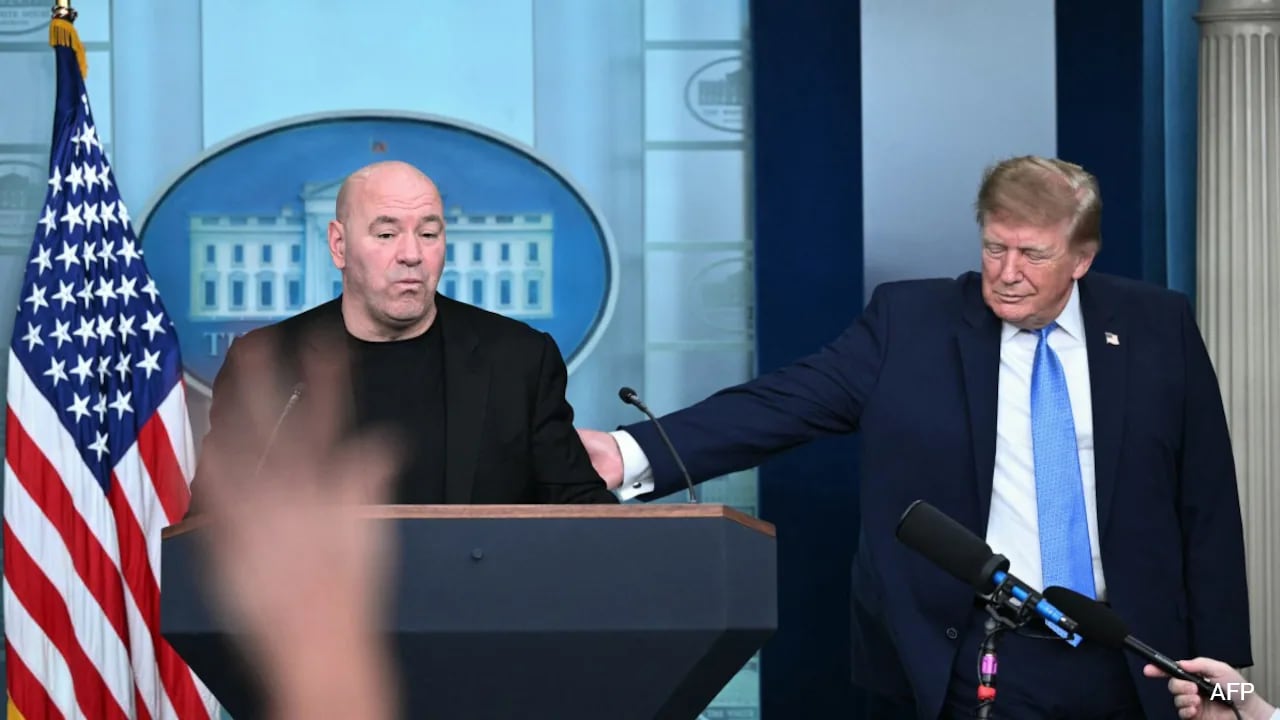
Politics and combat sports share a massive stage, but they operate under entirely different rules. When Donald Trump publicly threw out the idea of handing the White House press secretary badge to Ultimate Fighting Championship chief Dana White, social media erupted. People pictured UFC fighters standing behind the podium in the briefing room, trading standard political spin for sheer octagon energy. It sounded like classic political theater.
It also wasn't going to happen.
Dana White turned down the concept, choosing to stay firmly rooted in sports promotion rather than stepping into the permanent crosshairs of Washington press corps briefings. If you look at how White built his empire, running the daily gauntlet of federal media relations was never part of his actual playbook.
The Intersection of Fight Promotion and Political Branding
The relationship between Trump and White goes back decades, long before presidential campaigns or cage matches on the White House lawn. White frequently credits Trump for giving the UFC a home at the Tropicana in Atlantic City back in 2001 when other venues wouldn't touch mixed martial arts. That loyalty runs deep. White has spoken at multiple Republican National Conventions and helped galvanize young male demographic blocks that traditional political campaigns struggle to reach.
When Trump floated the press secretary idea on social media—complete with a suggestion that White bring along star fighters to handle hostile reporters—it fit their shared playbook of breaking standard institutional norms. It blurred the lines between entertainment and governance. But there is a massive gap between campaigning as an ally and sitting at a desk answering tough questions from reporters five days a week.
Why the Press Secretary Job Doesn't Fit Dana White
Running a multibillion-dollar global sports organization gives you ultimate control. You call the shots, promote the fights, and deal with fighters who settle their differences in a cage. The White House press secretary role is the exact opposite. You absorb incoming fire for someone else, navigate rigid bureaucratic messaging, and stand at a podium where every single word is parsed by hostile critics.
Dana White is an operator and an executive. He thrives on high-stakes chaos, but it is his chaos. Becoming a government spokesperson means trading autonomy for a daily PR defense battle. White knows his strengths lie in building fight cards, expanding global markets, and keeping the UFC machine moving at breakneck speed. Trading that kind of power for a government title made zero professional sense.
The Reality Behind the Headlines
While the internet debated whether fighters would actually take over the Brady Briefing Room, political insiders noted the lighter side of the announcement. Administration aides later indicated the proposal was partly tongue-in-cheek, designed to shake up a news cycle following rough midterm election results.
In the end, White is staying where he is. The crossover appeal between combat sports and modern political campaigning remains stronger than ever, but some lines shouldn't be crossed. Dana White understands his brand, and running the UFC pays a lot better than dodging reporters on Capitol Hill.


