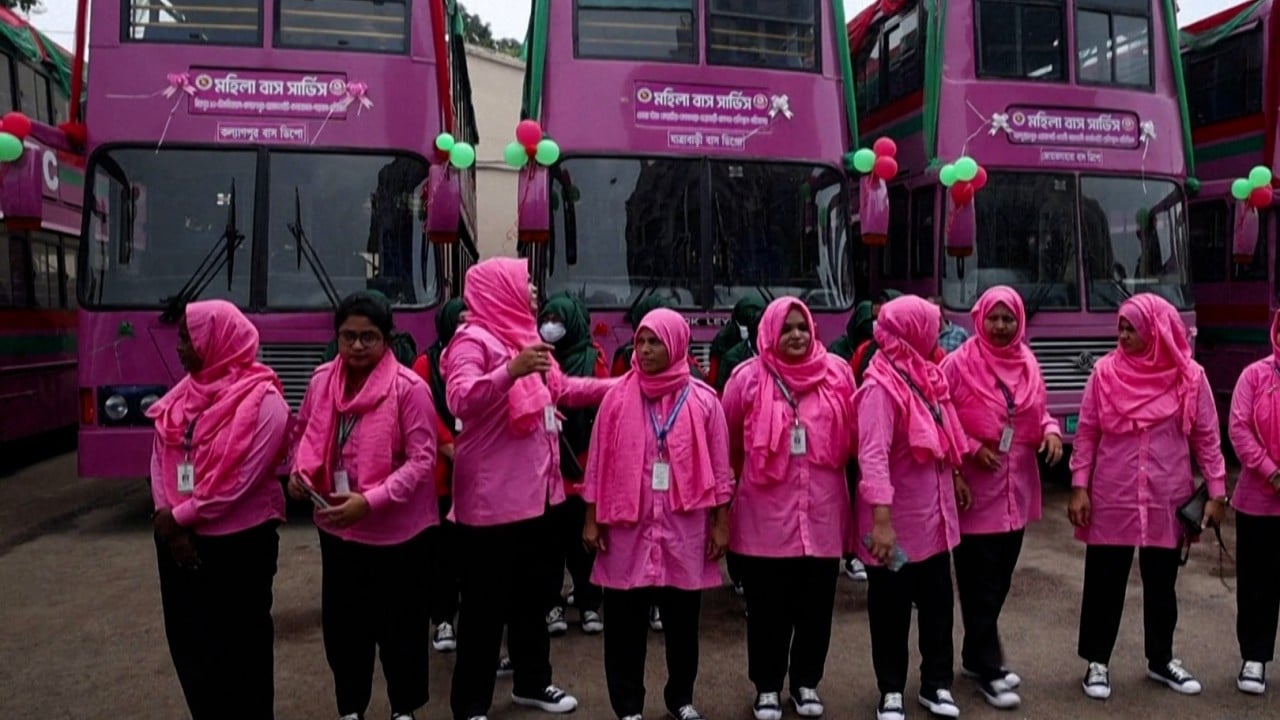
The Bangladesh Road Transport Corporation (BRTC) just launched a "Pink Bus" service in Dhaka, Chittagong, and Bogra. On the surface, it looks like a win. Women-only buses, operated by female drivers and conductors, are hitting the streets to combat the constant threat of harassment. It sounds great in a press release. But if you live in Dhaka, you know the reality of our commute isn't solved by a coat of paint.
I’ve spent years navigating the chaotic bus terminals of this city. I know exactly what it feels like to stand at a stop, clutching my bag, scanning the faces in the crowd, and wondering if I’ll make it to my destination without being grabbed, groped, or verbally abused. For millions of women here, that anxiety isn't an occasional bad day. It is the baseline of our daily existence.
The pink bus rollout
The current rollout includes 14 buses. Ten of these are circulating across busy Dhaka routes like Mirpur, Motijheel, and Abdullahpur. The logic is simple: remove men from the equation, and you theoretically remove the harassment. It’s a temporary relief for the women lucky enough to catch one.
The government has big plans. They are talking about 100 electric buses, vehicle tracking, and CCTV cameras. These features—Wi-Fi and electronic ticketing—are technically solid additions. But let's be honest. A bus that only comes once or twice an hour doesn't actually solve the problem for the woman who needs to get to work at 8:00 AM sharp. If the frequency isn't there, the service becomes a novelty, not a utility.
Why previous attempts failed
We have seen this movie before. BRTC tried women-only buses back in the 80s, the 90s, and throughout the early 2000s. They almost all died off. Why? The service was often inconsistent, the routes weren't practical for daily commuters, or the operating costs became too high for the agency to sustain.
If this time is going to be different, the authorities need to move past the "pink" aesthetic. We don't need a special color; we need reliable infrastructure.
The elephant in the room
The most disturbing reaction to this launch hasn't been the transit logistics. It's the immediate wave of misogyny that flooded social media. People are literally making jokes about women driving buses. It’s pathetic. It’s also exactly why these services exist in the first place. When you have a society that mocks a woman’s professional capability, you don’t just have a transport problem. You have a cultural one.
The reality is that 14 buses in a city of over 20 million people won't even scratch the surface of the demand. Most women will still be forced to crowd onto general-purpose buses. They will still be squeezed into corners, hoping to avoid unwanted contact. They will still have to live in fear.
What actually changes things
If the government is serious about safety, they can't stop at dedicated buses. Here is what would actually move the needle:
- Aggressive enforcement: Instead of just putting women on a separate bus, start punishing the men who harass women on regular ones. Right now, there is almost zero consequence for "accidental" touching. That needs to end.
- Better staffing: The transport staff on regular buses—drivers and helpers—are often the ones who turn a blind eye to harassment or participate in it. Training and strict oversight aren't optional.
- Consistent frequency: A dedicated service is useless if you have to wait 45 minutes for it to arrive. If the bus doesn't run every 10–15 minutes during rush hour, it is not a viable commute option for a professional.
- Inclusive design: Every bus, not just the pink ones, should have basic safety features like panic buttons or direct lines to emergency services.
The path forward
Don't get me wrong. I support any initiative that gives women a momentary break from the hostility of our streets. It’s a starting point. But don't mistake a pilot project for a solution.
If you're a commuter in Dhaka, keep using whatever tools are available. If you see a pink bus, use it. But keep your phone charged, stay alert, and don't let this service lull you into thinking the broader system has changed. The real work isn't happening on the bus routes. It’s happening in the way we talk about, treat, and protect women in public spaces.
Until the entire transit network is held to a higher standard of safety, this is just a colorful band-aid on a systemic wound. Stop waiting for the government to fix the culture. Carry your own safety kit, keep your documents backed up, and never hesitate to call out behavior when you see it. We are the ones responsible for our safety until the system finally grows up enough to do its job.