Most people think scientific discovery requires a PhD, a massive laboratory, or government funding. They’re wrong. Elizabeth Dickens proved that all you need is a notebook, a pair of eyes, and the discipline to use them every single day for half a century.
Starting in 1912, this Rhode Island native began documenting the birds of Block Island. She didn’t stop until 1963. While modern apps and high-tech sensors track migration patterns today, the records left behind by the "Bird Lady of Block Island" remain a foundational baseline for ornithologists. She wasn't just birdwatching; she was building a longitudinal study that captured the pulse of a local ecosystem across fifty years of change.
The power of consistency in nature study
You can't understand an environment by visiting it for a weekend. The real patterns—the shifts in arrival dates, the subtle changes in species population, the impact of weather—only reveal themselves to those who show up every day. Dickens understood this intuitively.
Her journals aren't just lists. They are the backbone of our understanding of the Atlantic Flyway’s offshore migration route. When researchers today want to know how bird behavior on Block Island has changed over the last century, they don’t guess. They go back to her daily logs.
If you’re interested in tracking wildlife yourself, stop trying to find the "rare" stuff immediately. The value in what Dickens did was her dedication to recording the mundane. She noted the common birds just as carefully as the unexpected ones. That is the secret to real data. Consistency beats intensity every time.
Moving beyond simple observation
Dickens didn’t just write things down; she shared them. In 1911, she received a set of Audubon Bird Leaflets from Harold Madison, the curator at the Museum of Natural History at Roger Williams Park. She didn't let them gather dust. She took those materials into local classrooms.
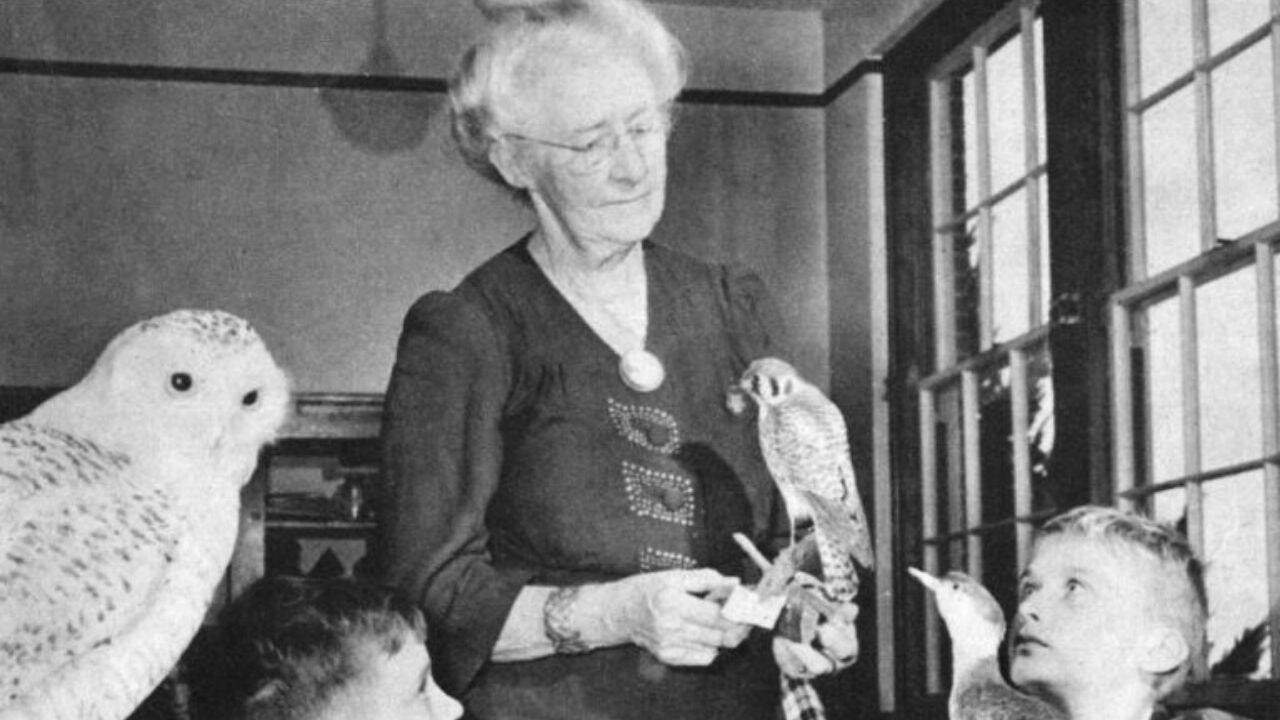
For nearly 50 years, she taught Bird Study to school children on the island. She wasn’t just a recluse with a journal; she was an educator who understood that the future of conservation relies on local engagement. She turned a generation of island children into a field research team. They brought her birds they found—usually victims of storms, predators, or windows.
Her collection of 172 mounted specimens, built over 43 years, serves as a physical record that matches her written one. She was strict about her methods, too. She refused to accept birds killed for the sake of collecting. Every specimen in her collection had a story, and every story had a reason. That kind of ethical rigor is what separates a hobbyist from a true naturalist.
Why her records still matter in 2026
We live in an age of data saturation, yet we often lack context. Comparing modern raptor data from the Ocean View Foundation with Dickens' notes provides a clear picture of how climate and habitat change are actually impacting avian populations.
She documented the stepping-stone nature of Block Island, proving that small offshore locations are critical for birds making the long trek along the Atlantic coast. Without her commitment, we would be looking at a hundred-year gap in our understanding of these migration pathways.
Here is what you can learn from her legacy:
- Start small. You don’t need to cover an entire island. Pick a single patch of woods, a backyard, or a local park.
- Ditch the noise. Don't worry about gadgets. Use a physical notebook. It forces you to slow down and actually look at the subject, rather than just snapping a photo and moving on.
- Find the "why." When you see a bird, don't just identify it. Note the temperature, the wind direction, or what it’s eating. Dickens wasn't just checking boxes; she was observing behavior.
- Share your findings. Citizen science is only as good as the community that supports it. Whether it’s through eBird, a local birding club, or simply teaching someone else, your data is useless if it stays in a drawer.
Practical steps for your own records
If you want to create a record that actually holds value for researchers, stop over-complicating it. You don't need a formal education in biology. You just need to follow a few simple rules that Dickens practiced every day:
- Keep it local. Pick one location and visit it at different times of the year, regardless of the weather.
- Standardize your notes. Date, time, weather conditions, and species count. Keep the format identical for every entry.
- Be honest. If you don't know what you're looking at, write "unidentified" and describe the markings. Don't guess. Precision matters more than a long list of impressive-sounding sightings.
- Be a regular. A messy record that spans five years is infinitely more valuable to science than a perfect list of sightings from a single, high-traffic weekend.
Elizabeth Dickens didn't have a computer or the internet, yet her work informs the research of experts today. She reminds us that the most significant contributions to science don't come from a desk in an office. They come from the field, one entry at a time. Put the phone down, grab a notebook, and go outside. The world is changing, and someone needs to be there to write it down.