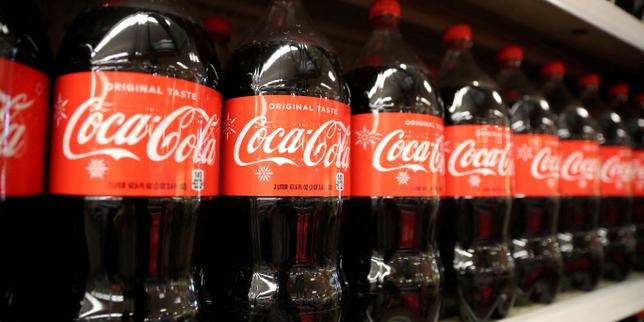
Ever wonder why a twelve-pack of soda costs noticeably more in one European country than right across the border? The European Commission just put a magnifying glass on that exact question, opening a formal antitrust investigation into Coca-Cola Europacific Partners (CCEP) under case number AT.40860 on November 23, 2026.
If you only read quick wire summaries, you might think Brussels is simply chasing a big brand name for headlines. Honestly, it's way more tactical than that. Regulators are targeting how dominant suppliers carve up the EU's single market along national borders when selling carbonated soft drinks and sports drinks to off-trade retailers like supermarkets. If you enjoyed this piece, you should look at: this related article.
What Brussels Actually Suspects in the Coca-Cola Europacific Partners Probe
Let's get straight to the core of the case. CCEP is one of the two largest European bottlers selling beverages under The Coca-Cola Company brands—alongside other soft drink lines—across markets that include Belgium, France, Germany, Luxembourg, the Netherlands, Portugal, Spain, and Sweden. According to the Commission, CCEP is the largest supplier of carbonated soft drinks in those member states. For another angle on this development, check out the recent update from Reuters Business.
That market position matters because EU competition law under Article 102 of the Treaty on the Functioning of the European Union (TFEU) prohibits companies from abusing a dominant position in ways that restrict competition and fragment trade between member states. Opening a formal investigation doesn't prove guilt, and Brussels has been clear that the probe's outcome is open. Still, the list of four practices under scrutiny is sharp and specific:
- Export-restricted wholesale discounts: Regulators are checking whether CCEP ties wholesale price reductions to a condition that buyers don't export carbonated soft drinks or sports drinks to other EU member states.
- Targeted product differentiation: The Commission is looking into whether CCEP uses country-specific differences—such as varying packaging volumes—to block or discourage cross-border trade.
- Curbing imports into Spain: Investigators are examining whether CCEP gives off-trade customers incentives to limit imports of carbonated soft drinks into Spain.
- Blocking multi-country procurement: Brussels is probing whether CCEP refuses to let off-trade wholesale buyers negotiate deals for multiple countries at once, forcing separate national talks instead.
Notice what isn't in the scope here. The investigation focuses on off-trade wholesale supply—supermarkets and retail stores where shoppers buy drinks to take home—rather than on-trade venues like restaurants, cafés, and hotels. And the formal target is CCEP (the bottler, in which The Coca-Cola Company holds a minority stake), not the Atlanta parent company itself.
Why Territorial Supply Restrictions Matter So Much Right Now
Anyone who has worked in European retail or commercial negotiations knows that "the single market" on paper often looks like a patchwork of national price lists in practice. When a supermarket chain operates across several EU countries, buying locally in whichever country offers the lowest wholesale price—known as parallel trade or cross-border sourcing—is one of the few levers retailers have to push back on supplier price hikes.
When a dominant supplier blocks cross-border buying, the math shifts fast. Retailers lose leverage, cross-border arbitrage dries up, and shelf prices stay higher in higher-priced countries. Executive Vice-President Teresa Ribera put that consumer impact bluntly when announcing the move, warning that such practices can undermine the single market, limit competition, and leave shoppers paying more with fewer choices.
Opening a formal antitrust investigation is an investigative step, not a final verdict—yet it immediately freezes out national competition authorities from applying EU competition rules to the same conduct under Regulation 1/2003.
👉 See also: clayton rice new bern nc
There's also a bigger policy backdrop that many commentators miss. Brussels isn't treating CCEP in isolation. Alongside enforcement under Article 102, the Commission has kept a public consultation open on territorial supply restrictions to figure out what extra legal tools might be needed when commercial barriers aren't already caught by existing dominance rules.
Lessons From Earlier EU Border-Restriction Cases
If you want a sense of how high the stakes can get—and how long these fights can drag on—look at past EU enforcement against territorial restrictions. In 2019, the European Commission fined brewer AB InBev €200 million for abusing a dominant position to restrict cross-border beer sales into Belgium from the Netherlands, including changing can designs and limiting volumes. Later, in May 2024, the Commission fined Mondelēz over cross-border trade restrictions on chocolate, biscuits, and coffee across EU markets, following an investigation opened in January 2021.
Those cases show two practical realities:
- Timelines aren't quick. Even when cases move steadily, investigations often take years, depending on file complexity, cooperation, and defense rights. There's no strict legal clock forcing Brussels to wrap up on a set date.
- Packaging and pricing details get scrutinized. A slightly different pack size or label setup isn't automatically illegal—legitimate local preferences, language rules, or tax/deposit systems exist—but regulators look hard at whether differences are used strategically to block cross-border flow.
Misconceptions and Nuances Worth Clearing Up
Whenever a household name like Coca-Cola hits antitrust news, three misunderstandings pop up almost immediately.
First, this isn't a repeat of old soft-drink exclusivity cases. Earlier EU proceedings involving The Coca-Cola Company and major bottlers—such as commitments made binding in 2005—focused heavily on practices like exclusivity clauses, target or growth rebates, and tying strong brands to weaker ones, rather than cross-border trade barriers. Today's probe is squarely about single-market fragmentation and wholesale sourcing across borders.
Second, CCEP isn't sitting still or admitting wrongdoing. In its response to the news, the company said it takes competition law very seriously, is committed to following applicable laws across its markets, and plans to cooperate with the investigation while contesting the suspicions. From a commercial standpoint, CCEP also enters this fight from a position of recent top-line momentum, having reported €5.76 billion in Q3 2026 revenue (up 5.8% year-over-year on a currency-neutral basis).
Third, different prices across borders don't automatically prove a violation. Excise taxes, sugar or packaging levies, local labor and logistics costs, and promotional cycles all affect final retail prices. What Brussels is testing is whether CCEP's commercial terms and restrictions—rather than ordinary market differences—artificially keep borders closed for wholesale buyers.
Practical Next Steps for Retailers, Analysts, and Watchers
If you track European FMCG markets, advise retail buyers, or invest in consumer staples, don't treat this as background noise. A few concrete moves make sense right now:
- Audit cross-border sourcing clauses: If you work in retail procurement or distribution, review supply agreements for volume rebates tied to no-export expectations or restrictions on multi-market buying groups, and document any real commercial friction.
- Track case AT.40860 on the Commission register: Follow updates under case number AT.40860 on the European Commission competition case register to see whether Brussels issues a formal Statement of Objections or explores commitments.
- Watch the territorial supply consultation: Check the Commission's public consultation on territorial supply restrictions (open for submissions through early December 2026) if your business relies on cross-border wholesale arbitrage across the EU.
- Separate headline risk from fundamental cash flows: For investors, formal probes create legal overhang and potential compliance shifts over time, yet outcomes and any remedies—if found—are rarely immediate. Weigh contract structures and margin resilience rather than reacting to day-one headlines.