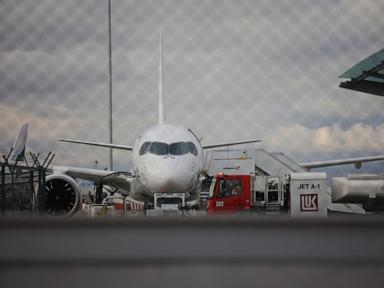
Planes diverted mid-air, fighter jets scrambled on emergency intercepts, and frightened passengers staring down the aisle wondering if it's their final flight. That was the grim reality across European airspace as dozens of commercial flights faced a massive wave of anonymous bomb threats.
If you've been following the news, you already know the headline: multiple flights operated by carriers like Ryanair, Wizz Air, and LOT Polish Airlines were forced to make emergency landings. Yet, once security forces cleared the cabins, the result was always the same. No explosives. No destructive devices. Just an empty cabin, delayed passengers, and massive operational headaches.
So what is actually happening behind the scenes, and why are authorities treating these false alarms as a serious psychological operation rather than simple pranks? Let's break it down.
The Anatomy of a Modern Disruption Campaign
When people hear "bomb threat," they picture a lone criminal or a traditional extortion plot. This wave across Europe looks entirely different. Over the course of the week, more than fifty flights spanning destinations from Poland to Spain and Italy received automated or targeted warning emails.
The scale points straight to coordination. Security analysts note that the goal isn't necessarily to blow up planes—it's to weaponize standard aviation protocols against the system itself. Commercial aviation operates under a strict zero-tolerance safety margin. If a threat comes in, even if it has a ninety-nine percent probability of being fake, ground control and flight crews must act as if it's one hundred percent real.
The perpetrators know this rule better than anyone. By mass-emailing threats to airports and logistics hubs, they force authorities to scramble fighter jets, evacuate terminals, and disrupt thousands of travel schedules with minimal effort on their own part.
Who is Behind the Threats and Why Now?
Investigators tracing the digital footprints have found a messy trail. Some Italian airport authorities received threatening emails tied to fringe extremist messaging, including references to a banned, misogynistic movement known as "The Male State". Other threats hit media headquarters, including Ireland's national broadcaster RTÉ, shifting the target profile from pure aviation disruption to broader societal intimidation.
Coincidence? Absolutely not. This spike in hoaxes coincided with high-stakes political movements across the continent, including major international summits and shifting geopolitical alliances.
Think of it as psychological warfare on a budget. You don't need a sophisticated military budget to paralyze an airport terminal. You just need an internet connection, a proxy server, and the willingness to exploit public anxiety.
The Real Cost of Malicious Hoaxes
Airlines love to talk about smooth contingency plans, but the ripple effects of these hoaxes hit real people hard. Passengers miss connecting flights, airlines bleed money through unscheduled fuel burns and diversions, and airport police are stretched thin responding to phantom dangers.
What makes it worse is the copycat factor. Once media outlets start broadcasting every single diversion, it invites unstable actors to join in. Governments have quietly urged caution in reporting to avoid feeding the attention cycle these groups crave.
Yet hiding information creates its own panic. When passengers see armed police swarming a tarmac in Prague or Copenhagen, rumors spread instantly on social media anyway.
How to Protect Your Travel Plans
If you're flying through Europe right now, you're probably wondering if you should cancel your trip. The short answer is no.
Statistically speaking, the actual risk to your flight remains exceptionally low. Eurocontrol noted that these targeted flights represent a tiny fraction of the tens of thousands safely crossing European skies daily.
- Expect delays, not danger. If a threat hits your flight corridor, protocol dictates a diversion or thorough screening. Pack extra patience and expect your arrival time to shift.
- Keep communication channels open. Airlines push real-time alerts via mobile apps faster than airport monitors update. Turn notifications on before heading to the terminal.
- Ignore unverified panic. Social media thrives on sensationalized clips of parked emergency vehicles. Trust official updates from aviation authorities over viral panic posts.
The system is bruised, but it isn't breaking. Understanding that these threats are designed to generate fear—rather than actual explosions—helps put the chaos into proper perspective.
Why are airports across Europe receiving hoax bomb threats? | BBC News
This video provides an in-depth breakdown of the recent European flight disruptions, government reactions, and expert analysis on how security authorities are managing the fake bomb threat crisis.