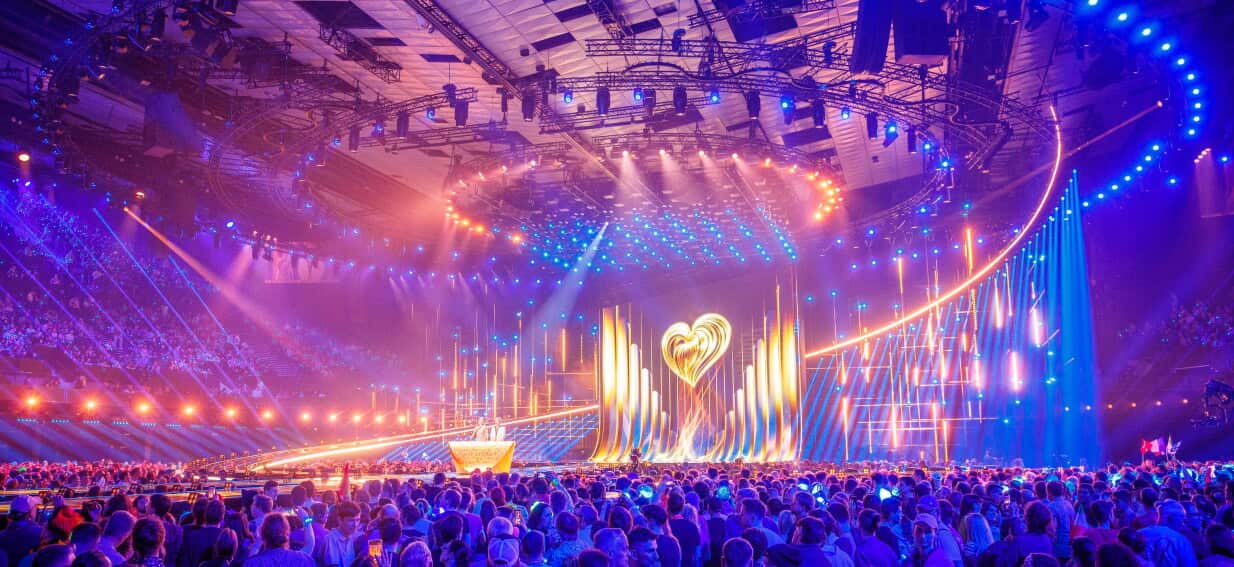
Eurovision just rewrote its rulebook so that winning a trophy doesn't automatically mean you get to throw the party.
If your country is tangled up in an armed conflict or serious geopolitical instability, your national broadcaster is officially ineligible to host the contest. Organisers from the European Broadcasting Union confirmed the update following an annual review of the competition.
For decades, the core premise of Eurovision has remained simple. You win, you host next year. It is a neat tradition that gives victors a massive tourism boost and a moment of national pride. But reality caught up with the song contest.
The Pressure Behind the New Regulation
The European Broadcasting Union didn't drop this policy out of nowhere. Tensions had been boiling for months.
Ahead of the 2026 contest in Vienna, five nations—Spain, Ireland, the Netherlands, Slovenia, and Iceland—boycotted the event entirely. They refused to share a stage while Israel participated amid the ongoing war in Gaza. Meanwhile, Israel finished second in both the 2025 and 2026 contests, coming dangerously close to taking the crown.
If Israel had won either year under the old format, the logistics of hosting a massive international broadcast in an active war zone would have created an absolute nightmare. The EBU faced mounting pressure from broadcasters, artists, and fans who argued that the traditional hosting mandate was no longer practical or safe.
We saw a preview of this back in 2023. Ukraine won the contest, but Russia's invasion made hosting impossible. The UK stepped in to run the show on Ukraine's behalf in Liverpool.
Under the updated guidelines, things work differently. If a winning broadcaster gets blocked due to security risks or armed conflict, an independent security body will assess the situation. The EBU will then appoint an alternative host broadcaster to manage the event in its own right, rather than forcing them to stage it on behalf of someone else.
Other Major Changes Coming to the Contest
The hosting ban isn't the only update shaking up the competition. Organisers also decided to target performer ages and live vocals.
Starting next year, every competing artist must be at least 18 years old on the day of their first rehearsal. The previous limit was 16. That change brings a bit more maturity and protection to young performers who get thrown into a media circus overnight.
Producers also tightened the rules around live vocals. Lead singers must perform the main melody live. Pre-recorded backing tracks are still allowed, but they cannot replace or secretly assist the main singer.
What This Means for the Future
Eurovision claims these tweaks protect the integrity of the contest. Critics might call it political interference in a show that constantly tries to pretend it has nothing to do with politics.
Either way, the era of unquestioned hosting rights is over. When the lights go down in Bulgaria for the 2027 contest—following Dara's victory—the entire landscape of the competition will look a bit different.
Check the lineup before you assume who is hosting next. The trophy might stay home, but the stage won't.