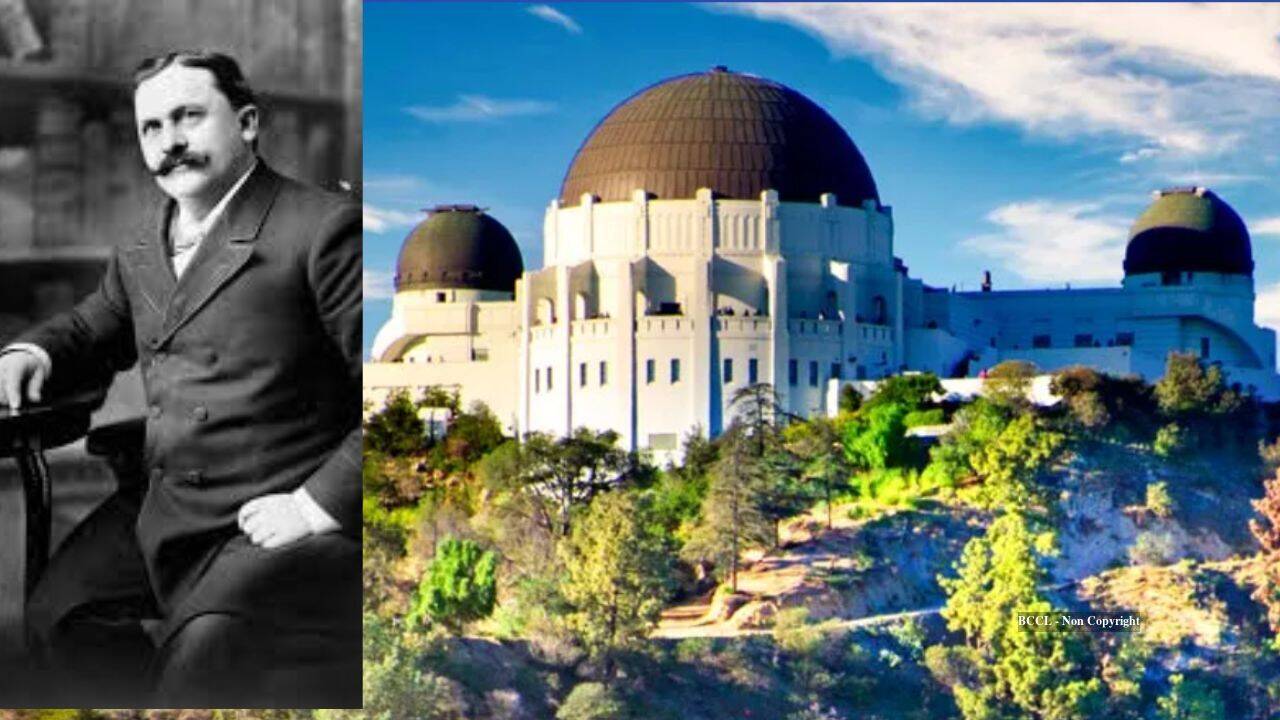
Back in 1882, a Welsh-born mining engineer named Griffith J. Griffith dropped $50,000 on a massive chunk of Southern California dirt. It was 4,071 acres of Rancho Los Feliz, a sprawling former Mexican land grant full of scrub oak, chaparral, and wandering cattle.
Most people didn't see much value in those steep hillsides above the Los Angeles River. Griffith did. Fourteen years later, he handed over 3,015 acres of it to the city of Los Angeles. That single gesture carved out one of the largest municipal green spaces in the United States and gave the city its most iconic skyline backdrop.
If you've ever hiked up to the Griffith Observatory or fought for parking near the Greek Theatre, you've lived inside a real estate transaction from the nineteenth century that changed an entire metropolis. Let's look at how it actually happened, and why the man behind it remains one of the most polarizing figures in California history.
The Speculative Bet on Rancho Los Feliz
In the late nineteenth century, Los Angeles was nothing like the sprawling concrete sea we know today. It was a booming frontier town trying to figure out its identity. Griffith had made a fortune in Nevada silver mines and wanted to plant roots and capital in Southern California.
Buying over 4,000 acres of rocky, rugged terrain didn't look like an immediate ticket to riches. There was no water infrastructure up in those steep canyons. Cattle ranching was about the only practical use at the time. But Griffith wasn't thinking about short-term cattle profits. He understood that a growing city would eventually run out of room, and control over the hills flanking the river meant control over the region's recreational destiny.
He didn't keep all of it for a private empire, which is where the story takes a surprising turn.
The 1896 Gift That Stunned the City
In December 1896, Griffith walked into city hall and deeded 3,015 acres to Los Angeles.
He attached strict rules to the transfer. The land had to remain a public park, completely free and open to everyone forever. No private development, no gated estates, no commercial sell-offs. Civic leaders were caught off guard. At the time, major American cities were wrestling with rapid industrialization, crowded tenements, and dirty air. Griffith's donation gave Los Angeles an enormous ecological lung right as the streetcar suburbs started pushing outward.
Over the years, additional land transfers pushed the park past 4,300 acres. It swallowed up deep canyons, ridges, and wildlife corridors that somehow survived the relentless paving of Southern California.
The Stargazer's Final Will and Testament
Griffith didn't just want a place for people to walk their dogs or ride horses. He had a specific obsession: astronomy.
He believed that letting ordinary people gaze through high-powered telescopes would humble them and expand their minds. Long before the park's famous white domes went up, he wrote about his vision for a public observatory on Mount Hollywood.
He didn't live to see it built. Griffith died in 1919, leaving a specific bequest in his will to fund the construction of an observatory on the donated land. When the Griffith Observatory finally opened its doors in 1935, it immediately became a cultural touchstone. Perched on the southern slope of Mount Hollywood, it offered sweeping views from downtown down to the Pacific Ocean, bridging high science with everyday public access.
A Dark Legacy Beneath the Stars
You can't talk about Griffith Park without confronting the man's deeply troubled personal life. History loves a clean hero, but Griffith was anything but.
In September 1897, less than a year after his monumental park donation, Griffith shot and seriously wounded his wife, Christina, during a stay at a Santa Monica hotel. He was convinced she was conspiring to poison him and that the Pope was involved—symptoms of severe alcohol-induced paranoia.
He was convicted of assault with intent to murder and served two years in San Quentin prison. When he got out, he found himself an absolute social outcast. His name was radioactive in polite society. Yet the city still accepted his money for the observatory decades later because the municipal thirst for funding outweighed the stain of his crime.
Today, that contradiction sparks fierce debates. Historians and local activists frequently question whether a park and a world-class science center should proudly bear the name of a convicted attempted murderer. City leaders have debated renaming landmarks, but for now, the name sticks.
Why the Landscape Still Matters
Strip away the personal drama, and the physical reality of the park remains an engineering and civic marvel.
It protects native ecosystems in the middle of a massive urban sprawl. Coyotes, bobcats, mule deer, and dozens of migratory bird species still navigate its chaparral-covered ridges. It hosts everything from the Autry Museum of the American West to miles of rugged single-track trails that give millions of stressed city dwellers a quick escape from traffic.
Griffith dropped $50,000 on a gamble in 1882. It turned into a public trust that no amount of modern real estate speculation can touch.
Next time you catch the sunset glow against the white art deco domes of the observatory, remember the strange math behind it. A tainted mining baron bought some cheap cattle land, handed most of it to a growing city, and inadvertently built the backyard of Los Angeles.