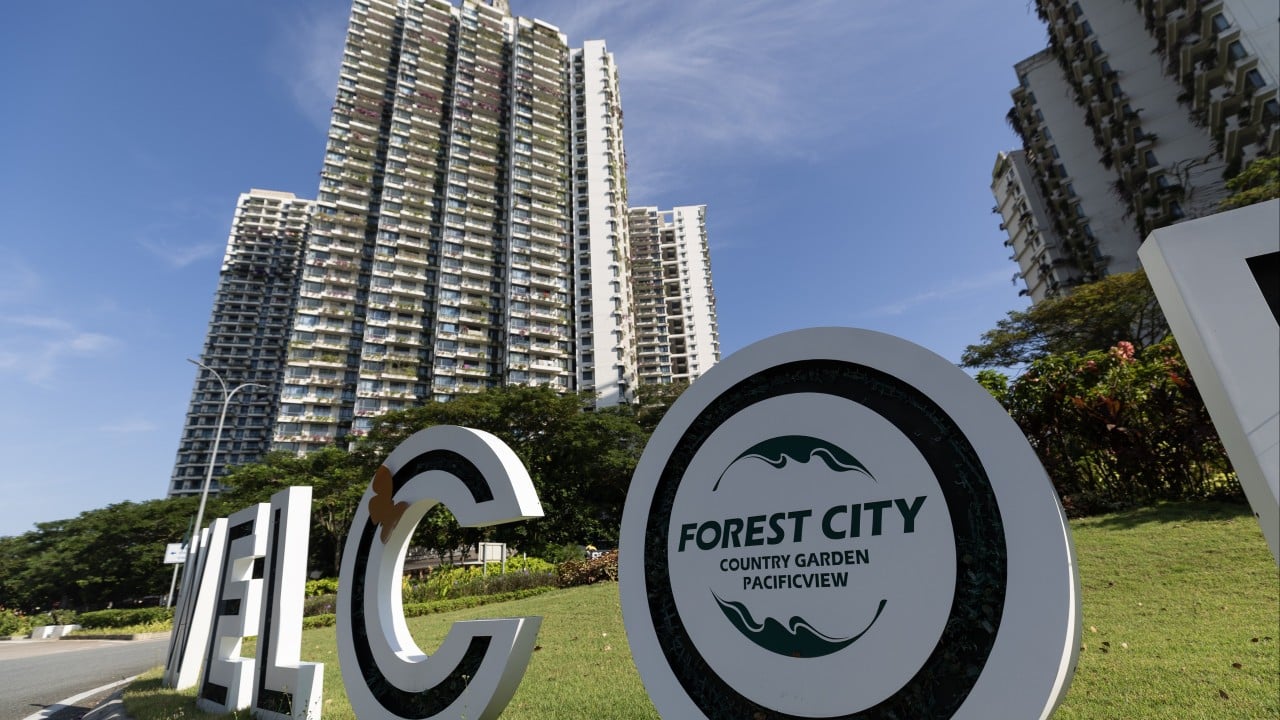
When law enforcement officers breached 27 apartments and five luxury bungalows in Johor's multi-billion dollar Forest City development, they weren't just disrupting petty criminals. They were uncovering an industrial-scale transnational fraud machine hiding in plain sight.
The July 15 raids netted 335 suspects, seized hundreds of computers and thousands of mobile phones, and instantly threw Malaysia's grand revitalization plans into an awkward spotlight. For years, Putrajaya has tried to shake off Forest City's reputation as a sterile, China-backed ghost town. Officials rolled out tax incentives, pushed special financial zones, and tried to court global wealth.
Then came the scam syndicates.
Let's look at what actually happened, why this development became an easy target, and what it says about modern organized crime moving into semi-vacant luxury real estate.
The Anatomy of the Forest City Crackdown
The numbers coming out of Johor police headquarters are staggering. Of the 335 people detained during the coordinated sweep, 309 were Chinese nationals, alongside individuals from Indonesia, Myanmar, and a handful of local Malaysians providing logistical support.
These syndicates weren't huddled in cramped shophouses or hidden deep in jungle clearings. They operated out of nearly five full floors of high-end apartments and exclusive waterfront bungalows. They booked corporate-backed flats under company names while using individual identities for the landed properties.
They ran classic playbooks: fake cryptocurrency investment schemes, sophisticated romance scams, and fraudulent impersonations of international law firms. Their targets weren't locals. Victims spanned across China, Indonesia, Japan, Europe, and the United States.
Many of these syndicate members had recently slipped across borders from places like Cambodia, setting up camp in Malaysia for only a few weeks before authorities closed in. They offered employment contracts promising monthly salaries between RM2,500 and RM4,000, pulling desperate or coerced workers into global cyber-slavery operations.
Why Forest City Was Built for Criminal Exploitation
If you've ever visited Forest City, you understand its unique vulnerabilities. Conceived as a sprawling, futuristic metropolis by Country Garden Holdings on reclaimed land near Singapore, it suffered from a massive oversupply of vacant units.
When a massive real estate project sits half-empty, security protocols tend to relax. Property managers want occupancy, rental income, and life pumped into empty corridors. Criminal syndicates love quiet developments. Low foot traffic means fewer prying eyes. Large blocks of vacant luxury apartments mean they can rent multiple units side-by-side without neighbors noticing suspicious traffic or late-night call-center chatter.
Furthermore, the isolation of the island-style layout provides a psychological buffer. It feels exclusive, which ironically makes it easier for transnational networks to operate undetected behind gated facades.
Property developers and local officials want economic revival. They want foreign buyers to snap up inventory. But when units are sold or leased en masse through opaque corporate entities without stringent background checks, criminal elements slip right through the cracks.
The Governance Reality Check
Putrajaya wants to turn Johor into a powerhouse. Between the Johor-Singapore Special Economic Zone and aggressive tax breaks for Forest City, billions of ringgit are riding on smooth execution and pristine investor confidence.
These raids force a hard conversation about regulatory oversight. When thousands of units belong to absentee landlords who lease properties through remote proxy agents, local councils lose track of who is actually sleeping behind the front door.
Johor police chief Ab Rahaman Arsad confirmed that investigators are working directly with Interpol to track down the hidden masterminds. Yet arresting 335 foot soldiers and seizing 1,557 mobile phones is only scratching the surface. The real test is structural.
Can Malaysia attract high-value residents and legitimate tech enterprises while tightening landlord accountability? Right now, transnational scam syndicates treat Southeast Asia like a moving chessboard. When one country cracks down, they pack up their laptops and shift operations to the next under-regulated luxury development.
What Needs to Change Immediately
Solving this vulnerability requires practical, unglamorous enforcement shifts.
First, property developers in mega-projects must face stricter compliance mandates regarding corporate rentals. If a single entity or proxy books multiple floors of luxury apartments, alarm bells should ring. Landlords and property management firms need skin in the game. They should face severe penalties if their units turn into illegal operations.
Second, law enforcement needs a permanent, high-tech intelligence outpost inside sprawling developments like Forest City. Waiting for cross-border syndicates to entrench themselves for months before launching massive reactive raids is an outdated strategy.
Malaysia has a golden window to salvage Forest City's economic reputation. But economic ambition without rigorous governance is just an invitation for organized crime.
Stop treating empty luxury developments as blank slates for any investor with cash. Verify the tenants, hold the landlords accountable, and lock down the physical loopholes before the syndicates move back in.