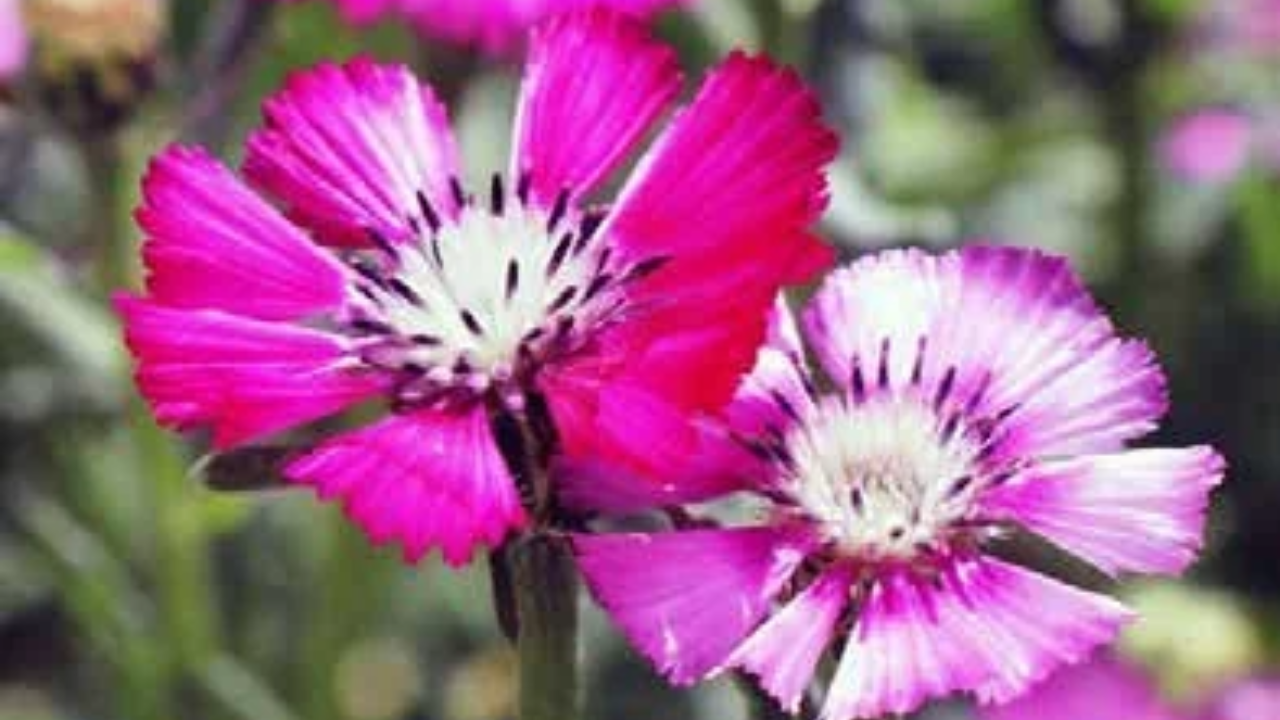
History has a habit of hiding in plain sight. Deep inside a 4,000-year-old Hittite pottery jug unearthed at the Külhöyük mound in Ankara's Gölbaşı district, archaeologists recently made an unexpected discovery: the oldest known seed remains of Turkey's endemic "love flower."
If you've never heard of Centaurea tchihatcheffii, you aren't alone. Locally known as sevgi çiçeği or yanardöner, this striking member of the daisy family blooms in shades of red, pink, and purple exclusively in a tiny corner around Ankara. Finding its seeds locked inside Bronze Age coarse pottery proves this native blossom has quietly witnessed four millennia of human history in central Anatolia.
Yet, as archaeologists celebrate the find, botanists are sounding alarms. This ancient botanical survivor faces modern extinction.
Inside the Hittite Seal Cutter Workshop
The discovery wasn't made in a glamorous royal tomb. Excavation director Derya Yilmaz Tekin and her team at Ankara University uncovered the vessel in Room 1 of a major complex at the center of the Külhöyük mound.
The room itself tells a fascinating story of Bronze Age industry. Alongside the rounded, three-knobbed jug, researchers found:
- Fragments of bull-headed cult bowls
- Unfinished administrative seals
- Weaving weights made from broken pottery
- Obsidian blade fragments and a mud-brick hearth
Archaeologists believe this structure functioned as an ancient seal cutter's workshop operating at the dawn of the Old Hittite period. Archaeobotanists Emel Oybak-Dönmez and Barbaros Yaman sifted through the site's botanical layers, identifying everyday staples like bread wheat, einkorn, barley, lentils, and bitter vetch alongside wild oak seeds and the ancient love flower remnants.
Why someone deliberately tucked those specific flower seeds inside a pottery jug four thousand years ago remains an open question. Were they keeping them for medicinal use, religious rituals, or simple storage? We may never know for certain. But their presence confirms that the plant's deep roots in the region stretch back far beyond modern memory.
Why This Rare Flower Is Teetering on the Edge
While the Hittites shared their landscape with Centaurea tchihatcheffii, today's generation might be the last to see it grow naturally. The plant's geographic range is painfully restricted to the Gölbaşı area, making it uniquely vulnerable to human activity.
Urban expansion around Ankara eats away at its natural habitat every year. But the greatest threats come directly from modern farming practices. Research conducted by Yasemin Ergüner Baytok at Middle East Technical University revealed that agricultural chemicals inflict massive damage on local populations.
Herbicides are particularly lethal. When farmers spray fields to clear weeds, they inadvertently wipe out high percentages of the love flower, severely reducing seed germination rates. Stubble burning—a common practice after harvest—similarly sterilizes the topsoil and destroys dormant seeds waiting for the next rain.
The Surprising Paradox of Tillage
Agriculture is often painted purely as the enemy of wild endemic plants, but the reality on the ground is more complicated. Baytok’s field monitoring yielded a counterintuitive finding: mechanical soil tillage actually increased plant density the following year.
When tractors turn over the soil, they bury older seeds to optimal depths while bringing dormant ones closer to the surface, breaking up crusts that would otherwise block germination.
Conservation doesn't mean locking farmers off their land entirely. Instead, timing is everything. Data suggests that if farmers delay ploughing until after the plants have finished setting their seeds—ideally rotating or restricting heavy tilling to once every two years—wild populations can maintain their numbers while agricultural land remains productive.
What Real Conservation Looks Like
Authorities haven't stood by while the species slips away. In 2016, a targeted conservation project launched around Lake Mogan. Crews fenced off critical growing zones, monitored land use, and began seed-banking programs to reintroduce the flower into protected pockets.
The Gölbaşı Municipality secured a geographical indication registration for the flower in 2019, giving it official protected status and local cultural recognition. Its Turkish moniker, yanardöner, translates roughly to "shining and changing," describing how its petals seem to shift color depending on the angle of the sunlight.
Protecting an endemic species isn't just about saving a pretty weed. It preserves a living thread connecting modern Turkey to the Bronze Age civilizations that walked those exact same plains four millennia ago.
Stop spraying near field borders, shift your ploughing schedules by a few weeks, and let the ancient landscape breathe.