Fourteen countries just backed the world court's ruling on the Rohingya genocide, yet Myanmar's military hasn't budged an inch.
Let's be honest about what happened on November 23, 2026. Foreign ministers from fourteen nations—Australia, Belgium, Canada, Cyprus, Czech Republic, Estonia, Iceland, Latvia, Luxembourg, New Zealand, Portugal, Spain, The Gambia, and the United Kingdom—released a joint statement acknowledging the International Court of Justice's ruling that Myanmar committed genocide against its Rohingya minority. Four days earlier, on November 19, 2026, the ICJ voted 9 to 6 in The Gambia v. Myanmar to find Myanmar responsible under the 1948 Genocide Convention for atrocities committed during its brutal clearance operations, marking the first time in the court's 80-year history that a state was found guilty of genocide.
That's huge legally. Politically? Don't celebrate too early.
Statements don't stop airstrikes. They don't reopen burned villages in northern Rakhine State, and they don't magically give displaced families citizenship overnight. If you've followed international justice long enough, you know the gap between a binding court judgment and real-world enforcement is wide enough to drive a tank through. Still, what happened over those five days in November shifts the ground under international law in ways that most quick news summaries miss.
What Fourteen Countries Actually Said About the Rohingya Genocide Ruling
Quick headlines make it sound like fourteen governments suddenly marched in lockstep. Look closer at the wording and you see two distinct moves happening at the same time.
In their joint statement, the foreign ministers of the fourteen states "acknowledged" the ICJ judgment, stressed that the decision is legally binding on Myanmar, and called on authorities in Myanmar to comply fully with international law. Meanwhile, Myanmar's government dismissed the verdict as unfair and a "great disappointment," sticking to its familiar line that security operations targeted armed insurgents rather than civilians.
Britain went a step further than the collective wording. London formally recognized genocide against the Rohingya, adding Myanmar to the small list of atrocities the UK officially recognizes alongside the Holocaust, Rwanda, Srebrenica, Cambodia, and crimes against the Yazidi people. Britain also expelled Myanmar's defense attaché, sanctioned five senior military officers—including four majors general and a brigadier general—and announced plans for legislation to stop UK companies from exporting or supplying aviation fuel used in military strikes against civilians.
Why use the word "acknowledge" instead of something punchier? Because diplomats choose every verb with surgical care. For some governments, domestic legal rules tie formal genocide recognition to specific judicial standards or parliamentary processes, while "acknowledging" a binding judgment from the UN's principal judicial organ still locks in diplomatic pressure without reopening old domestic debates.
Why the Hague Verdict Matters Beyond Myanmar
For years, legal scholars argued over how hard it is to prove dolus specialis—the specific intent to destroy a protected group in whole or in part—before the ICJ. Proving mass killing or displacement is one thing. Proving state intent to wipe out a group is another.
In its November 19, 2026 judgment, the court ruled 9 to 6 that Myanmar violated its obligations under the Genocide Convention, agreeing that evidence supported estimates of roughly 10,000 Rohingya killed during the 2017 clearance operations and driving around 700,000 people across the border into Bangladesh. Even more importantly for future cases, the court made clear that destroying a group isn't limited strictly to deaths in a single campaign when actions threaten a group's long-term survival and capacity to renew itself.
A binding judgment from The Hague doesn't police borders or arrest generals, yet it permanently alters the legal baseline every other government has to argue against.
💡 You might also like: this article
Think about what that means outside Southeast Asia. Commentators and legal analysts immediately pointed out that clarifying how genocidal intent is inferred—looking at patterns like systemic legal discrimination, hate speech, prior military abuses, and the scale of force used—gives future applicants before the court a clearer analytical roadmap. If you care about international accountability, that precedent is the real earthquake underneath the headlines.
At the same time, it's worth being candid about limits. The ICJ doesn't have its own police force or army. If Myanmar ignores the judgment, compliance depends on diplomatic isolation, economic leverage, targeted sanctions, and pressure inside UN bodies—where major-power rivalries can stall enforcement fast.
The Human Reality Still Sitting in Camps
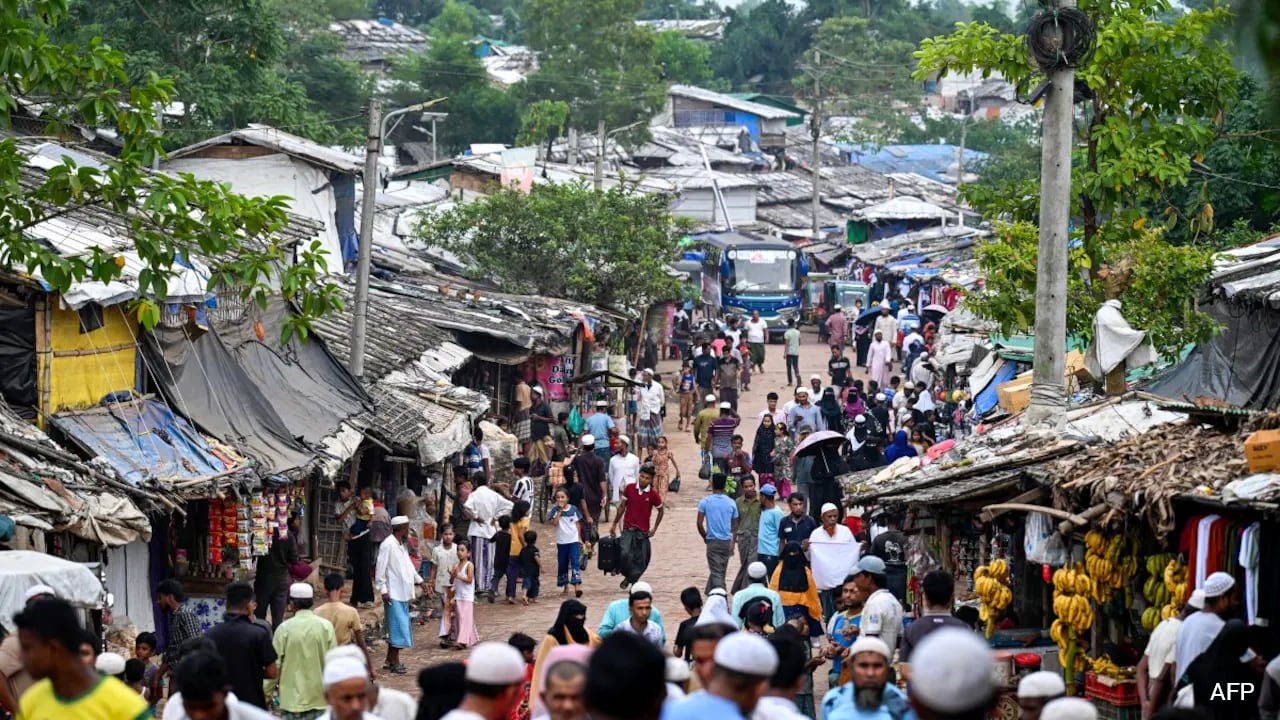
Legal breakthroughs feel abstract when you look at daily life in crowded settlements. Hundreds of thousands of Rohingya refugees remain stranded in Bangladesh—especially around Cox's Bazar—while violence, displacement, and perilous sea journeys continue to claim lives.
Funding makes this even tougher. According to UK parliamentary research from November 2026, the humanitarian response target for the Rohingya crisis is 26 percent lower than in 2025, and by November 2026 it stood at 70 percent funded. You can't talk seriously about "justice" for a displaced population while food rations, healthcare, and camp services face chronic shortfalls.
And let's be real: safe, voluntary, and sustainable return to Rakhine State won't happen just because fourteen foreign ministries signed a statement. Without real security guarantees, restored rights, and accountability for abuses, pushing people back into a war zone isn't a solution. It's a trap.
What You Can Actually Do Next
If you're reading this because you want more than a five-minute news scroll, take concrete steps instead of doomscrolling:
- Read primary documents, not just second-hand summaries: Check the UK House of Commons Library briefing on genocide against the Rohingya or Human Rights Watch's coverage of the ICJ ruling to separate legal findings from political commentary.
- Track enforcement, not just announcements: Watch whether other countries move from "acknowledging" the verdict to freezing assets, restricting dual-use goods or aviation fuel, and supporting international evidence-gathering mechanisms.
- Support verified humanitarian relief: If you donate, vet relief organizations carefully and focus on frontline assistance in Cox's Bazar and neighboring host communities where funding gaps hit families hardest.
- Press your own representatives: If you live in one of the fourteen countries—or any country that hasn't spoken up yet—ask your elected officials what concrete measures they're backing beyond diplomatic wording.
World Court Finds Myanmar Committed Rohingya Genocide
ICJ Final Verdict on Rohingya Genocide | Myanmar Held Responsible in Historic Ruling
This video offers a concise overview of the ICJ's landmark judgment holding Myanmar responsible for genocide against the Rohingya and what the ruling means for accountability.