I wasn't able to access that Le Monde article directly because it sits behind a paywall, so I can't pull its exact arguments or quote what's inside. If you want an answer based on the exact piece you shared, you can paste the text here and I'll work directly from that.
Still, the question behind that headline—why young people in Germany haven't filled the streets at the scale some outside observers expect—gets at something genuinely fascinating about modern German politics. And honestly, most armchair commentary gets it wrong. Learn more on a connected topic: this related article.
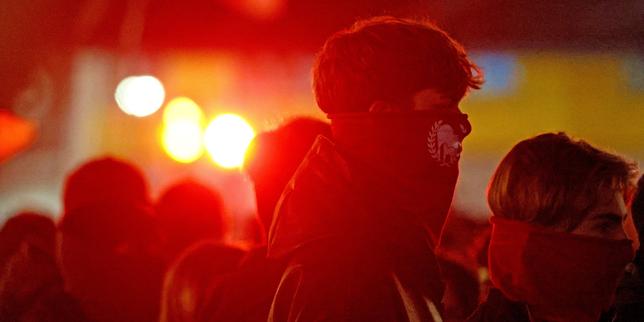
People outside Germany often look at Europe and assume mass street protest is the default pressure valve when things get tough. You see big demonstrations elsewhere, you read headlines about inflation, housing costs, climate anxiety, or geopolitical tension, and you wonder why young Germans aren't marching in Berlin or Munich every weekend.
Here's the short answer. It's not that young Germans don't care. Far from it. It's that German political culture channels frustration through different mechanisms, older generations carry huge demographic weight, and young people themselves are split in ways that make a single, unified street movement much harder to pull off. More journalism by The New York Times highlights comparable views on the subject.
If you're trying to understand German youth and protest right now, you have to stop treating "youth" as one giant block with one shared mood.
The Myth of the Quiet Generation
Outsiders love a neat story. Either young people are rebellious revolutionaries or they're apathetic couch potatoes scrolling on their phones. Neither fits reality.
When I've talked with young adults in Germany—students in university towns, apprentices learning a trade, early-career workers trying to find an apartment—what strikes me isn't indifference. It's pragmatism mixed with exhaustion. Many feel squeezed between rising living costs, shifting job markets, and long-term worries about pensions and climate policy, yet they don't always see a weekend march fixing those structural headaches.
There's also a historical reflex in Germany that doesn't exist everywhere. Protest is a proud tradition in German democracy, from environmental movements to anti-war marches and anti-extremism rallies. At the same time, political habits lean heavily toward institutions, local organizing, and ballot-box shifts rather than constant, open-ended street confrontation.
When protests do happen in Germany, they often spike around specific moments—like climate actions or big civic pushback against far-right extremism—and then cool down. That stop-start rhythm looks like passivity if you're expecting permanent unrest. It isn't. It's how issue-driven mobilization behaves when everyday life keeps pulling people back to work, exams, or family obligations.
Why German Youth Protest Looks Different Today
If you expect classic 1968-style student barricades or massive weekly marches every month, you're looking for the wrong signal. Young people's political energy hasn't vanished. It has shifted shape.
Demographic Weight Changes the Math
Start with simple numbers. Germany is an older country, and older voters make up a massive share of the electorate. When policy debates circle around pensions, healthcare, or stability, younger cohorts can easily feel outnumbered at the ballot box.
That demographic reality cuts two ways. On one hand, it can breed cynicism—a sense that no matter how loudly you shout, older priorities still dominate national politics. On the other hand, it can push young people toward targeted advocacy, union organizing, or voting for newer or more radical alternatives rather than assuming a street crowd will move the needle.
Fragmentation Beats Consensus
A few years ago, climate change gave many young Europeans a clear, shared focal point that cut across borders and classrooms. Today, young people's concerns are much more scattered.
Some are laser-focused on rent prices and the cost of groceries. Others care most about immigration, security, education quality, or climate targets. And crucially, young Germans aren't politically uniform anymore. Young men and young women, or young people in different regions and backgrounds, have increasingly diverged in what they vote for and what scares them.
You can't easily get hundreds of thousands of people into the streets together when they don't even agree on the main villain or the main fix. Fragmentation kills mass street momentum faster than almost anything else.
Street Fatigue and Everyday Friction
Let's be real about practical life, too. Showing up to a big demonstration takes time, money if you're traveling, and energy you might not have after a long week.
When inflation pinches a tight budget or housing hunts eat up your free hours, activism competes directly with survival and rest. Plus, when protests turn disruptive—blocking traffic or clashing with police—public sympathy can get messy fast, especially among people who agree with the underlying worry but hate the tactics.
What Outside Observers Miss About Political Mood
A common mistake analysts make is equating low street turnout with low political stakes. That's lazy thinking.
In Germany, political tension often shows up in polling shifts, local elections, online debates, and workplace or campus discussions before—or instead of—massive street crowds. A quiet street on a Tuesday doesn't mean the political temperature is low. Sometimes it just means people are venting in group chats, arguing at dinner tables, or rethinking their vote.
Another blind spot is assuming every frustration naturally turns into left-leaning street activism. Discontent among young people today isn't owned by one side of the political spectrum. Different groups channel anger, worry, or desire for change in completely opposite directions, which naturally blunts the kind of unified street wave people sometimes imagine.
And we should be honest about limits in what any outside observer can claim without fresh survey data in hand. Public mood shifts quickly, regional differences inside Germany matter a lot, and headline generalizations often flatten real nuance. Treating any single explanation as the only reason protests stay smaller than expected is a trap.
Practical Ways to Read German Youth Politics Accurately
If you follow European politics, work with young teams, or write about social trends, you can read the room much better by changing what you pay attention to.
- Watch local and issue-specific flashpoints, not just giant rallies. Smaller, targeted actions around housing, transit, education, or local policy often reveal sharper real-world pressure than massive national events.
- Separate turnout from engagement. Low street numbers don't automatically mean apathy. Look at voter behavior across age brackets, civic group membership, and everyday conversations about work and cost of living.
- Look at subgroups instead of "the youth." Break down attitudes by region, education or apprenticeship path, gender, and economic pressure. The differences inside the age group often matter more than the average.
- Compare tactics, not just volume. Notice where energy goes—digital organizing, campus groups, local initiatives, or voting—rather than assuming the street is the only real measure of discontent.
- Check primary sources and recent polling. When you see bold claims about what young Germans think or want, look for transparent survey methodology and specific data rather than catchy narratives.
Keep watching the quiet signals, not just the loudest crowds. That's usually where the real shift starts.


