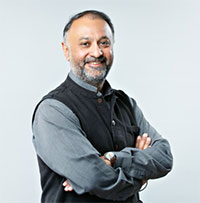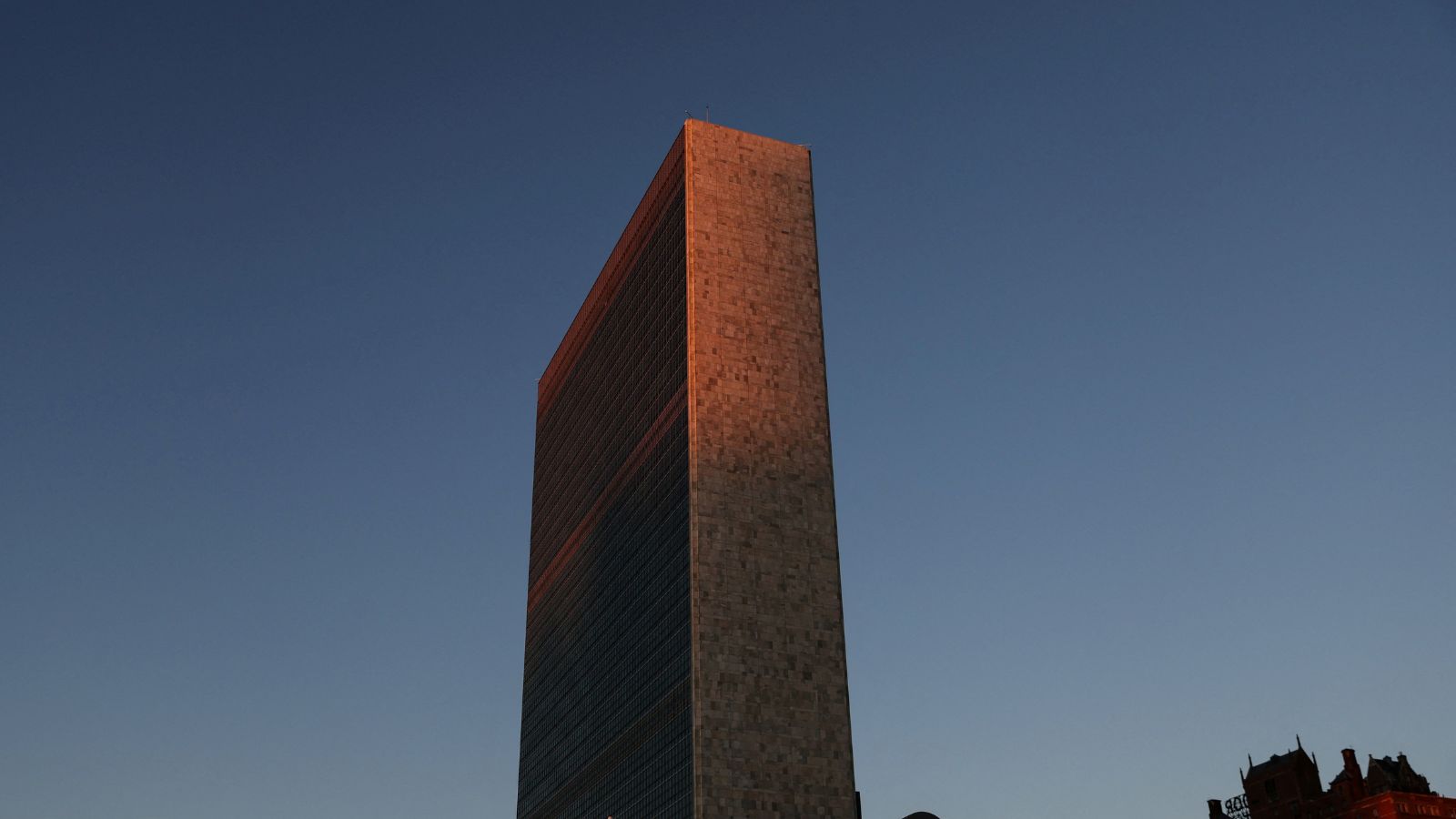
The United Nations Security Council was built for a world that died eighty years ago. While global economics, demographics, and military power have shifted dramatically, the top table at Turtle Bay remains frozen in 1945. India's permanent representative to the UN, Ambassador Parvathaneni Harish, recently drove a stake through a dangerous compromise floating around diplomatic corridors. New Delhi made it crystal clear: any reform creating new permanent seats without veto power is a non-starter. It creates a tier of second-class powers while leaving the old guard's monopoly untouched.
You don't fix a broken global governance architecture by handing out hollow titles. Let's look past the polite language of multilateral diplomacy and figure out what is actually at stake in this high-stakes game.
The Illusion of Progress at the United Nations
For decades, the conversation around reforming the UN Security Council has moved at a glacial pace. The Council currently stands at fifteen members. Five of them hold permanent status with absolute veto power: the United States, Russia, China, the UK, and France. Ten other countries rotate in and out on two-year terms.
Piecemeal proposals often surface suggesting an expansion of permanent seats, but with a clever catch. The old P5 members hint they might support adding emerging economic powerhouses like India, Brazil, Germany, or Japan, but withhold the veto. Proponents of this half-measure call it a pragmatic stepping stone. India calls it what it is: an insult.
If you sit at the high table but cannot block a resolution that threatens your core national security interests, you aren't an equal decision-maker. You are window dressing. You get all the responsibilities of global leadership with zero enforcement leverage.
Why the Veto Is the Ultimate Red Line
People often misunderstand the veto as an outdated instrument of obstruction. In reality, it is the glue holding the entire fragile multilateral system together. The veto ensures that major powers with divergent interests cannot be outvoted into a corner from which war is the only exit.
When the UN Charter was written, the architects knew that a global body cannot function if it forces a nuclear-armed state to accept binding security measures against its own will. Giving the original five nations that power acknowledged messy geopolitical realities.
If you add new permanent members without extending those exact same rights, you preserve a discriminatory club. You create an internal caste system inside the world's most powerful security organ. The original members keep absolute sovereignty over outcomes, while the newcomers operate under a permanent handicap. New Delhi's stance is blunt: all permanent members must enjoy equal rights and responsibilities. Anything less preserves global inequality under a shiny new coat of paint.
The G4 Push and the Hard Reality of Intergovernmental Negotiations
India isn't fighting this battle alone. Through the G4 coalition alongside Brazil, Germany, and Japan, New Delhi has pushed for a comprehensive expansion of the Council from fifteen to twenty-five members. They want both permanent and non-permanent seats added to make the body reflect modern economic and demographic gravity.
Yet, progress is painfully slow due to entrenched resistance. Some existing powers love the current stalemate because it protects their exclusive club. Others push counter-proposals that rely on intermediate models, suggesting temporary long-term seats or deferred veto rights.
India's recent statements put an end to entertaining these half-baked compromises. If you are going to open up the UN Charter to structural reform, you cannot settle for a consolation prize. Text-based negotiations need clear timelines, not endless procedural loops designed to kick the can down the road.
What Happens Next on the Global Stage
The diplomatic chess match continues as India campaigns for its ninth non-permanent term for 2028-2029, facing a contest with Tajikistan for the Asia-Pacific seat. Winning temporary stints proves diplomatic muscle, but it doesn't solve the structural deficit at the core of the UN.
Global multilateralism is losing credibility fast because it fails to manage contemporary conflicts effectively. When the primary organ charged with maintaining international peace and security looks like a relic of post-war Europe, nations start looking for alternative frameworks. Regional groupings, bilateral security pacts, and economic coalitions begin to bypass Turtle Bay entirely.
If the United Nations wants to remain relevant through the twenty-first century, it has to embrace true equality among its top stakeholders. Handing out second-class permanent seats won't save a sinking ship. True reform means giving new voices a real seat at the helm, complete with the tools to steer. Stop offering consolation prizes and start negotiating real structural parity.