The COP31 climate talks in Antalya just fell apart, and Australia is standing right in the blast radius. Campaigners want the Albanese government to reject the Hunter Valley Operations coalmine expansion, calling it a climate bomb that exposes the gap between Canberra's diplomatic talking points and its export habits.
If you've been following climate negotiations over the last few years, you know the script. Countries gather for weeks, draft compromises, and walk away arguing over language. This time in Turkey, a coalition of nations including European Union members, Panama, the Marshall Islands, Vanuatu, Norway, and Belize drew a hard line. They refused to back a proposed deal unless it explicitly stated that the world needs to transition away from fossil fuels.
When the talks collapsed without that commitment, the fallout landed straight back in Australian politics. Climate change minister Chris Bowen, who led negotiations at the summit, said he would have been happy to see a transition away from fossil fuels in the text, while pointing out that Saudi Arabia, Russia, and other oil-rich states blocked consensus. Fair enough on the diplomatic math. Still, critics see a deeper contradiction closer to home.
How COP31 collided with the Hunter Valley coalmine plan
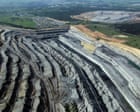
Right now, federal environment minister Murray Watt holds the pen on whether to approve the Hunter Valley Operations expansion in New South Wales. If signed off, the project would extend open-cut mining at the site by 19 years to 2045 and allow another 430 million tonnes of coal to be extracted and burned.
Glencore and Yancoal, the companies behind the development, have estimated it could generate around 800 million tonnes of greenhouse gas emissions, mostly when that coal is burned overseas.
That number is why activists call it a climate bomb. It isn't a polite metaphor. Eight hundred million tonnes of emissions is massive by any measure, and it cuts right against the argument that Australia can play climate peacemaker abroad while expanding long-lived coal infrastructure at home.
Naomi Hodgson from Rising Tide, a grassroots group known for its annual people's blockade at the Newcastle coal port, put it bluntly: to back up talk of climate action and Pacific solidarity, the Albanese government needs to reject the Hunter Valley expansion immediately. Gavan McFadzean of the Australian Conservation Foundation went even further, calling an approval reckless and warning that coal and gas exports come back to Australians as bushfires, floods, heatwaves, and droughts.
Georgina Woods, who leads research and investigations for the Lock the Gate Alliance, sees the summit's breakdown as a preview of political pressure building inside Australia. Leaders have spent years avoiding the core issue that burning coal, oil, and gas drives global warming, she argues, and that tactic has a use-by date.
A federal government spokesperson has kept things tight, saying the decision-making process is still underway and that further comment would be inappropriate. Hunter Valley Operations declined to comment.
What most people miss about Scope 3 emissions and state approvals
Here's where public debate gets messy, and honestly, a lot of people talk past each other without realizing why.
When a coalmine expands in New South Wales, the New South Wales Independent Planning Commission looks closely at local and state impacts. In September, the commission approved the Hunter Valley Operations expansion after hearing from workers, unions, climate groups, scientists, and residents affected by climate impacts. Its conclusion was stark: the climate damage from the expansion was outweighed by its benefits to the Hunter region and New South Wales.
That reasoning frustrates climate advocates to no end, and you can see why. If you look mostly at local jobs, regional economic activity, and direct domestic accounting, a mine looks like a familiar economic engine. If you look at the full lifecycle of the coal—especially when shipped overseas and burned—the climate ledger looks completely different.
That tension between domestic politics and global emissions isn't unique to this single mine, either. In late November 2026, New South Wales passed legislation tied to the Mount Pleasant coalmine amid sharp criticism from the Greens over political motives and governance risks. Meanwhile, federal attention has turned to Murray Watt's decision under federal nature laws, following a report from the national environmental protection agency completed earlier in November that has not yet been released.
From my perspective watching Australian energy politics, this is the exact trap governments keep stepping into. They want credit for renewable energy growth and multilateral climate diplomacy, yet they treat fossil fuel expansion as a separate bucket that doesn't affect their climate credibility. Voters and international partners don't separate those buckets nearly as neatly.
Why COP31 wasn't just another diplomatic stalemate
It's easy to look at a failed UN climate summit and assume nothing changed. Same rooms, same gridlock, same excuses.
That misses what happened in Antalya. According to climate observers and groups like the Australian Conservation Foundation, a bloc of countries was willing to blow up consensus rather than sign off on text that dodged the root cause of warming. Even analysis from Bill Hare on The Guardian framed the refusal to accept a watered-down deal as a line-in-the-sand moment where governments pushed back against fossil fuel interests.
There's also a real debate over what the summit's failure means for global climate governance. Some commentators argue UN summits need urgent reform because consensus rules let major fossil fuel producers stall progress. Others point out that market forces, clean technology costs, and domestic politics will keep pushing even when UN text stalls. Both things can be true at once. A diplomatic text isn't a law of physics, and physics doesn't care about diplomatic compromises.
Still, for Australia, COP31 carried extra baggage. Having an Australian minister at the center of negotiations that ended without a fossil fuel transition commitment makes every domestic coal decision louder. When vulnerable Pacific nations push for stronger action on fossil fuels, approving a coalmine running to 2045 invites immediate accusations of double standards.
The jobs and transition reality in the Hunter Valley
Let's be real about the other side of this argument, because ignoring it makes for bad analysis and worse policy.
The Hunter Valley has powered New South Wales and driven export earnings for generations. For families and union members in the region, coal isn't an abstract line item in a climate report. It's paychecks, shifts, apprentices, local suppliers, and community identity.
Campaigners argue that extending open-cut mining to 2045 locks in high emissions for two more decades and delays a serious transition. Supporters of the project—and many local workers—worry that shutting down mines faster than replacement industries arrive leaves regional communities carrying the cost.
That clash is real. You can't wave it away with slogans. At the same time, pretending a 19-year extension has no climate consequence doesn't solve the transition problem either; it just pushes the reckoning further down the road.
If you're trying to make sense of the competing claims around the mine and COP31, keep a few practical points in mind:
- Watch the unreleased agency report: The national environmental protection agency finished its recommendation earlier in November 2026, and what it says about environmental impacts will shape scrutiny around Murray Watt's decision.
- Separate local economics from global emissions: A planning body weighing regional benefits against local criteria reaches a very different conclusion from someone counting 800 million tonnes of projected emissions from burning coal abroad.
- Read diplomatic statements alongside approvals: Negotiators can blame oil-rich states for blocking summit text, yet voters will judge the Albanese government on the projects it actually approves at home.
- Look for concrete regional transition plans: Any credible path forward in the Hunter has to pair climate limits with real jobs, training, and industrial investment, not wishful thinking.
The decision on Hunter Valley Operations won't settle the entire fossil fuel debate on its own. It will, however, show whether the lessons of COP31 stay in Turkey or shape what happens next in Australia.