History has a funny way of sitting right under our noses for a century. Back in 1903, long before modern highways carved up the Midwest, photographers hauled heavy glass-plate cameras deep into an Illinois canyon to capture a rushing waterfall. That striking image ended up preserved by the Library of Congress. For generations, ordinary people couldn't actually visit the place. Corporate ownership locked the gates, wrapping the stunning limestone walls and flowing cascades in decades of restricted access.
Everything just changed. Covia, the corporate owner holding the keys, handed over more than 50 acres of pristine land to the Village of North Utica. The goal is straightforward on paper and complicated in practice: turn a forgotten natural wonder into a public park. If you liked this piece, you should look at: this related article.
If you live anywhere near Starved Rock Country, this land transfer is massive news. But before you grab your hiking boots, you need to pump the brakes. You can't actually walk the trails yet.
What the Clark's Falls Property Actually Looks Like
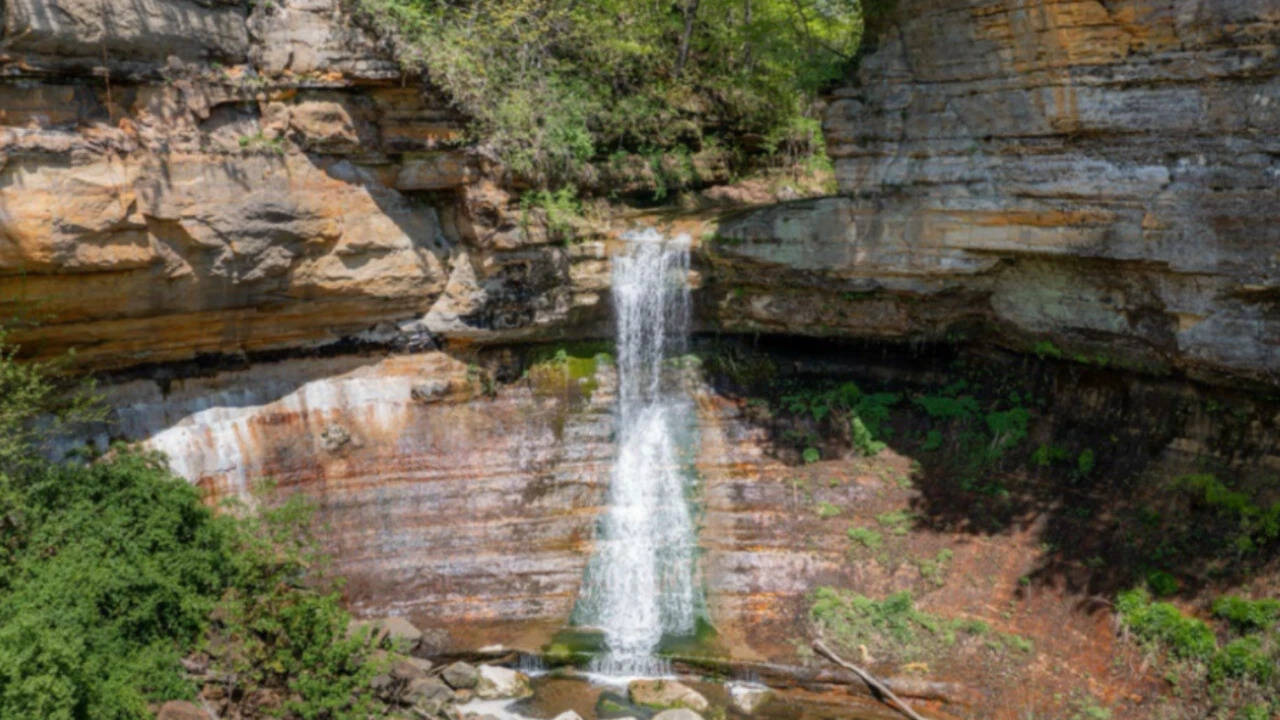
Let's get specific about what was just handed over. The newly donated property centers around Clark's Falls in North Utica, Illinois. We're talking about a main waterfall, an upper falls section, and a deep canyon framed by towering sandstone walls. Geologically, it shares a lot of DNA with nearby Starved Rock and Matthiessen state parks. For another perspective on this story, check out the recent coverage from Travel + Leisure.
Yet, it has stayed entirely off-limits to recreational hikers for generations. While tourists flooded the nearby state parks by the millions, this specific slice of landscape remained hidden behind industrial boundaries.
The historical roots run deep. James Clark arrived in Utica back in 1833, shaping the early community through involvement in the Illinois and Michigan Canal and local cement manufacturing. He held civic positions that laid the foundation for the town. The waterfall bears his name for a reason, tying early 19th-century industrial development directly to the natural landmark people are talking about today.
Why You Can't Visit Right Now
Corporate land donations sound like an overnight victory, but mayors and city planners know the reality is much messier. Utica Mayor David Stewart pointed out that while the potential is enormous, the village has a serious responsibility to approach the project carefully.
Right now, the site is closed. Entering the property without permission means facing actual fines or tickets.
Why the delay? Transforming raw industrial or restricted land into a safe public amenity takes years of heavy lifting. The village has to build a strategic planning committee from scratch. They'll have to tackle a massive checklist:
- Safety infrastructure: Sandstone canyons erode, edges are sheer, and water features present real hazards without proper railings or managed paths.
- Environmental protection: Uncontrolled foot traffic can destroy fragile canyon ecosystems before a park even opens.
- Parking and access: A 50-acre park needs dedicated vehicle space, signage, and entry points that don't choke local residential streets.
- Long-term maintenance: Parks cost money to clean, police, and maintain year-round.
What Happens Next for North Utica
North Utica already sits comfortably as the go-to gateway for Starved Rock State Park. Adding Clark's Falls to the map could completely change local tourism, but leaders insist they aren't trying to build a carbon copy of the state parks. They want to preserve its unique character.
There is no official opening date yet. The ink on the land transfer is barely dry, and the planning phase is just getting underway.
If you want to see Clark's Falls become a reality, your best move right now is patience. Keep an eye on local announcements from the Village of North Utica as they form their planning committees and figure out public input sessions. Don't risk trespassing on closed property. Let the experts map out the trails, build the safety infrastructure, and prepare the land so that when those gates finally open, the waterfall can be enjoyed the right way.