Automotive history usually gathers dust in forgotten corners or gets scattered across distant private facilities. Ford just changed that completely.
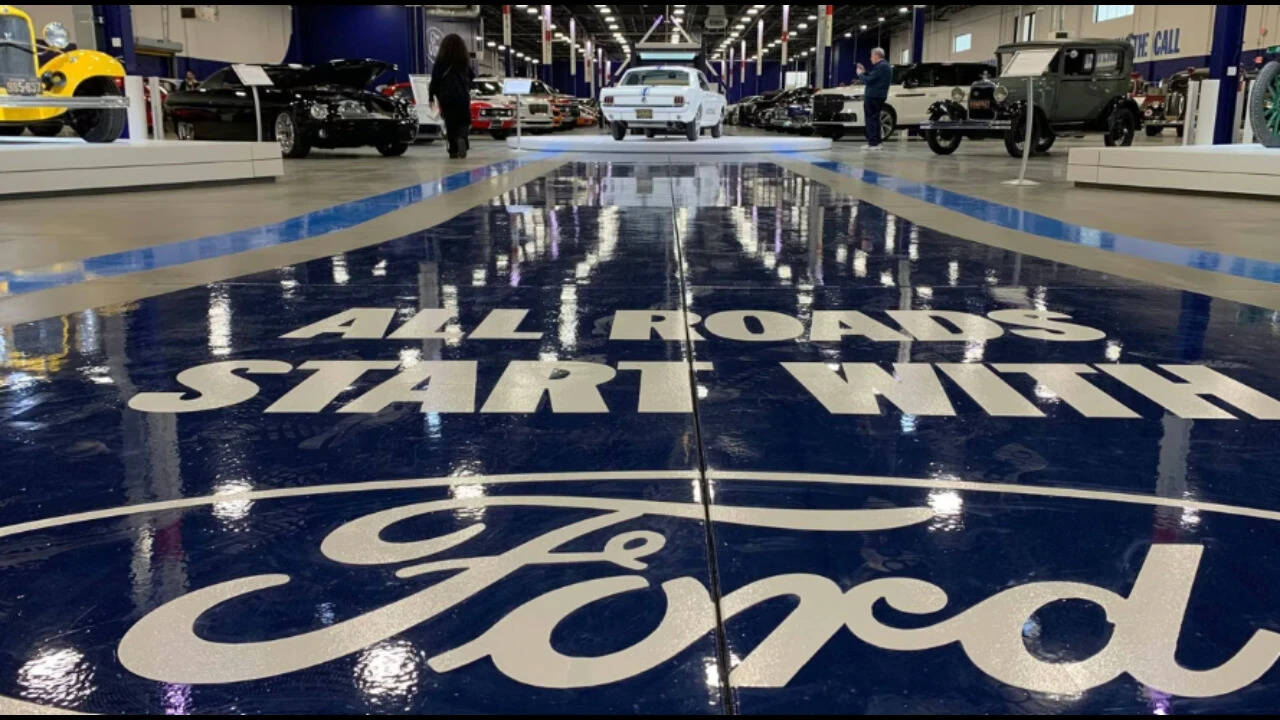
The company took a massive 79,000-square-foot former Amazon warehouse in Romulus, Michigan, and transformed it into a secure, permanent home for its legendary heritage fleet. This isn't just a parking garage for old vehicles. It's a high-security, purpose-built archive housing roughly 150 historic cars, including 125 rare gems put on display during its initial opening phase.
If you have ever wondered where corporate automotive giants store the crown jewels of their engineering past, the answer is sitting right outside Detroit. Here is what makes this multi-million dollar vault a big deal for car culture.
Why Ford Built the Romulus Vault
For decades, Ford's historic vehicles were split up across multiple storage locations, hidden away from the public and largely inaccessible to the very designers building modern cars. CEO Jim Farley pushed to fix this setup three years ago. He wanted an American equivalent to the heritage facilities major automakers maintain overseas.
Ford archives and heritage brand manager Ted Ryan spearheaded the effort. Instead of building a brand-new facility from scratch, they repurposed an industrial distribution footprint. The scale is staggering. Spanning 79,000 square feet, the space provides a climate-controlled, purpose-built environment where rare prototypes and race winners finally sit side-by-side.
Ciera Casteel, Ford’s archives manager, put it bluntly during the unveiling: "That's our legacy. That's what we do here. That is what this company is."
The Heavy Hitters Inside the Collection
You won't just find standard production models here. The vault groups vehicles into distinct storytelling pillars, covering everything from wartime manufacturing efforts to Hollywood pop culture.
The layout features approximately 60 concept vehicles and roughly 50 racing machines. A few standout pieces immediately catch the eye:
- The Le Mans Podium Sweepers: The actual first three cars to cross the finish line at the 1966 24 Hours of Le Mans are housed here. Immortalized by the silver screen in Ford v Ferrari, these endurance racers represent a defining era of American motorsport dominance.
- The "Johnny Cash" Mustang Prototype: Engineers kept a 2005 Mustang GT proof-of-concept that paved the way for the Shelby GT350. Because various teams bolted experimental pieces onto it over the years, staff affectionately nicknamed it "Johnny Cash" after the song about a car built "one piece at a time". It looks like automotive Frankenstein, and it has never been displayed publicly until now.
- Television and Celebrity Icons: Pop culture makes an appearance through vehicles like a vintage Mustang featured on The Mary Tyler Moore Show alongside a 1934 flathead Ford pickup truck on loan from comedian Jay Leno.
- Deep Cuts of History: The collection stretches from a British-built Model T up to experimental concepts that never made it to assembly lines. You can also view the very first F-150 built at the Rouge complex, showing how radically utility trucks have evolved.
A Working Archive, Not Just a Museum
Most car museums function as static exhibits where ropes keep you ten feet away from polished paint. Ford designed this space differently.
Design director Gordon Platto treats the vault as an active design tool. When current engineers and stylists need inspiration for future electric vehicles or next-generation trucks, they walk the floor. Seeing original packaging, experimental layouts, and historical proportions in person sparks ideas that digital CAD files simply cannot replicate.
It bridges the gap between past ingenuity and future manufacturing. When you look at World War II-era military vehicles—remember, Ford built massive numbers of Jeeps and B-24 Liberator bombers during the war—you see a template for rapid industrial scaling. That institutional memory matters when a legacy automaker tries to pivot through massive industry shifts.
Can You Visit the Ford Vault?
Right now, getting inside requires an employee badge or a golden ticket.
Due to local zoning rules and municipal permits in Romulus, Michigan, daily public walk-in access isn't active yet. Ford opened the doors for a heavily anticipated preview weekend, but regular civilian tours remain on hold while the company works out long-term zoning adjustments with the city.
Ford leadership insists the closure is temporary. Ted Ryan made it clear that keeping the space locked away permanently defeats the purpose. The ultimate goal is to integrate the vault into Michigan's broader automotive tourism network as soon as regulatory approvals clear.
Until then, the 79,000-square-foot warehouse remains an automotive time capsule—protecting the mechanical DNA of a century-old American giant while its engineers figure out what comes next.