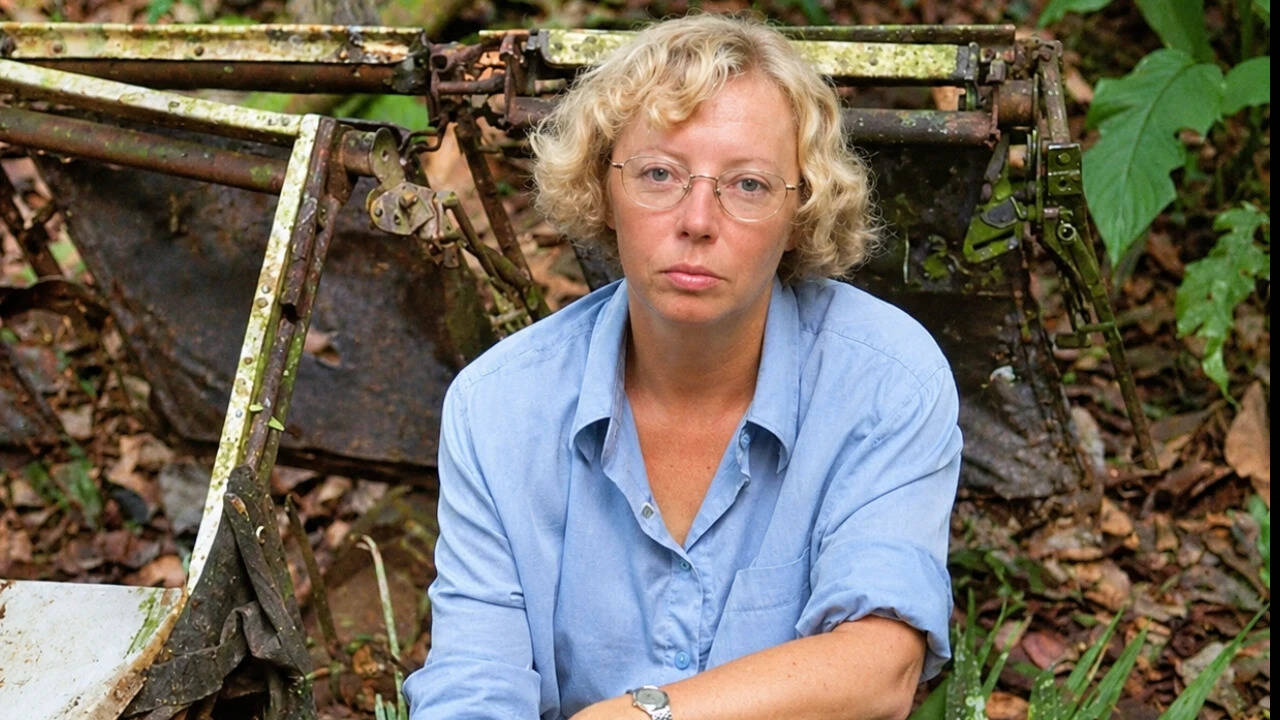
On Christmas Eve in 1971, seventeen-year-old Juliane Koepcke strapped herself into a seat on LANSA Flight 508, eager to reach her father in the Peruvian jungle. She never expected she would become the sole survivor of a catastrophic mid-air lightning strike, plunging three thousand meters into the green canopy below before walking eleven grueling days through the wilderness.
Most people hear this story and focus entirely on the impossible drop. Surviving a fall from ten thousand feet strapped to a row of airplane seats sounds like pure Hollywood fiction. Physics says it shouldn't happen. Yet, the real test wasn't the descent—it was everything that happened afterward in one of the most unforgiving environments on Earth.
The Fall That Defied All Odds
LANSA Flight 508 took off from Lima heading toward Pucallpa, carrying eighty-six passengers and six crew members. Turbulence hit hard almost immediately. The sky turned ink black, and violent flashes of lightning tore through the clouds. Passengers wept openly as the aircraft shook violently.
Juliane sat beside her mother, ornithologist Maria Koepcke. When lightning struck the outer engine on the left wing, her mother uttered a calm, chilling final phrase. Seconds later, the plane broke apart mid-air.
Juliane didn't wake up until the following morning. She found herself lying alone on the forest floor, still strapped to her seat. Her injuries included a broken collarbone, a torn knee ligament, deep cuts, and one swollen eye that barely functioned. She had lost her glasses, meaning her vision was blurred, and she wore only a sleeveless mini-dress and a single sandal.
Yet, she was breathing. Ninety-one other people on that plane were not.
Why Growing Up in the Jungle Saved Her Life
Many stranded travelers panic, run out of energy, and make fatal mistakes within forty-eight hours. Juliane didn't. Her parents were German zoologists who operated Panguana, a remote biological research station deep in the Amazon. She spent her formative years living among the trees, learning firsthand that the rainforest wasn't a malicious green hell waiting to destroy humans.
She understood a fundamental survival rule immediately: find running water.
Water sources act as highways out of dense jungles. She located a small creek and began following it downstream, wading through knee-deep water because walking through thick jungle brush with a torn ligament proved impossible.
Food was scarce. Her only sustenance was a small bag of candy she found in the wreckage, which she rationed carefully until it ran out. Hunger gnawed at her stomach, but dehydration and infection posed far greater threats.
Facing the Grim Reality of the Wreckage
On the fourth day of her trek, Juliane stumbled upon a horrifying sight. A row of three airline seats had crashed headfirst into the mud, still holding passengers.
As a teenager, confronting dead bodies proved profoundly traumatic. She poked the remains with a stick, initially fearing one body belonged to her mother. When she noticed the painted toenails of one victim—her mother never wore nail polish—she felt a wave of relief followed instantly by intense guilt.
Rescue planes droned overhead daily. She yelled until her voice cracked, waving frantically. But the dense Amazon canopy acted as a literal shield, hiding her tiny frame from pilots looking down from the sky. She quickly realized waiting for aerial rescue meant certain death. She had to keep moving.
The Battle Against Infection
By the tenth day, her physical condition deteriorated rapidly. The wound on her upper right arm, sustained during the fall, became infested with dozens of parasitic fly larvae. Maggots burrowed a centimeter deep into her flesh, causing agonizing pain.
Her father's past experience with their family dog saved her life. Their dog had suffered a similar parasitic infection, and her father had treated it using kerosene. Spotting a abandoned shelter with a motorboat, she found a liter of fuel left behind by local woodcutters.
She poured the fuel directly into the open wound. The burning sensation was excruciating as the parasites tried to burrow deeper to escape the chemical. Using her fingers, she pulled out roughly thirty maggots one by one.
The Voices of Salvation
On the eleventh day, floating or walking near a larger river, she discovered a small palm-roofed hut. She collapsed inside, too weak to continue.
Hours later, local Peruvian lumbermen returned to the shelter. When they first spotted her—battered, bloodied, wearing a tattered dress with one shoe—they initially mistook her for a water spirit from local folklore.
She spoke to them in fluent Spanish, explaining her ordeal. They immediately gave her food, tended to her wounds, and used their canoe to transport her downriver over several hours to a clinic. Civilisation greeted her with open arms, and the following day, she reunited with her weeping father.
Juliane Koepcke's story proves that survival often depends less on luck and more on quiet composure, environmental literacy, and the refusal to quit when every odd stacks against you.