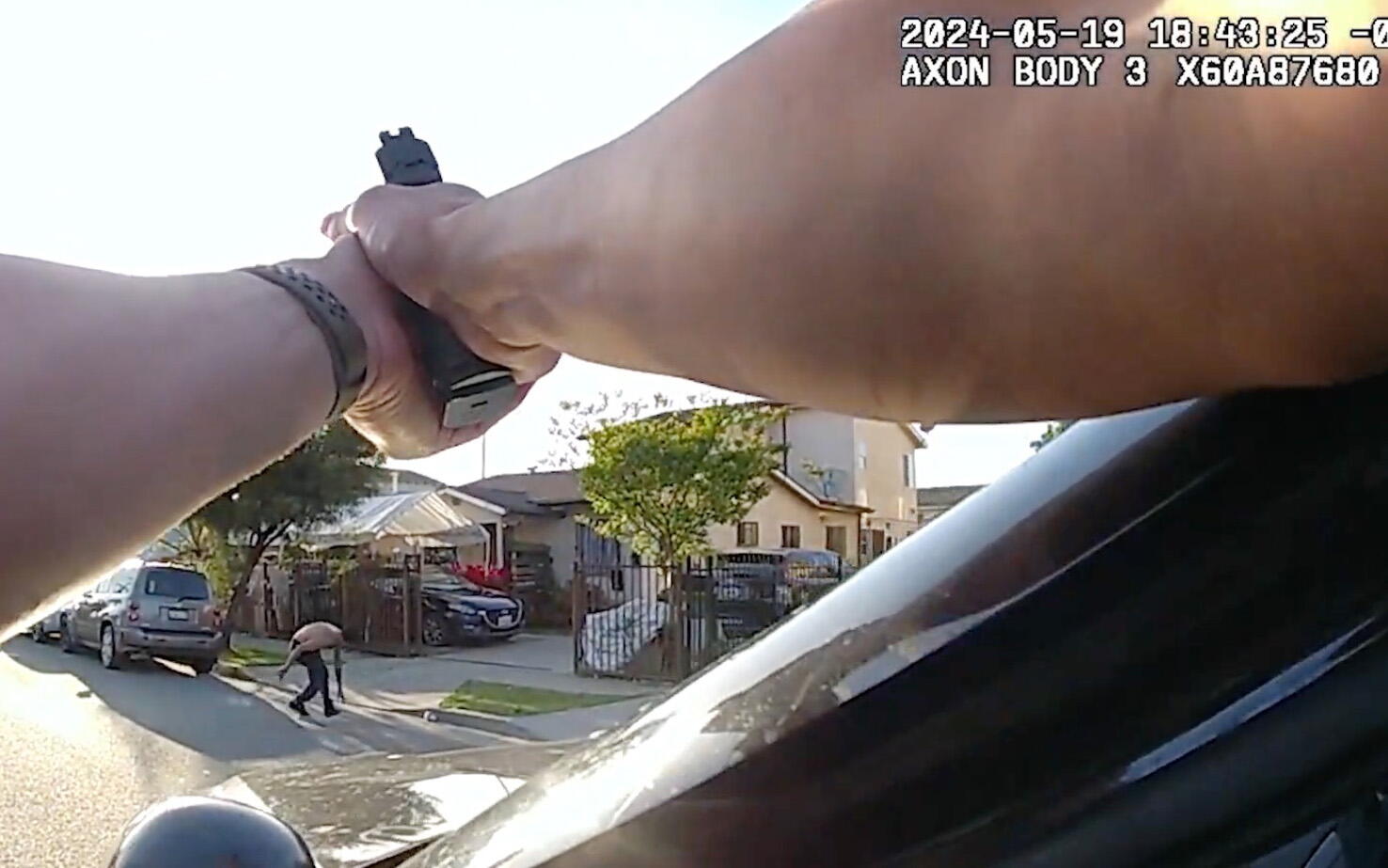
Two reports presented to the Los Angeles Board of Police Commissioners this week landed with a thud: LAPD shootings jumped 62% in 2025, rising from 29 incidents in 2024 to 47, putting Los Angeles ahead of other major U.S. police agencies in raw shooting counts. That headline is going to dominate local news for days, and honestly, it should. When a police department's firearms discharges climb that sharply in a single year, people deserve straight answers.
Still, if you stop at the top-line comparison, you miss half the story. Raw counts tell you how often officers pulled the trigger, not whether the LAPD is uniquely trigger-happy, why 2025 swung upward, or how those numbers stack up once you adjust for department size and patrol volume. For a different look, see: this related article.
How LAPD Shootings Compare To Other Major Police Agencies
On paper, the comparison looks stark. According to the LAPD's comparative review presented to the Board of Police Commissioners, Los Angeles recorded 47 officer-involved shootings in 2025. That edged out the Chicago Police Department at 45 incidents and sat well above the New York Police Department at 27, the Houston Police Department at 27, the Los Angeles County Sheriff's Department at 17, and the Philadelphia Police Department at 14.
Look closely at those figures, though, and context matters right away. New York has roughly 33,000 officers serving more than 8.5 million residents. Los Angeles operates with around 8,100 sworn officers on a roughly $2.1 billion budget. When you divide shootings by sworn personnel—a standard way analysts gauge relative frequency—the LAPD's 2025 rate sits around 5.5 shootings per 1,000 sworn officers, compared to 3.9 in Chicago and 0.8 in New York. Similar analysis on the subject has been provided by USA Today.
Even department-to-department comparisons come with a catch. Different agencies define, classify, and track critical incidents differently across states. Some count every firearm discharge regardless of whether anyone is struck, while others separate non-hit discharges, animal shootings, or multi-agency responses. In California, statewide reporting under state law also tracks "qualifying incidents" involving firearm discharges or force causing serious bodily injury or death, which produces much higher totals across agencies than municipal officer-involved shooting tallies alone.
- Chicago vs. Los Angeles: Chicago came within two incidents of the LAPD in 2025 (45 versus 47), showing that Los Angeles wasn't an isolated outlier among big-city forces.
- New York's scale: The NYPD logged 27 shootings across more than 6 million calls for service in 2025, underscoring how sheer call volume and officer headcount change the math.
- Sheriff's contrast nearby: Right next door, the Los Angeles County Sheriff's Department saw its officer-involved shootings drop 32% in 2025, falling from 25 to 17.
What Actually Drove The 2025 Surge In Los Angeles
If you've watched police commission meetings or read use-of-force reviews over the years, you know spikes rarely have a single neat cause. In 2025, the LAPD recorded more than one million public contacts and 49,768 arrests, with roughly 1,600 of those contacts involving an application of force. Out of that massive volume of street encounters, 47 involved a shooting.
A few concrete patterns stand out in the department's 2025 breakdown:
- More gunfire aimed at officers: Incidents in which officers were fired upon rose from 8 in 2024 to 12 in 2025. You can't talk about police shootings honestly without acknowledging when suspects shoot first.
- Edged weapons and mental health: Suspects had edged weapons in 12 of the 47 shooting incidents in 2025. Six of those suspects were perceived to be experiencing mental illness, and two had prior Mental Evaluation Unit contacts. That's a stubborn, painful reality in big cities: patrol officers are routinely first on scene for acute behavioral crises involving knives or sharp objects.
- Less-lethal tools aren't a silver bullet: Across those 12 edged-weapon shootings, officers deployed a Taser in one incident, a beanbag shotgun in two, and a 40mm less-lethal launcher in three. Less-lethal options are vital, yet in fast-moving, close-quarters encounters, they don't always stop a threat or create enough distance.
- Fewer rounds fired per shooting: Here's a detail that surprised me when looking at the broader force data. Total rounds fired by LAPD officers in shootings actually dropped from 330 in 2023 to 303 in 2024 and 243 in 2025, with the average dropping from 10.4 rounds per incident in 2024 to 5.2 in 2025. More incidents happened, yes, yet officers fired fewer bullets on average per event.
Chief Jim McDonnell has pointed to staffing strain as a major pressure point for the department, noting the LAPD has been down roughly 1,500 police officers and 700 to 800 civilian employees. When a department runs lean for years, administrative backlogs grow, overtime shifts, and supervisory bandwidth gets stretched thin.
Experience Over Theory: Where Policy Meets The Street
I've spent plenty of time looking at policing policy documents and commission agendas, and there's a wide gap between what sounds smart on paper and what happens at 2:00 a.m. in a narrow hallway or dimly lit intersection.
On paper, de-escalation and crisis response sound straightforward. Give officers better training, pair crisis teams with mental health calls, and rely on less-lethal tools whenever possible. In real life, a crisis call doesn't always announce itself clearly on dispatch. A neighbor calls about someone screaming with a knife, officers arrive in two minutes, and suddenly a split-second decision has to be made before backup or specialized mental health clinicians can reach the block.
Another common mistake people make when reading these reports is treating every officer-involved shooting as identical. A shooting where a suspect fires at officers from a vehicle is a completely different tactical situation than an encounter involving someone with a replica firearm or a mental health crisis. Lumping every discharge into one bucket makes for a punchy headline, not a sharp diagnosis.
At the same time, critics and accountability advocates have a fair point when they ask why LAPD shootings jumped 62% while violent crime indicators in the city were trending downward—including a sharp drop in homicides. If overall serious crime isn't exploding, why did firearms discharges climb so much from 2024 to 2025? That tension is right at the heart of the debate in Los Angeles, and brushing past it with a quick "fluctuations happen" doesn't cut it.
What The 2026 Numbers Are Starting To Show
One bright spot in the reporting is that LAPD shootings are down in 2026 compared to last year's surge. Because full-year 2026 figures aren't final until the calendar closes—and investigations and reviews often lag behind the date of an incident—any mid-year or late-year snapshot comes with a caveat. Still, the direction matters, especially with Mayor-elect Nithya Raman stepping into office amid ongoing debates over LAPD leadership, contract negotiations, staffing, and oversight.
Nationally, broader tracking by groups like Mapping Police Violence showed U.S. fatal police encounters dipping slightly by 5% in 2025 after years of increases, even though total deaths remained above 1,300 nationwide. That wider picture reminds us that local spikes and national trends don't always move in lockstep.
Practical Ways To Follow The Data Yourself
If you live in Los Angeles—or just care about how big-city policing is evaluated—you don't have to rely on second-hand soundbites to track what's happening next.
- Read the primary commission reports: Look up the reports submitted to the Los Angeles Board of Police Commissioners, including the comparative agency reviews and Critical Incident Review Division analyses. You'll find weapon breakdowns, officer experience levels, and less-lethal usage that headlines often skip.
- Check critical incident videos and timelines: Browse the LAPD Critical Incident Videos portal to see how incidents are categorized (such as hit versus non-hit shootings) and when body-worn camera releases or investigative updates are posted.
- Compare multiple data sources: Pair departmental reviews with independent databases like Mapping Police Violence and state-level reporting so you understand both raw incident counts and population-adjusted context.
- Watch public comment and oversight hearings: Pay attention to Board of Police Commissioners meetings and City Council public safety discussions, where commissioners, the Office of the Inspector General, and community members press command staff on tactics, training, and accountability.
LAPD chief explains why there are more police shootings this year
This video provides additional context from LAPD leadership on the factors behind rising police shooting numbers.