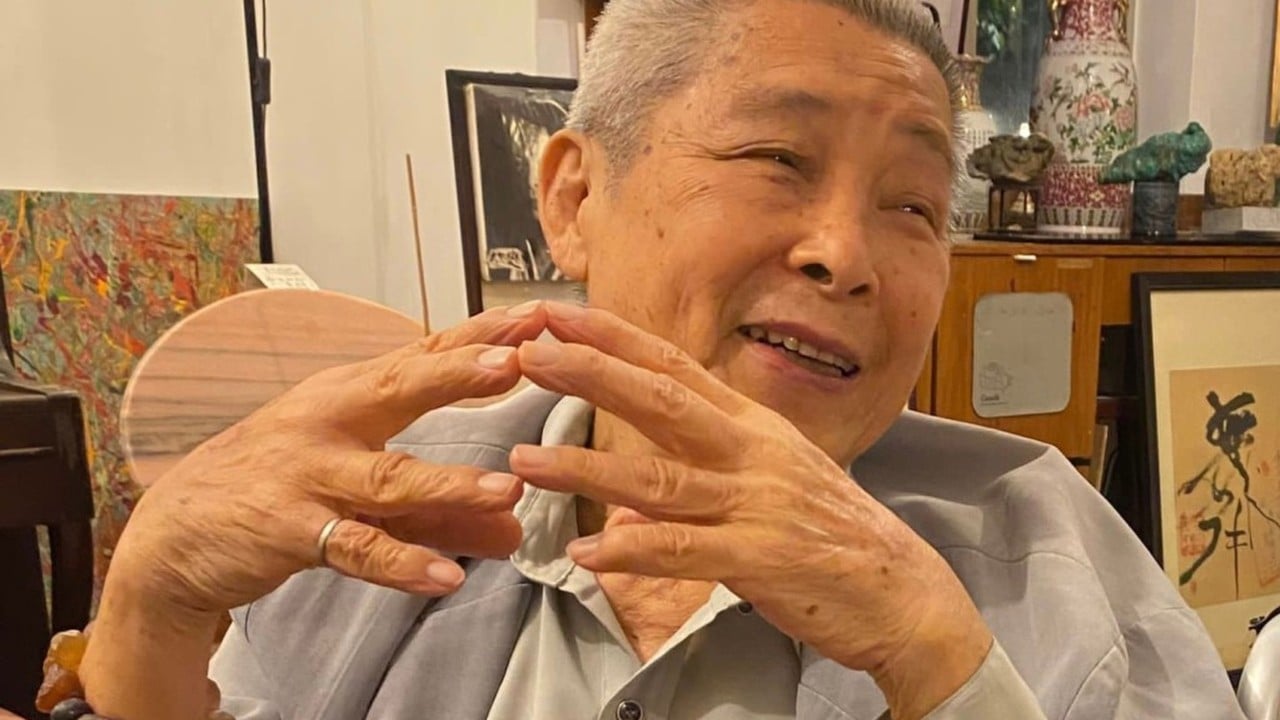
Long before he ever put on a period costume for Hong Kong television or terrified moviegoers as an androgynous tree demon, Lau Siu Ming was already changing how art worked in the city. He didn't just stumble into the spotlight. He built the stage from scratch.
When news broke that Ming Sir had passed away at the age of 94, tributes poured in from government officials and industry veterans alike. Hong Kong’s Secretary for Culture, Sports and Tourism, Rosanna Law, praised his lasting contributions to the cultural sector. Lawmakers and former students shared memories of his fierce dedication. But behind the formal statements lies a much richer, grittier reality of an artist who spent over five decades refusing to stay in a single creative box.
If you only know him from his chilling villainous turns or wise mentor roles in classic television dramas, you missed half the story.
The Dancer Who Left For Europe In The 1960s
Most casual viewers assume Ming Sir was purely a product of the golden age of Hong Kong cinema and TVB serials. That is dead wrong. Born in 1931, he chased an artistic dream that very few young men in colonial Hong Kong even dared to imagine.
In the early 1960s, he secured a scholarship to study at the Rosella Hightower School of Dance in Cannes, France. He became one of the very first local dancers to pursue rigorous, formal training in Europe. He didn't just learn steps. He absorbed avant-garde techniques, worked with major international troupes like the Brussels Ballet du XXe Siècle, and brought European choreography theory back home.
When he returned to Hong Kong in 1967, the local dance scene was basically a blank slate. He stepped into the role of dance master and choreographer for local broadcasters, founding groups and shaping a brand-new generation of performers. He infused classical Western ballet training with distinct Chinese heritage, long before cultural fusion became a buzzword in modern boardrooms.
Reinventing Himself On Screen At Nearly 50
Most performers think about slowing down as they approach their fifties. Ming Sir went the opposite direction. In 1979, at a time when many career dancers would be hanging up their shoes for good, he made a sharp pivot into film.
He made his cinematic debut in Tsui Hark’s landmark mystery film The Butterfly Murders. That single role blew open the doors to a prolific screen career. He didn't play romantic leads or generic action heroes. He specialized in nuance, grit, and unforgettable character work.
Think about his filmography. He brought terrifying presence to A Chinese Ghost Story in 1987 as Lao Lao, the creepy tree demon. He added gravitas to The Legend of the Condor Heroes and Swordsman. Younger actors noticed. Stars like Sean Lau Ching-wan and Francis Ng regularly sought him out, treating him as a real-world mentor rather than just a coworker. Actress Charmaine Sheh once credited him with teaching her that acting should flow like water, fluid and natural, rather than rigid and rehearsed.
He didn't stop when things got difficult, either. After losing his wife, Cheung Wai Ling, to cancer in 2012, he briefly stepped away from the spotlight, admitting that art lost its primary audience when she was gone. Yet, true to form, he returned to television screens years later, making his final TV appearance in the 2020 drama The Gutter.
The Personal Toll And Real Legacy
Ming Sir spent his final years dealing with declining health, navigating multiple ailments, and moving around in a wheelchair. Yet, visitors noted that his mind remained sharp, and his passion for the industry never cooled down. Lawmaker Kenneth Fok recalled visiting him in the hospital, noting how the aging artist still gripped his hand tightly, eager to talk about the future of Hong Kong's arts sector.
That is what separates a true pioneer from a standard celebrity. He didn't just collect an honorary fellowship from The Hong Kong Academy for Performing Arts or a Lifetime Achievement Award from TVB and think his job was finished. He cared about the ecosystem. He served on government arts panels, advising on how to nurture new talent and expand local audiences.
When we look back at the giants of Hong Kong's cultural history, we often focus exclusively on the box office hits or pop chart records. We forget the foundational work done by people like Lau Siu Ming. He proved that you can reinvent your career at fifty, blend European technique with Asian roots, and still hold onto your artistic integrity until your final days.
Don't just remember him as a face from old television reruns. Remember him as the man who dared to dance across continents when nobody else was looking.