Geopolitics loves a spreadsheets-and-maps approach to the world. Look at Northeast Asia through that lens and the solution to regional security seems incredibly obvious. You have a nuclear-armed North Korea ramping up its missile testing. You have an increasingly assertive China. Sitting right across the water from each other are South Korea and Japan, two heavily armed, technologically advanced democracies backed by the United States.
On paper, they should be inseparable strategic partners. They should be running joint naval drills every week, sharing real-time radar data, and matching their supply chains.
Instead, they are trapped in a loop of historical grievance that logic cannot break.
South Korean President Lee Jae-myung laid it bare on June 8, 2026, during a press conference marking his first year in office. He admitted that while a formal military logistics pact with Japan makes total sense from a practical standpoint, it simply cannot happen right now. The reason is simple. The South Korean public won't allow it until Japan delivers a sincere, unambiguous apology for its 1910-1945 colonial rule.
This is not just stubbornness. It is a fundamental reality of democratic politics that Western analysts constantly misread. In international relations, deep emotional scars hold just as much weight as ammunition counts.
The Friction Between Pragmatism and National Pride
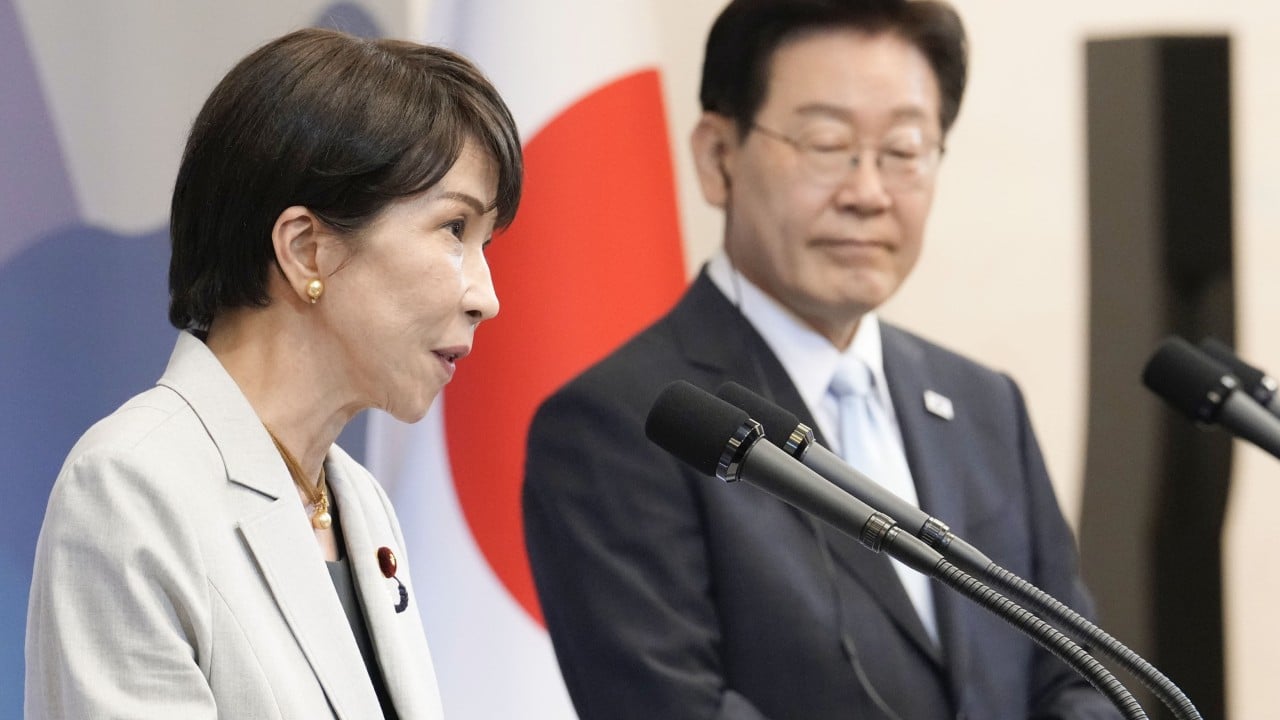
President Lee found himself in a tough spot during his summit with Japanese Prime Minister Sanae Takaichi in Andong. He knows the military data. He understands that if a conflict breaks out in the region, South Korean and Japanese forces need to be able to talk to each other without waiting for Washington to translate.
He explicitly acknowledged that an Acquisition and Cross-Servicing Agreement—commonly known as an ACSA—is practically necessary. An ACSA allows two militaries to share and procure basic supplies like fuel, food, and ammunition during joint operations or crises. Japan has been pushing for this deal for years. The two countries almost signed one back in 2012, but public fury in Seoul killed the momentum at the eleventh hour.
"On the issue of a military logistics support agreement, many people in the Republic of Korea would say, 'What are you talking about?'" Lee told reporters. "Yet from my perspective, there is a practical necessity for it."
But Lee is a politician who answers to an electorate, not a military strategist working in a vacuum. He admitted to telling Takaichi straight up that he would get into massive political trouble at home if he tried to force the agreement through. The wounds from the colonial era, specifically regarding forced labor and wartime sexual slavery, are live political currents in South Korea. They are not ancient history.
Why Past Japanese Apologies Haven't Stuck
A common complaint from observers in Tokyo and Washington is that Japan has already apologized. They point to statements from the 1990s, like the landmark 1993 Kono Statement or the 1995 Murayama Statement, where Tokyo expressed deep remorse for wartime suffering. They look at billions of dollars shifted through treaties and funds over the decades and wonder why the goalposts keep moving.
But from the South Korean perspective, the issue isn't the number of apologies. It's the consistency.
Every time a Japanese Prime Minister offers a statement of regret, a prominent cabinet member or lawmaker goes on TV a few months later to deny wartime atrocities, or visits the Yasukuni Shrine, which honors Japan's war dead—including convicted war criminals. To South Koreans, this completely invalidates the official government stance. It makes the apologies look like diplomatic chores rather than genuine acts of contrition.
Lee summed up what the South Korean public is actually looking for: a simple, unvarnished statement. "There must be a sincere apology—one that sincerely says, 'I'm really sorry for hurting you.' I believe that day will come eventually."
Until that happens, any military cooperation beyond basic intelligence sharing will face a hard ceiling.
The Complicated Road Ahead for Northeast Asian Security
So where does this leave the regional security architecture?
Right now, the three-way alliance between Washington, Seoul, and Tokyo relies heavily on the United States acting as the middleman. South Korea and Japan will share data with the US, which then passes it along. It's a clunky, inefficient way to manage a fast-moving security environment, but it's the only setup the public sentiment in Seoul will tolerate.
Lee hinted that his long-term goal is to move Northeast Asia toward a broader, multilateral security framework rather than a tight, US-led trilateral bloc that pits Washington, Seoul, and Tokyo directly against Beijing and Pyongyang. He wants to de-escalate the current confrontational atmosphere, favoring short- and medium-term goals like freezing North Korea's nuclear material production rather than demanding immediate, outright denuclearization.
But managing the immediate neighborhood means managing Japan. Lee noted that historical and territorial disputes—like the ongoing row over the Dokdo islands, which Japan calls Takeshima—must be handled separately from areas where cooperation serves immediate national interests. It's a delicate balancing act. You cooperate where you must, but you don't sign away the emotional demands of your people for the sake of military convenience.
Next Steps for Regional Stability
The gridlock won't break tomorrow, but there are clear paths to prevent relations from sliding backward.
- Keep Cooperation Quiet: Focus on lower-profile functional cooperation, like search-and-rescue operations or maritime safety, which don't trigger the same public backlash as high-profile logistical or combat agreements.
- Establish Historical Consistency: Tokyo needs to realize that words matter. If Japan wants the strategic benefit of a fully cooperative South Korean military, its political leadership must stop sending mixed signals regarding its wartime past.
- Focus on Incremental Security Goals: Instead of swinging for massive, historic defense pacts that get torn up after the next election cycle, both sides should lock in smaller, institutionalized agreements that survive shifts in political leadership.
Strategic necessity is a powerful motivator, but it can't override national identity. If Tokyo wants a real military partner in Seoul, the road runs through history, not around it.