Most middle school science projects end up in a kitchen trash can or dusty garage corner. Not this one.
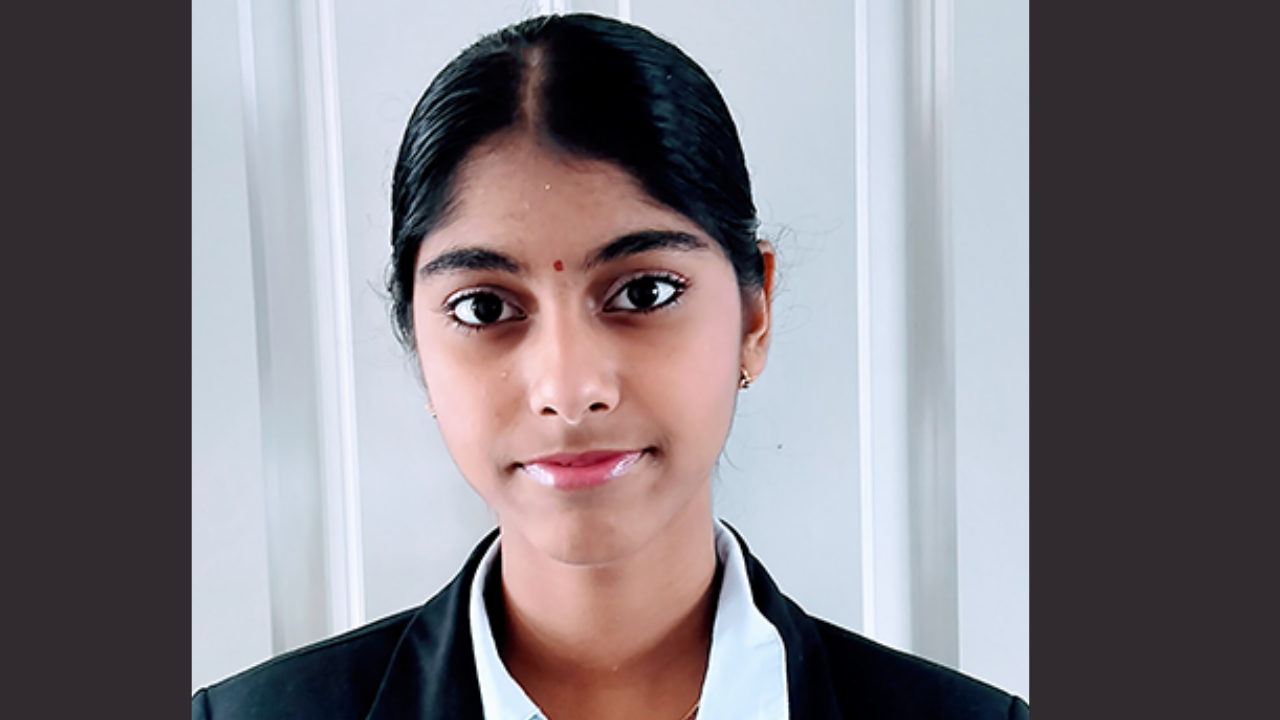
Sai Sri Valli Mogilineedi, an eighth-grader at Mountain View Middle School in Mechanicsburg, Pennsylvania, skipped the baking soda volcano routine. Instead, she engineered a pharmaceutical solution to a very human problem. Her project tackles Gastroesophageal Reflux Disease, known commonly as GERD, by rethinking how antacids release medicine inside the body.
That exact piece of independent research just landed her a spot as one of only 30 national finalists in the 2026 Thermo Fisher Scientific Junior Innovators Challenge. She beat out nearly 2,000 applicants nationwide. Now, she is heading to Washington, D.C., to compete for a share of over $100,000 in educational awards.
Fixing the Flaw in Common Heartburn Relief
If you have ever popped an over-the-counter antacid, you know the script. Relief hits fast. Then, an hour or two later, the burn creeps right back.
Standard antacids work instantly, but they clear out of the system way too quickly. Patients often need to swallow multiple doses throughout the day just to manage symptoms. Mogilineedi looked at that flaw and decided to build a better delivery mechanism.
Her project bears the formal title A Novel Controlled Release System for GERD Drugs Using Immobilization Techniques. Rather than letting an antacid dump its active ingredients all at once, she utilized immobilization techniques to meter out the medicine slowly.
Think of it like a time-release capsule engineered from scratch. By slowing down the release rate, the treatment stays active for longer periods. It shifts the entire paradigm of how mild-to-moderate acid reflux can be managed at a molecular level without constant redosing.
The Brutal Math of the Thermo Fisher Junior Innovators Challenge
Getting to the national stage requires surviving a brutal filtering process. You do not just sign up on a website and cross your fingers.
The journey starts locally. Students have to finish in the top 10 percent of their regional science fairs just to score a nomination. For Mogilineedi, that meant proving her concept at venues like the Capital Area Science and Engineering Fair (CASEF). Judges there took notice, handing her specialized accolades including the Penn State College of Medicine Award and the Love Award.
From there, 1,997 regional nominees submitted their research papers to a national pool. A panel of scientists, engineers, and educators whittled that mountain of applications down to the Top 300 Junior Innovators in early September. From that elite group, judges selected the final 30.
These finalists represent just 17 states and Puerto Rico. Maya Ajmera, President and CEO of the Society for Science, noted that these young researchers consistently tackle real-world friction points rather than theoretical hypotheticals.
What Happens During Washington D.C. Finals Week
Winning a major STEM competition takes more than a smart lab notebook. When Mogilineedi travels to Washington, D.C., for Finals Week, individual research evaluation is only half the battle.
Organizers toss the 30 finalists into collaborative team challenges. These group tasks test raw communication, adaptive problem-solving, and how well students can handle pressure alongside peers they just met.
Every single finalist walks away with a guaranteed $500 cash prize, while their home institutions—including Mountain View Middle School—receive $1,000 to fund future science programs. However, the major stakes lie in the category prizes handed out on October 27:
- The $25,000 Thermo Fisher Scientific ASCEND Award for top overall STEM excellence.
- The $10,000 Robert Wood Johnson Foundation Award for health advancement research.
- The $10,000 Broadcom Coding with Commitment Award.
- The $10,000 DoD STEM Talent Award.
Lessons from a Young Innovator
You do not need a university lab or a million-dollar grant to solve technical problems. You need an eye for everyday inefficiencies and the persistence to test raw ideas through failure.
Mogilineedi did not reinvent chemistry; she optimized drug delivery mechanics using tools accessible to a dedicated student researcher. If you want to encourage young minds in STEM, stop giving them pre-packaged kits with predictable outcomes. Let them pick a messy, unresolved problem and watch how fast they figure out what actually works.