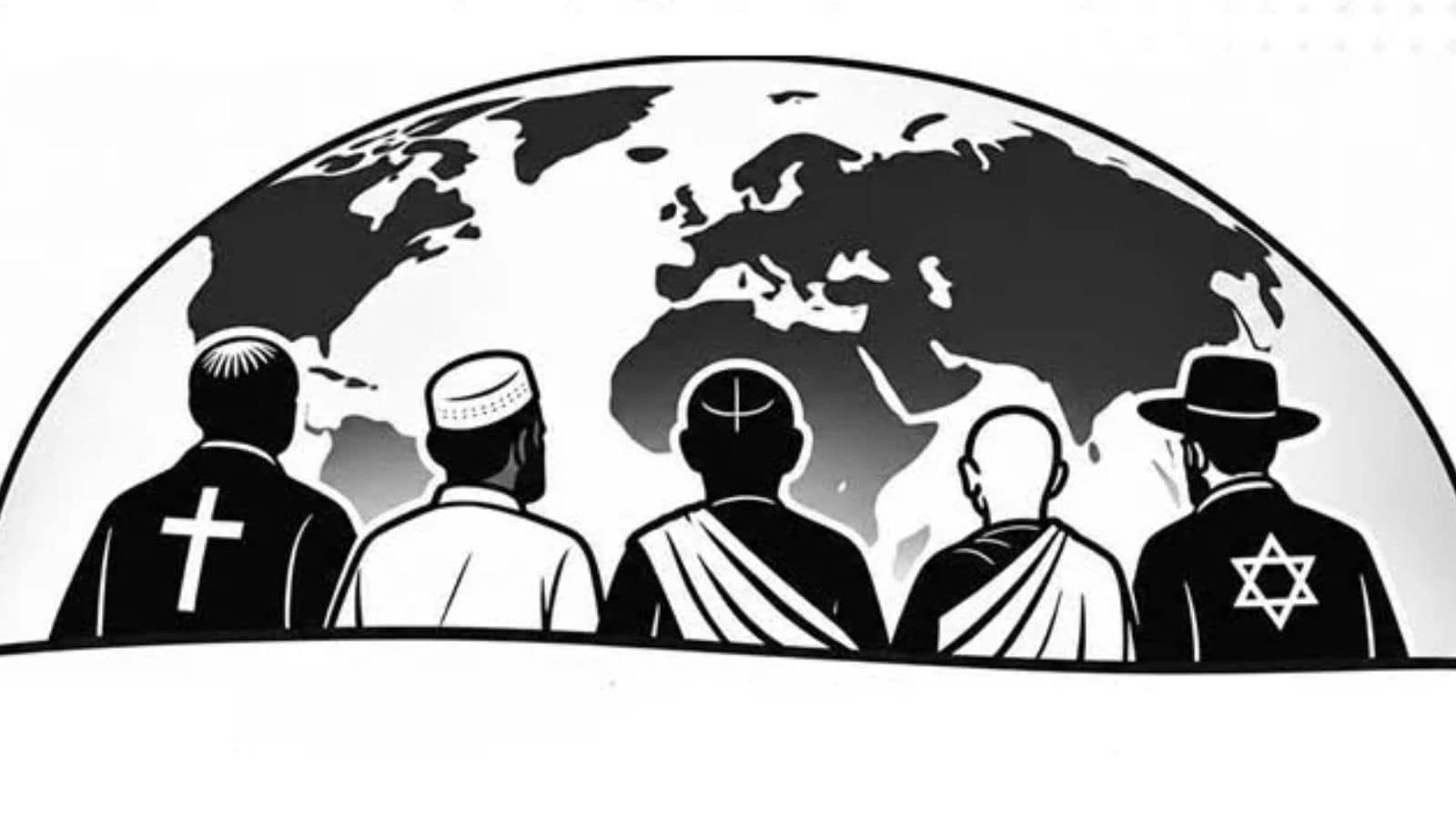
Muslims could overtake Christians as the world's largest religious group around 2035, not because people are converting in waves, but because of age, birth rates, and basic demographic math.
Let's be honest. Headlines about shifting religious populations usually trigger knee-jerk reactions—either panic about cultural clashes or assumptions about mass conversions. The actual numbers from the Pew Research Center tell a much quieter, more structural story. In 2020, Christians led globally with roughly 2.27 billion people compared to about 2.02 billion Muslims. By 2035, Pew projects roughly 2.57 billion Muslims versus 2.52 billion Christians. Stretch that out to 2070, and Muslims are projected to reach more than 3.6 billion people—about 35.8% of the world—while Christians sit just under 3 billion, or roughly 29.1%.
Notice the catch? Neither group is actually shrinking overall. Both keep growing. Between 2020 and 2070, Muslims and Christians are the only major religious groups projected to expand faster than—or right alongside—the overall world population growth of 29%. Christianity grows by about 30% over that stretch. Islam grows by roughly 80%.
As the age structure diagram above illustrates, younger age distributions give a population built-in momentum for decades. When a larger share of people hasn't even reached peak childbearing years yet, future birth totals climb even if individual family sizes gradually settle down.
Why Muslims Could Outnumber Christians by 2035 Without Mass Conversions
If you've worked with demographic datasets long enough, you know that switching faiths rarely moves global totals the way people imagine. Between 2020 and 2070, Pew estimates roughly 9.2 million Muslims will become Christian and about 9 million Christians will become Muslim. Those two flows basically cancel each other out.
What makes the difference is natural population change—births minus deaths. From 2020 to 2070, natural increase is projected to add about 1.6 billion Muslims worldwide, compared with roughly 792 million Christians. That gap comes down to two things:
- Younger age profiles: In 2020, the median age for Muslims globally was 24, nearly a full decade younger than the 33-year median age for non-Muslims. Younger populations have more people entering their prime reproductive years right now.
- Higher fertility rates: Between 2020 and 2025, Muslim women averaged roughly 3.1 children, compared with 2.5 children for Christian women and 1.6 for all other women. Replacement level sits near 2.1 children per woman. Even as fertility rates gradually converge by the 2065–2070 window—projected to range from about 2.2 children per Muslim woman down to 1.5 for religiously unaffiliated women—the earlier head start compounds over time.
There's also religious retention to consider. Pew estimates that globally, around 99% of people raised Muslim still identify as Muslim in adulthood, whereas Christianity sees a projected net loss of about 104.9 million adherents from religious switching between 2020 and 2070 (mostly toward no religious affiliation), compared with a projected net switching loss of 7.7 million for Muslims. Still, even if you stripped out switching completely, fertility and age structure would drive the core shift.
A common mistake people make when reading global projections is treating "Muslim" or "Christian" as a single monolithic bloc with uniform politics, economics, or culture. It isn't. A young Muslim in Jakarta or Lagos faces completely different economic pressures, schooling access, and urbanization trends than someone in Cairo or London. Treating a religious label as a single voting or consumer monolith is lazy analysis.
How Religious Maps Shift Across Regions by 2070
Zooming out to 2070, the biggest story isn't just who holds first place globally. It's where followers live. Religion is relocating geographically, especially for Christianity.
Sub-Saharan Africa becomes a demographic powerhouse
Sub-Saharan Africa is where the fastest transformations collide. By 2070, more than half of all Christians in the world are projected to live in sub-Saharan Africa. Christians there are forecast to more than double in headcount, rising from 697 million in 2020 to 1.6 billion in 2070. Even so, their regional share edges down slightly from 62% to 59% because Muslims and religiously unaffiliated groups grow even faster there.
Meanwhile, the share of the world's Muslims living in sub-Saharan Africa is projected to climb by 9 percentage points to 27%, with Muslims making up about 36% of the region's population by 2070 (up from 33% in 2020). The Democratic Republic of the Congo is projected to overtake the United States as the country with the largest Christian population by 2070.
Europe and North America look markedly different
In Europe, the share of the population that is Christian is projected to drop by 15 percentage points by 2070, while Europe's slice of the global Christian population falls from 22% in 2020 to 11% in 2070. Religiously unaffiliated Europeans are projected to rise from about a quarter in 2020 to roughly a third in 2070, while Muslims grow from roughly 6% to 13% of Europe's population—driven heavily by migration. Notably, Russia and Italy drop out of the top 10 Christian countries by 2070.
Across North America, Christians are projected to fall from 63% of the population in 2020 to 46% in 2070, losing their majority status while remaining the largest single group. Religiously unaffiliated people rise from 30% to 41% over that period, and U.S. Christians are projected to decline from 217 million in 2020 to 174 million in 2070. U.S. Muslims are projected to grow by 9 million, reaching roughly 4% of the U.S. population (around 3.7% in Pew's figures).
Asia-Pacific, Latin America, and MENA
In Asia and the Pacific, Muslims are projected to rise from 26% of the regional population in 2020 to 37% in 2070, surpassing the religiously unaffiliated as the largest regional group ahead of Hindus. Pakistan is poised to overtake Indonesia as the country with the most Muslims well before 2070—Pakistan's Muslim population is projected to roughly double to 461 million by 2070—while India's Muslim population rises from 213 million to 334 million.
Latin America and the Caribbean remains heavily Christian, shifting from 85% in 2020 to 77% in 2070. In the Middle East and North Africa, change is minimal: Muslims sit around 95% in 2070 compared with 94% in 2020. Globally, 54 countries and territories are projected to have Muslim majorities by 2070, and the number of places with no majority religion more than doubles from 7 to 16 (including Switzerland, Mongolia, and Taiwan).
What Happens to "Nones," Hindus, Buddhists, and Jews
Quick headlines often miss what happens to everyone else. Religiously unaffiliated people—"nones"—are projected to drop from 24% of the global population in 2020 to 17% in 2070. Why? Because secularization and religious switching in places like North America and Europe can't offset older age profiles, lower fertility, and steep population decline in East Asia—especially China, which is projected to shrink by roughly 400 million people over the long run.
Hindus are projected to grow in sheer numbers—reaching about 13.6% of the global population by 2070—yet edge down as a share of the world total. Buddhists are projected to decline both in number and share, largely reflecting demographic shifts in East Asia. Jews are projected to grow from roughly 15 million in 2020 to nearly 18 million in 2070, while dipping slightly from 0.19% to 0.17% of the global population. All other faiths combined grow modestly in headcount but slip below 2% globally by 2070.
Why Projections Aren't Destiny—and What to Do With This Data
Here's the candid reality check: a 50-year demographic projection isn't a crystal ball. Demographers project forward based on observed age structures, fertility, mortality, migration, and switching rates. If girls' education expands faster than expected, if economic shocks or rapid urbanization push birth rates down sharper than modeled, or if secularization accelerates in regions currently holding steady, the 2070 numbers will shift. That's why Pew treats these figures as conditional scenarios if current trends hold—not guarantees.
If you're a journalist, policymaker, educator, or business leader trying to make actual sense of these shifts rather than farming outrage clicks, take four concrete steps:
- Separate global totals from local reality. Don't confuse a global milestone around 2035 with what happens in your own city or country. Check country-level age and religious breakdowns before drawing conclusions about local politics or markets.
- Look at age cohorts first. When reading any demographic claim, check median age and fertility before blaming or crediting conversion or secularization. Age structure explains huge swaths of population growth.
- Avoid monolithic assumptions. Within every faith—and among the unaffiliated—differences in class, language, geography, and civic views are massive. Segment by real local context, never just a broad label.
- Track updated censuses and surveys. Keep an eye on national census releases and Pew Research Center updates to see whether fertility and switching trends stay on pace or bend in a new direction.