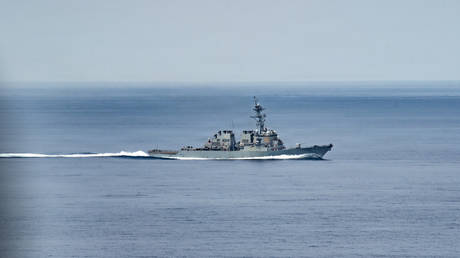
When you’re floating in the middle of the South China Sea, the last thing you want is for the lights to go out. Imagine the scene. You're part of a billion-dollar warship, an Arleigh Burke-class destroyer built to project power, but suddenly, the air conditioning stops. Then the toilets quit. Finally, the galley goes dark.
That’s exactly what happened to the USS Benfold on July 24. For four grueling days, the crew lived through an engineering nightmare. They weren't fighting a naval battle. They were fighting heat, sanitation issues, and a dead ship.
The reality of engineering casualties
The Navy calls it an "engineering casualty involving its generators." It sounds clinical and detached. For the sailors on the ground—or rather, on the water—it was anything but. In tropical temperatures hitting 37 degrees Celsius, a ship without climate control is essentially a metal oven.
We’re not talking about a small patrol boat here. The Benfold is a 10,000-ton powerhouse. When the power goes, it's not just about losing the radar. It's about basic human dignity. No flushing toilets. No cold water. No cooked meals.
Why this keeps happening
Some will point to bad luck. I call it a symptom of a stretched-thin fleet.
The Benfold incident isn't an isolated fluke. It’s the second time an Arleigh Burke-class destroyer has faced a major power-related breakdown in the Indo-Pacific this year. Remember the USS Higgins in May? It lost propulsion for several hours. When the "backbone" of your fleet starts breaking down during routine operations, you have to ask: are we running these ships too hard?
The demand on the Navy is relentless. Between the long-term commitments in the Middle East and the constant "freedom of navigation" exercises in the Pacific, ships are rarely getting the maintenance time they need. Sailors are being pushed to the brink. We are seeing deployments stretched to nine months and beyond, and the equipment is showing the scars.
The hidden cost of constant readiness
When an aircraft carrier like the USS Abraham Lincoln spends over 200 days at sea, it’s not just the ship that wears down. The sailors do, too. You can only demand so much "grit and resilience" before the system cracks.
The Navy says the crew of the Benfold remained steady. I don't doubt that. But "resilience" isn't a replacement for a functioning generator. Relying on other ships like the USS Robert Smalls to shuttle food over to a dead-in-the-water destroyer is a stopgap, not a strategy. It’s a sign that the logistical chain is frayed.
What comes next
The Navy has returned the Benfold to duty, but the investigation into the generator failure continues. Don't expect a sudden shift in policy. The operational requirements aren't going away.
If you're looking for the real takeaway, it’s this: military readiness isn't just about the number of hulls you have in the water. It’s about the condition of those hulls. You can move ships around the map, redeploying from the Pacific to the Persian Gulf to fill gaps, but if you don't fix the underlying maintenance deficit, you're just waiting for the next breakdown.
Modern warfare requires more than just high-tech missiles. It requires the basic infrastructure to keep a crew fed, cool, and capable of functioning for more than a few days at a time. Until the Navy reconciles its massive operational footprint with its limited maintenance capacity, these stories will keep surfacing.
The next time you hear about a "routine operation," look closer. There’s almost always a crew somewhere working twice as hard just to keep the lights on.
This video provides additional context regarding the recent technical struggles faced by US naval vessels and the broader concerns about fleet maintenance.
http://googleusercontent.com/youtube_content/1