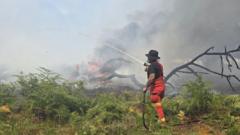
Smoke hanging heavy over a deserted A31 isn't a scene you expect in Hampshire during August. Yet, that's the grim reality as emergency crews battle a fierce wildfire tearing through the New Forest amid a brutal nationwide heatwave. When 247 acres of protected heathland turn into a tinderbox, it forces everyone to look past the usual tourist brochures and face a harsher truth about our changing climate.
The fire didn't just pop up out of nowhere. Weeks of dry weather left the region parched, creating conditions that turn ordinary grass into fuel waiting for a spark. Firefighters working round the clock face a massive challenge. Even when they manage to dampen the visible flames on the surface, the peat underneath stays hot. It smolders quietly, waiting for a shift in the wind to roar back to life. That makes containment a grueling multi-day struggle.
The Perfect Storm of Heat and Dryness
Let's look at the numbers. The UK is tracking toward its hottest summer on record for average temperatures. Parts of England have gone nearly two months without significant rain, pushing large swathes of the country into official drought status.
When you combine amber heat-health alerts predicting temperatures climbing into the mid-30s with bone-dry soil, you get a landscape primed for disaster. The National Fire Chiefs Council reported that July was their busiest month ever for wildfires, responding to hundreds of incidents across the country.
People love heading to national parks for summer holidays, but complacency kills ecosystems. Simple habits become major hazards when the ground is this dry. Discarded glass bottles act like magnifying glasses under the intense sun. A stray cigarette butt or an illegal disposable barbecue can trigger a catastrophe that takes decades for nature to heal.
What Authorities Are Doing Right Now
The government and emergency response teams are scrambling to keep up. Emergency Cobra meetings have been convened to coordinate responses as water levels drop and reservoirs shrink. Officials are seriously weighing restrictions on disposable barbecues in high-risk areas because too many blazes start from pure carelessness.
Transport networks take a massive hit too. The closure of the A31 dual carriageway—a vital artery for holiday traffic—has stranded motorists and choked local routes. Helicopters circle overhead, dumping water on hotspots while ground crews hack through dense brush just to reach isolated flare-ups.
Protecting Your Local Green Spaces
If you live near vulnerable countryside or plan to visit parks during a heatwave, you have a role to play.
- Skip the flames entirely: Never use portable grills or start campfires on dry heathland.
- Pack out your trash: Take every piece of rubbish home, especially glass containers.
- Watch your cigarette ash: Make damn sure cigarettes are completely extinguished before proper disposal.
- Report smoke immediately: Call emergency services the second you spot an unattended plume. Early detection stops minor smoke from becoming a massive front line.
The heatwaves won't magically stop, and our green spaces won't suddenly become fireproof. Treating the countryside with respect during extreme weather isn't just about conservation anymore. It's about basic survival.